SAEDNEWS: Introduction to Markouh Castle in Ramsar, Iran + Photos

According to Saednews, Markouh Castle dates back to the post-Islamic historical periods of Iran. It is located in the city of Katalom, Ramsar County, along the Talarsar Road. The monument was officially registered as one of Iran’s National Heritage Sites on March 15, 2001, under registration number 3484.
The castle takes its name from the mountain on which it stands. However, there are several theories regarding the origin of the mountain’s name. Some believe it was named after the presence of snakes (Mar means snake in Persian). However, this explanation is considered unlikely, as the Persian word for snake was not commonly used in the local dialect.
Other research suggests a different origin for the name. Historical records from the 3rd, 5th, and 8th centuries AH mention the existence of the castle, suggesting that its construction may date back to the 3rd century AH. At that time, the local population had not yet converted to Islam and largely followed the ancient Mithraic religion.
In the local dialects of the region, the word for “mother” is pronounced as Mar, Mahar, or Mahār. Considering that many words in the local dialect have roots in Mithraic traditions, the word Mar (meaning mother) may be connected to Mehr or Mithra. This theory suggests that the mountain may once have held sacred significance for the people of that era.
It is therefore possible that the site originally served as a temple or sacred place before being converted into a fortress, or that it served both religious and military purposes.
Although the exact construction date remains unknown, historians have attempted to estimate its age based on historical references to the castle in the 3rd century AH and its architectural similarities to other structures from that period, such as Babak Castle.
The castle is also mentioned in the historical book Zobdat al-Tawarikh. Additionally, Khwaja Rashid al-Din Fazlullah Hamadani refers to it in his book Jami' al-Tawarikh, particularly in connection with events that took place in 536 AH, when the castle was captured by the Ismailis.
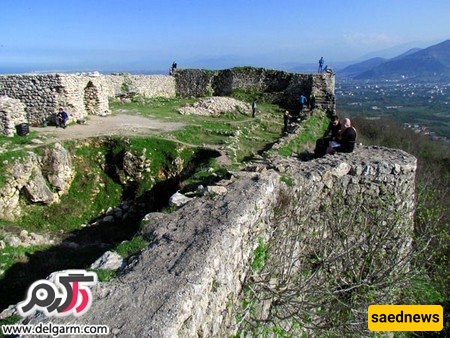
Mirza Hassan Khan Etemad al-Saltaneh, who personally visited the castle, described it as follows:
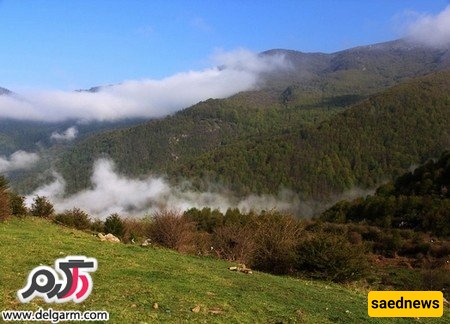
“In Tonekabon, there is a mountain known as Markouh, containing numerous caves inhabited by large numbers of bats. These bats fly toward people and lanterns, preventing visitors from entering the caves. At the top of the mountain is a place known as Naqareh Khaneh (the Drum House). When a stone is struck against a particular spot there, it produces a sound similar to a drum, which can be heard from as far as half a farsakh away.”
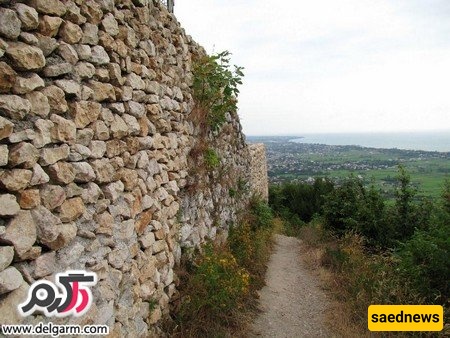
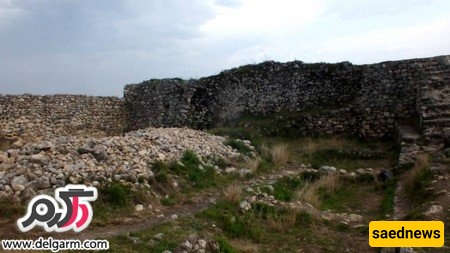
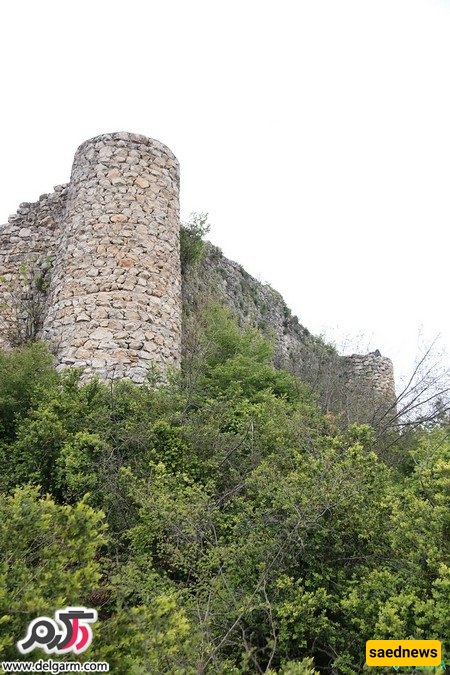
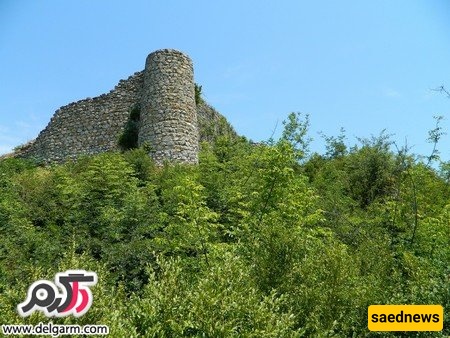
Markouh Castle covers an area of approximately 600 square meters. Of this once-impressive structure, only four surrounding defensive walls and their supporting towers remain today. The main construction materials used were stone, mortar, and plaster.
The interior of the castle is spacious enough to accommodate approximately 100 soldiers, allowing them to live within its walls.
The castle's eastern wall measures approximately 17.70 meters in length, 2.30 meters in depth, and 6.30 meters in height. Its western wall is 9 meters long.
The northern wall is divided into two sections by a large rock extending along its length. The western section measures approximately 14.80 meters, while the eastern section, separated from the main rock, measures 15 meters.
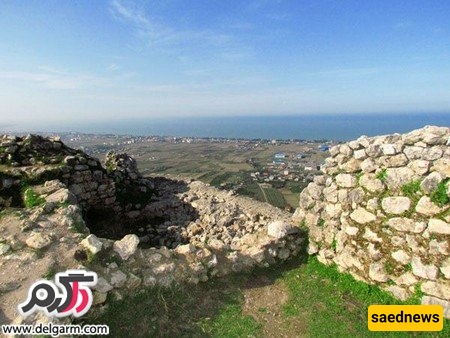
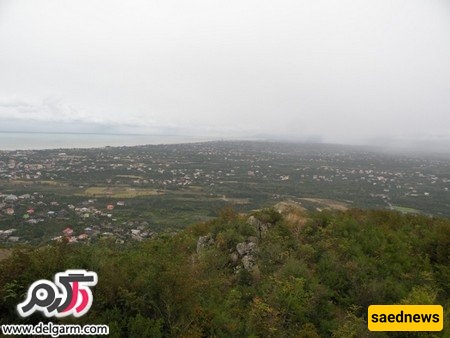
One of the castle's most remarkable features is its strategic location, which provides a complete 360-degree panoramic view of the surrounding landscape.
From the top of the castle, visitors can enjoy views of:
North: The Caspian Sea.
East: Tonekabon.
West: Ramsar.
South: The Alborz Mountains.
This elevated position made the castle an ideal defensive stronghold, allowing its occupants to monitor the surrounding areas.
According to local stories, there was once an underground tunnel inside Markouh Castle that supposedly extended to the village of Niasteh, located at the foot of the mountain. It was believed that soldiers used this tunnel as an emergency passage to enter or leave the fortress.
However, subsequent investigations have shown that this story is not accurate. The opening found inside the castle is not a tunnel but rather a water-storage pit. Since the castle had no direct access to a water source, this structure was likely used to store and keep water cool.