SAEDNEWS: ICL Lens Surgery: An Alternative When LASIK Is Not Suitable
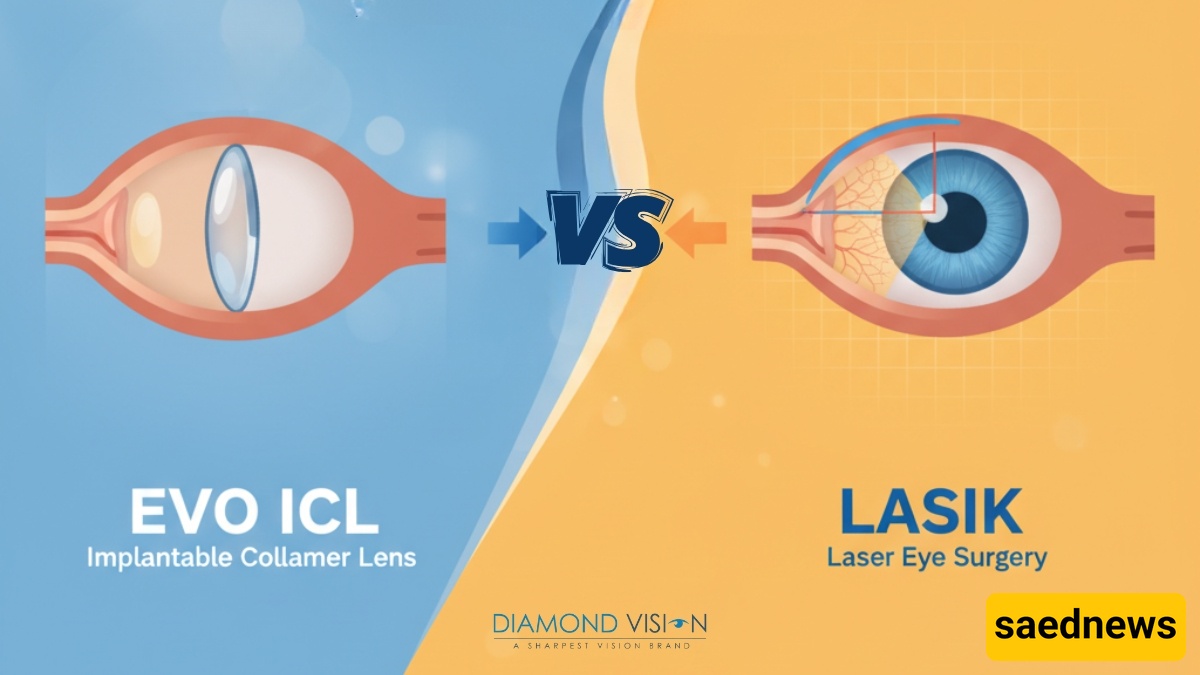
According to Saednews, Laser vision correction procedures, including LASIK, Femto-LASIK, LASEK, PRK, TransPRK, and SMILE, are performed to correct refractive errors. However, not everyone is a suitable candidate for these procedures. In some cases, factors such as thin corneas, high refractive errors, severe dry eye, or irregular corneal shape may make LASIK unsuitable.
In such situations, many people assume that there is no longer any way to become glasses-free. However, Implantable Collamer Lens (ICL) surgery may be a suitable and effective alternative for some of these individuals. In this article, we explore what ICL is, who can benefit from it, and whether it really represents the last opportunity to eliminate the need for glasses.
LASIK, PRK, or ICL?
LASIK works by reshaping the cornea. Therefore, corneal health and thickness play an essential role in the success of this procedure. If the cornea is too thin or has an irregular shape, removing additional corneal tissue may increase the risk of complications.
LASIK may not be suitable for the following individuals:
People with thin or irregular corneas.
Individuals with very high refractive errors.
Patients with keratoconus or suspected keratoconus.
People suffering from severe dry eye.
Individuals whose prescription has not yet stabilized.
People with certain uncontrolled eye or systemic conditions.
Pregnant or breastfeeding women until their eye condition and prescription become stable.
However, being unsuitable for LASIK does not necessarily mean that someone is unsuitable for all laser vision correction procedures. Following a thorough examination, an ophthalmologist may recommend alternatives such as PRK or TransPRK. For some individuals, implantable collamer lens (ICL) surgery may be a more appropriate option.
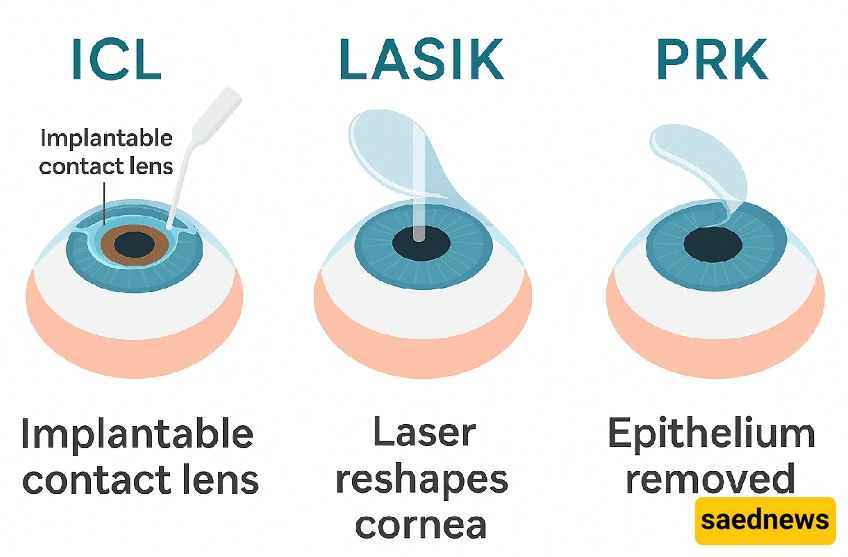
ICL stands for Implantable Collamer Lens. This procedure involves placing an extremely thin and flexible lens inside the eye to correct refractive errors such as myopia (nearsightedness) and astigmatism.
Unlike LASIK, ICL surgery does not involve reshaping or removing corneal tissue. The eye's natural crystalline lens is also preserved. The ICL is generally positioned between the iris and the natural lens, where it helps redirect incoming light so that images are more clearly focused on the retina.
This lens is designed for long-term use. However, under certain circumstances, it can be removed or replaced. It is important to note that this does not mean lens removal is a simple or risk-free procedure, as it requires another intraocular surgery.
ICL Lens
ICL implantation is generally considered for individuals with high refractive errors or those who are not suitable candidates for laser vision correction.
The main factors that may make someone a suitable candidate for ICL include:
Moderate to severe myopia or astigmatism.
Insufficient corneal thickness for LASIK.
Significant dry eye.
A healthy cornea.
A stable eyeglass prescription.
No active eye disease.
Sufficient anterior chamber depth and intraocular space to accommodate the lens.
To determine whether ICL is appropriate, the ophthalmologist must perform a comprehensive eye examination. This typically includes measuring refractive errors, checking intraocular pressure, assessing anterior chamber depth, and examining the cornea, natural lens, retina, and optic nerve.
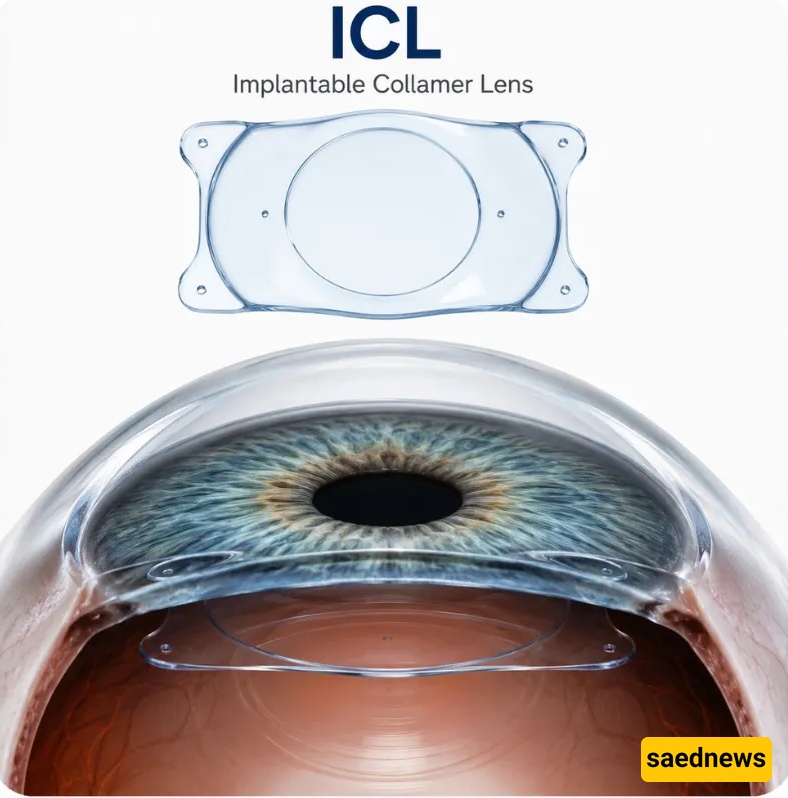
ICL implantation is usually performed as an outpatient procedure under local anesthesia. First, anesthetic eye drops are administered to numb the eye. The surgeon then makes a very small incision near the edge of the cornea and inserts the ICL into the eye.
Next, the lens is carefully positioned behind the iris and in front of the natural crystalline lens.
The procedure is generally brief and, in most cases, does not require stitches. After surgery, the patient receives prescribed medicated eye drops and can usually return home within a few hours.
ICL surgery offers several advantages, including:
Suitable for people with high refractive errors.
Preservation of natural corneal tissue.
Lower likelihood of worsening dry eye compared with certain laser vision correction procedures.
Correction of astigmatism using toric ICL lenses.
Rapid visual recovery in many patients.
Preservation of the eye's natural crystalline lens.
The possibility of lens removal or replacement under specific circumstances.
Despite these benefits, ICL is an intraocular surgical procedure and should not be considered completely free of risks or complications.
Like any surgical procedure, ICL implantation may involve certain complications. Potential risks include:
Increased intraocular pressure.
Intraocular inflammation or infection.
Blurred vision or temporary visual impairment.
Lens rotation or displacement.
Incorrect lens sizing or improper fit.
Development or progression of cataracts.
Halos and glare, particularly at night.
The need for additional treatment or repeat surgery.
If you experience severe pain, significant redness, sudden vision loss, unusual discharge, or nausea after surgery, you should contact your ophthalmologist as soon as possible.
The answer is not the same for everyone. If a person's corneal thickness is adequate, their refractive error falls within the treatable range, and they do not have severe dry eye, LASIK or another laser vision correction procedure may be an appropriate option.
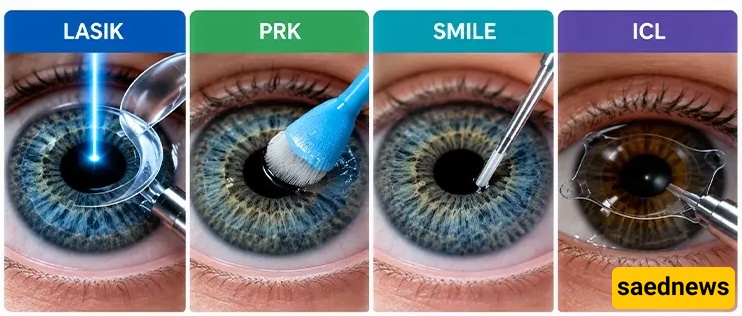
Comparing LASIK and ICL
However, for individuals with high refractive errors, thin corneas, or conditions that make LASIK potentially unsafe, ICL may be a more suitable alternative.
Ultimately, the best vision correction procedure depends on several factors, including the patient's age, refractive error, corneal thickness and shape, the health of the natural lens and retina, and overall medical condition.
Scientific Article on LASIK Eye Surgery
Scientific Article on Implantable Collamer Lens (ICL) Surgery