SAEDNEWS: Rumi’s Tomb in Konya, Turkey – Where Is Rumi’s Mausoleum Located? – Exploring Rumi and the City of Konya
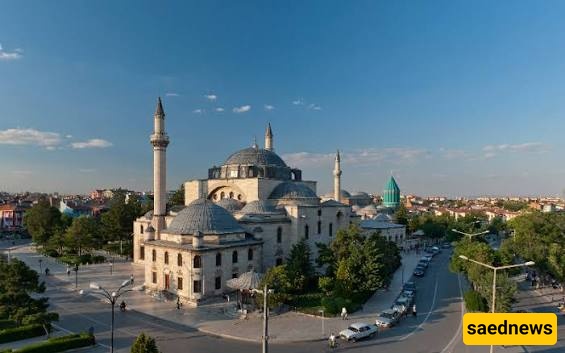
According to Saednews, The initial settlement of Konya and its surrounding areas dates back to the pre-civilization period. During this era, Neolithic, Chalcolithic, and Early Bronze Age cultures flourished in the region. Ancient settlements, particularly prehistoric mound settlements, were located within the present-day borders of Konya Province.
During the Neolithic period (7000–5500 BC), archaeological excavations at Çatalhöyük uncovered numerous historical artifacts. Today, remains of Hittite settlements can also be found in the Kara Höyük area of Konya.
Artifacts discovered through years of archaeological research provide valuable evidence of the region's ancient history.
Following the end of Hittite rule in Anatolia, the Phrygians migrated from Thrace to Anatolia. Artifacts discovered at Alaeddin Hill, Karapınar, Kıcı Kışla, and Sızma indicate settlements dating back to the seventh century BC.
After the Phrygians, Konya came under the control of the Lydians and Alexander the Great. Later, when the Romans established their rule over Anatolia, Konya became a firmly established settlement within the Roman Empire.
During this period, Saint Paul, an important figure in early Christianity, travelled from Antioch to Yalvaç and later visited Konya.
During the Byzantine period, important settlements in the region included Hatunsaray, Lystra, Derbe, Laodicea (modern-day Ladik in the Halıcı area), and Sille.
As Islam spread throughout Anatolia, Arab attacks on the Byzantine Empire increased. The Umayyads and Abbasids launched several military campaigns towards Konya. Following the Battle of Manzikert in 1071 AD, Konya and much of Anatolia were taken from Byzantine control.
The Seljuk Sultan of Anatolia, Suleiman Shah, chose Konya as his capital in 1076 AD. In 1080, the capital was moved to İznik. In 1097, Kilij Arslan I once again transferred the capital to Konya.
Between 1097 and 1277, Konya served as the capital and political centre of the Anatolian Seljuk Dynasty. In 1277, the city was conquered by Karamanoglu Mehmet Bey, who established Karamanid rule in the region. Later, Sultan Murad II of the Ottoman Empire brought Karamanid rule to an end.
During the Ottoman period, Konya maintained its historical importance and prestige. Several Ottoman sultans stayed in the city during their military campaigns and journeys. Sultan Selim I (Yavuz Sultan Selim) stayed in Konya while travelling to Iran and Egypt. Suleiman the Magnificent also visited the city during his Iranian campaign, while Sultan Murad IV stayed there during his journey to Baghdad.
During the Republican era, Konya experienced rapid development. Its historical heritage was preserved through the establishment of museums and the restoration of important monuments.
Today, Greater Konya consists of three main metropolitan districts: Karatay, Meram, and Selçuklu. According to the historical source, their combined population was 742,690. Including the surrounding towns and villages, the wider administrative area comprised 92 settlements.
1207–1273 AD
Jalal al-Din Muhammad Balkhi (born on 6 Rabi' al-Awwal 604 AH in Balkh and died on 5 Jumada al-Thani 672 AH in Konya) was one of the most renowned Persian-language poets and mystics.
His full name was Muhammad ibn Muhammad ibn Husayn al-Husayni al-Khatibi al-Bakri al-Balkhi. During his lifetime, he was known by titles such as Jalal al-Din, Khodavandgar, and Mawlana Khodavandgar.
In later centuries, particularly from around the ninth Islamic century onwards, he became widely known by titles such as Mawlavi, Mawlana, Mawlavi Rumi, and Mulla-ye Rumi. In some of his poems, he also used the pen names Khamush, Khamoosh, and Khamush.
After a prolonged illness and a severe fever, Rumi passed away on Sunday evening, 5 Jumada al-Akhirah 672 AH (1273 AD).
On that bitterly cold day, Konya was covered in frost. A tremendous crowd of people, young and old, Muslims and non-Muslims, Christians and Jews, gathered to mourn his death.
According to Aflaki, many of those who had previously opposed or rejected Rumi's teachings abandoned their former beliefs and embraced his spiritual path on that day. The mourning ceremonies continued for forty days.
The following verses describe the atmosphere of grief:
After forty days, they returned to their homes,
Yet all remained absorbed in this tale.
Day and night, their words were all the same:
That treasure had been buried beneath the earth.
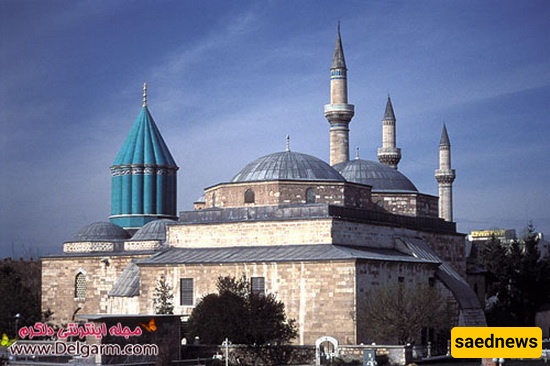
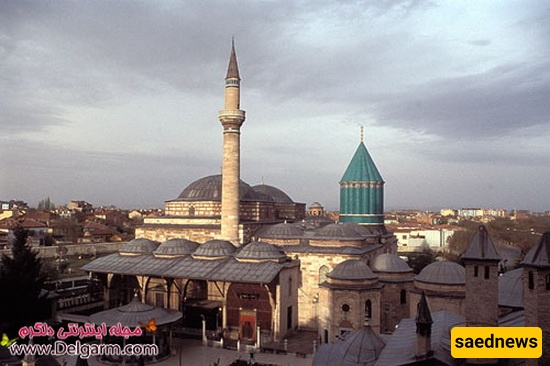
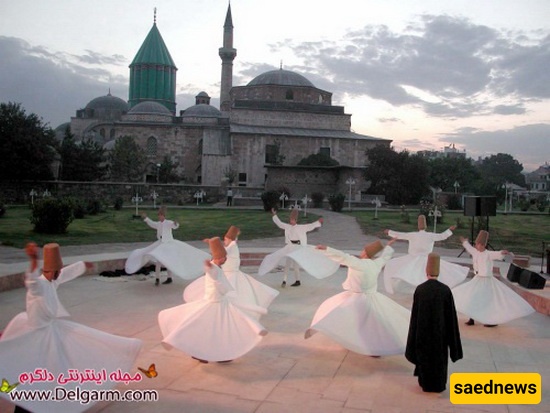
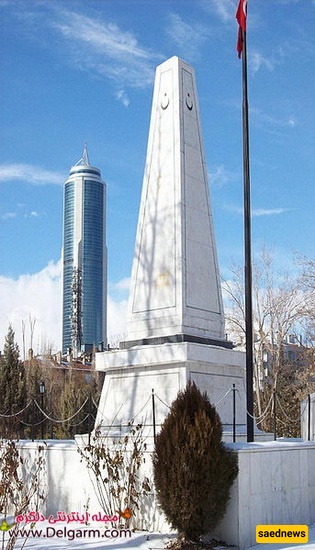
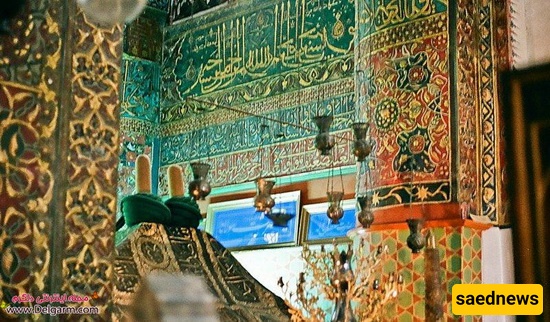
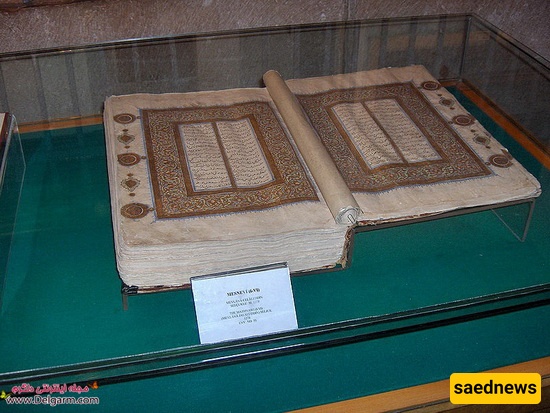
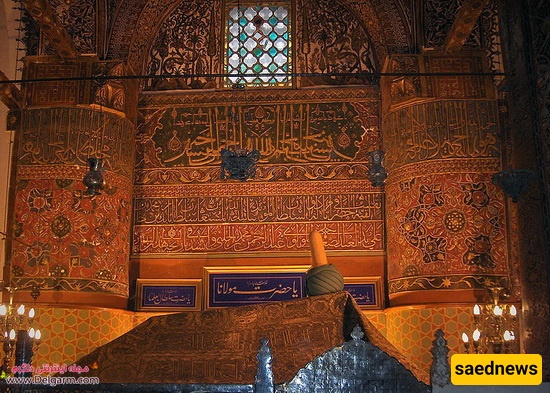
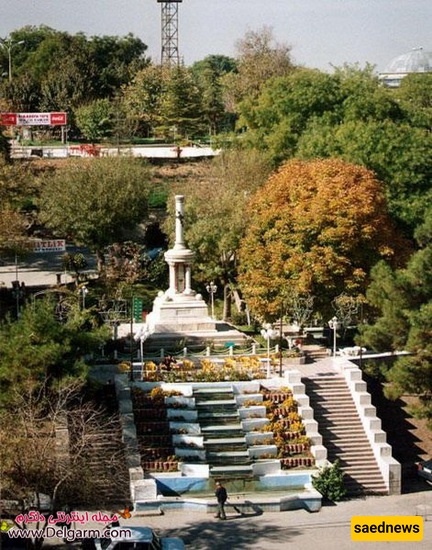
Some of the most important historical monuments, museums, and archaeological sites in Konya and its surrounding region include:
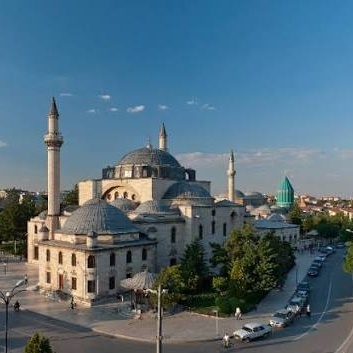
Mevlana Museum (Mevlana Mausoleum)
Tomb and Mosque of Shams Tabrizi
Konevi Museum of Ceramic Works
Şerafettin Mosque
İnce Minareli Medrese Museum
Alaeddin Mosque
Aziziye Mosque
Sultan Selim Mosque
Seljuk Palace
Konya Archaeological Museum
Atatürk Museum
Ethnography Museum
Koyunoğlu Museum
Yusuf Ağa Library
Meram Gardens
Sille Historical Village
Kilistra and Gökyurt
Çatalhöyük Neolithic Archaeological Site
Beyşehir
Eşrefoğlu Mosque
Fasillar Monument
Kubadabad Palace
Eflatunpınar Hittite Water Monument
Akşehir