SAEDNEWS: Westminster Abbey, known as London’s royal church, is one of the world’s most visited religious landmarks. It is also the traditional venue for official ceremonies and major occasions involving the British Royal Family.
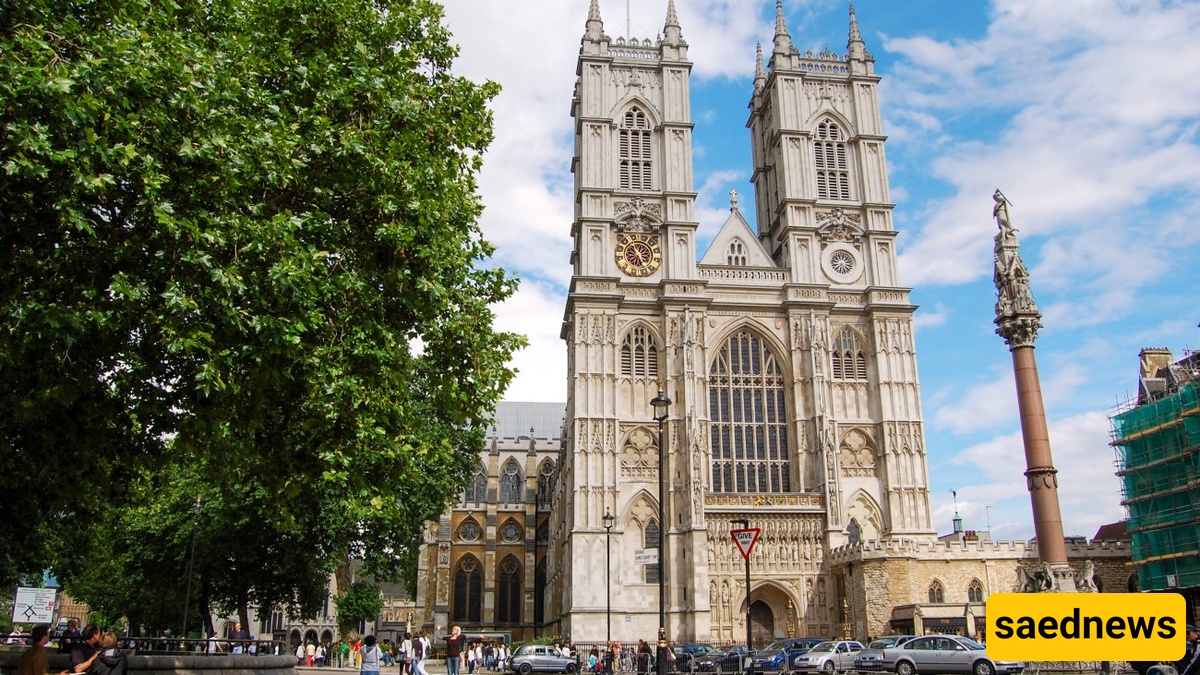
According to Saednews, Westminster Abbey is one of England’s most historic churches, located in the heart of London. Built primarily in the Gothic architectural style, it has traditionally served as the setting for the coronations, royal weddings, funerals, and other major ceremonies of the British royal family.
The church covers approximately 3,000 square meters, while its western towers rise to a height of around 69 meters. The earliest foundation associated with the site dates back to 616 AD. The present western towers were designed by Nicholas Hawksmoor and completed between 1722 and 1745.
During the 19th century, extensive restoration work was carried out under the supervision of Sir George Gilbert Scott. Westminster Abbey has also played an important role in British intellectual and cultural history, alongside institutions such as Oxford and Cambridge.
Around one million people visit Westminster Abbey each year. Often described as London’s royal church, it has hosted numerous coronation ceremonies and other important national occasions.
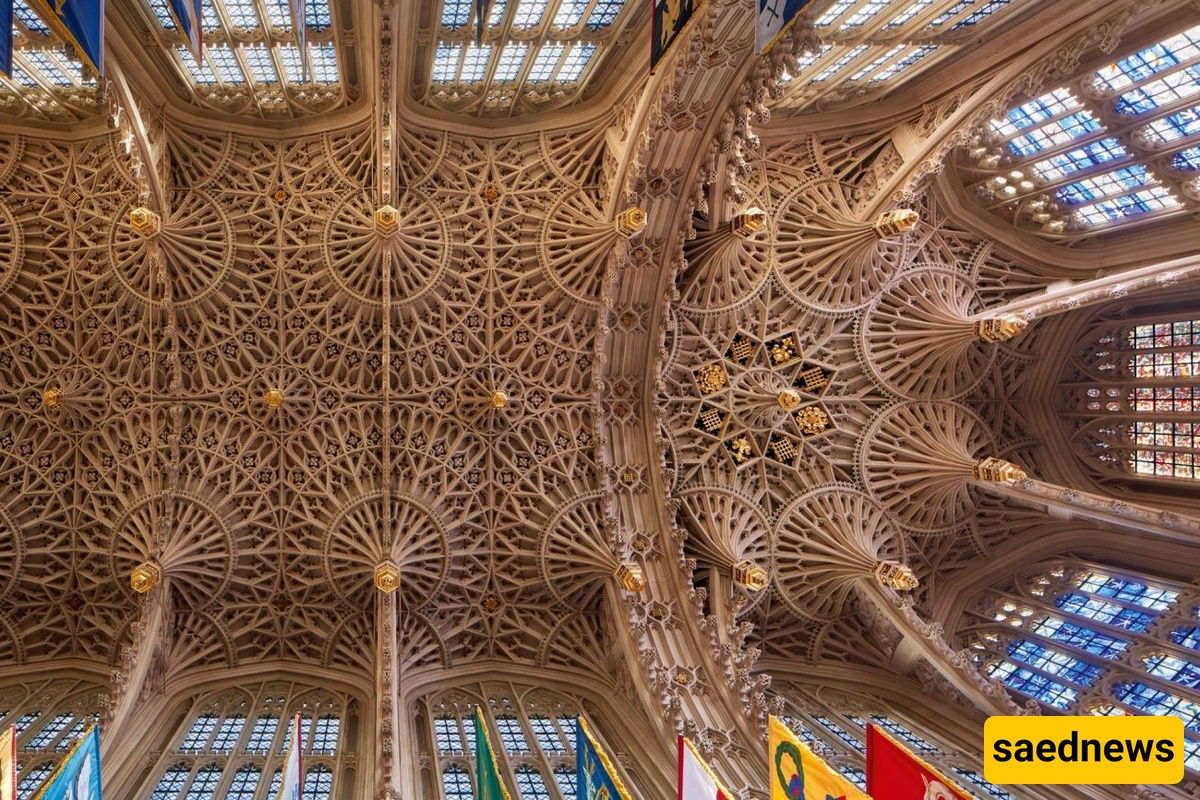
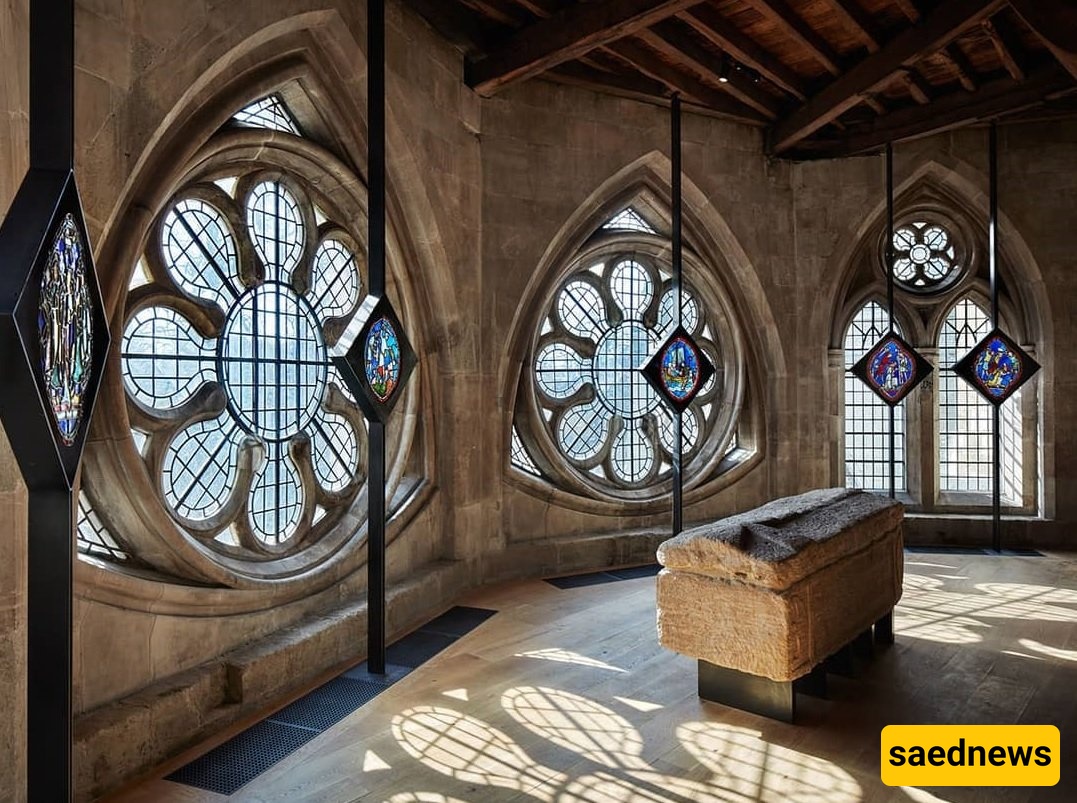
Its distinctive Gothic architecture, remarkable paintings, stained-glass windows, intricate craftsmanship, memorials, and sculptures have made Westminster Abbey one of London’s best-known landmarks. Together with the Palace of Westminster and St Margaret’s Church, it forms part of a UNESCO World Heritage Site and attracts visitors from around the world.
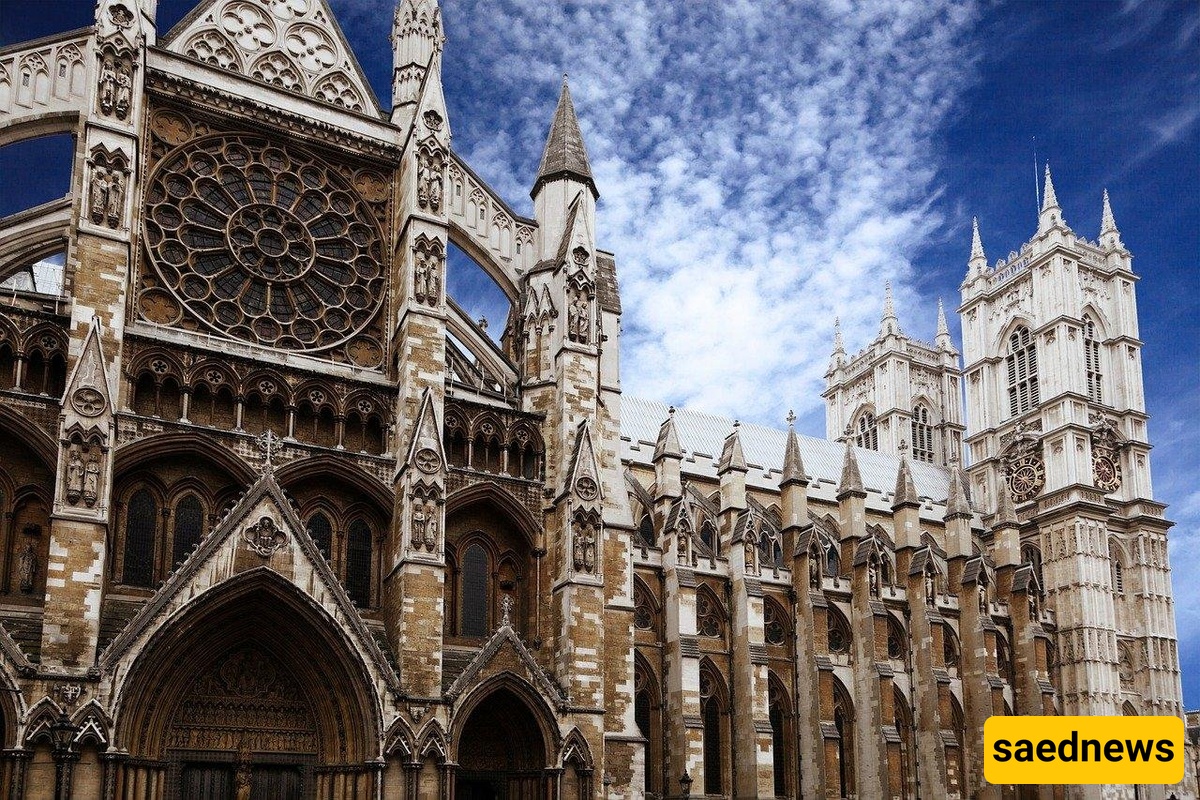
Westminster Abbey is almost as famous internationally as some of Europe’s most celebrated historic churches, including Notre-Dame de Paris. Its importance comes largely from its role in British national and royal history.
The abbey has hosted major national ceremonies and numerous coronations, which is why it is widely regarded as one of Britain’s most important royal churches.
One of its best-known modern events was the wedding of Prince William and Catherine Middleton in 2011.
Because Westminster Abbey receives such a large number of visitors, audio guides are commonly used instead of traditional group tours. The official audio guide has been made available in multiple languages and provides detailed information about the abbey and its history. A typical visit using the audio guide takes approximately one hour.
The wall paintings, monuments, and architectural details throughout the abbey preserve centuries of stories and historical events. The building was transformed into its present Gothic form during the medieval period and has remained closely associated with the coronation of British monarchs.
Westminster Abbey has also hosted numerous royal weddings and contains a remarkable collection of tombs, sculptures, memorials, and works of art, making it important both as a religious building and as a historic cultural site.
For centuries, Westminster Abbey housed the famous Coronation Chair, which was historically associated with the Stone of Scone, an important symbol of Scottish monarchy.
In 1950, a group of Scottish students stole the Stone of Scone from Westminster Abbey and secretly took it back to Scotland. The stone was recovered several months later and returned to Westminster Abbey in time for the coronation of Queen Elizabeth II in 1953.
In 1996, the British government officially returned the Stone of Scone to Scotland. It was placed in Edinburgh Castle alongside the Scottish Crown Jewels, although arrangements were made for the stone to return to Westminster Abbey for future coronations.
Westminster Abbey also has four gardens. College Garden is particularly notable for its long history, while St Catherine’s Garden is among the more recent additions.
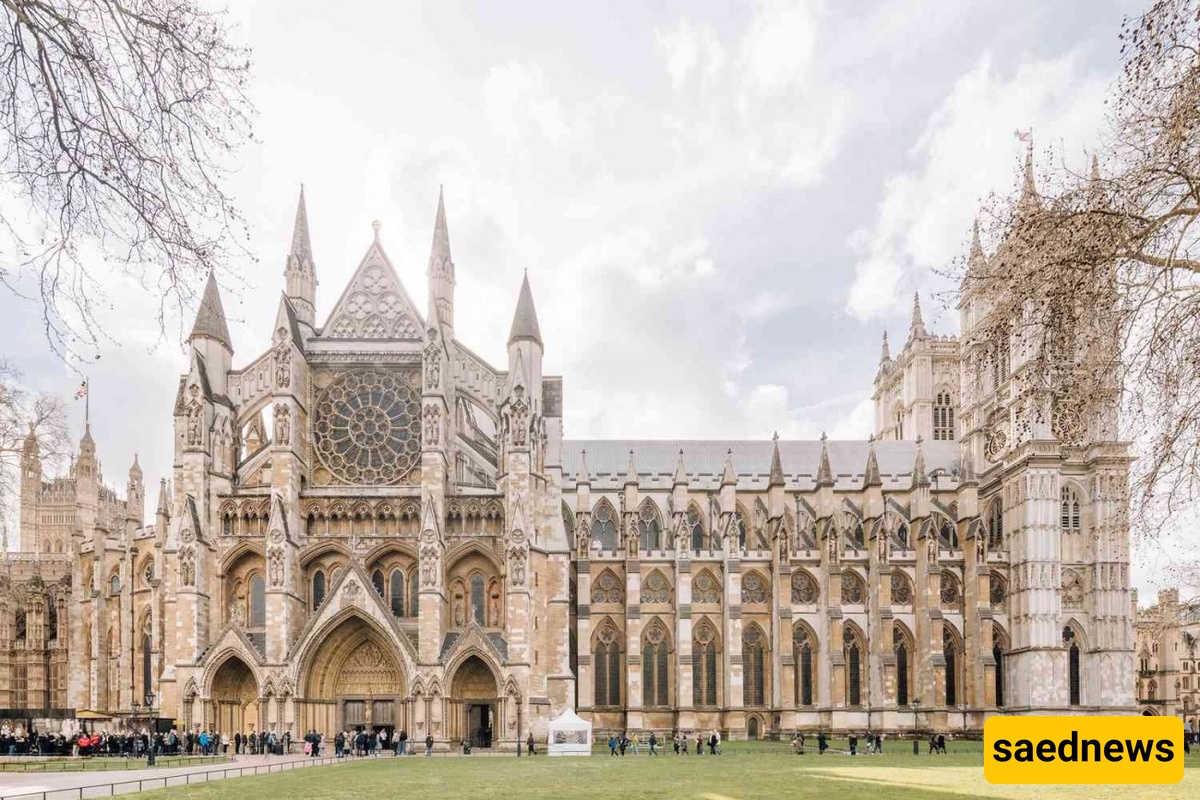
Westminster Abbey is located in central London, close to the Houses of Parliament and the River Thames. Its position in the historic Westminster district places it within one of the most important areas of London for British political, religious, and royal history.
The history of Westminster Abbey stretches back more than a thousand years.
Around 960 AD, Benedictine monks established a monastery beside the River Thames on what was then known as Thorney Island, an area that eventually became part of Westminster.
In the 11th century, Edward the Confessor commissioned a much larger church to replace the earlier monastery. The new building was constructed in the Romanesque style and dedicated to Saint Peter. Construction took approximately 25 years.
The name “Westminster” was used to distinguish the church from another religious foundation known as Eastminster, helping differentiate the two locations.
The church continued in this form for roughly two centuries. During the 13th century, Gothic architecture became increasingly popular, and King Henry III ordered Westminster Abbey to be rebuilt in the new architectural style. Parts of the earlier structure were retained during the reconstruction.
The Gothic rebuilding of Westminster Abbey progressed over many decades, with the principal medieval church completed during the late 13th century. Additional sections and architectural features were added over subsequent centuries, while the western towers were completed in the 18th century.
The abbey became the traditional setting for English and later British coronations from 1066 onward. It was eventually recognized alongside St Margaret’s Church and the Palace of Westminster as part of a UNESCO World Heritage Site.
Thirty-nine monarchs have been crowned at Westminster Abbey, while numerous kings, queens, princes, nobles, writers, and other notable figures have been buried or commemorated there.
One of the most famous areas inside Westminster Abbey is Poets’ Corner. It contains the graves and memorials of many important writers and literary figures.
Among those associated with Poets’ Corner are Geoffrey Chaucer, Charles Dickens, Thomas Hardy, William Shakespeare, T. S. Eliot, Jane Austen, and members of the Brontë family, along with many other influential figures from British literary history.
The abbey also contains a large stained-glass window dedicated to Isambard Kingdom Brunel, one of the most prominent engineers of the 19th century.
Westminster Abbey became part of the Church of England during the English Reformation. In 1560, it was granted special status as a royal peculiar, meaning that it was directly associated with the monarch rather than being under the jurisdiction of a diocesan bishop.
Although no monks now live at Westminster Abbey, religious services continue to be held there, particularly on Sundays and during major Christian festivals.
The abbey therefore remains both an active place of worship and one of Britain’s most important historic landmarks.
One of the quieter attractions at Westminster Abbey is College Garden, a historic garden concealed behind high walls and mature trees.
Entering the garden can feel like stepping into a different world from the busy streets of central London. The garden has a history of roughly 900 years and is considered one of England’s oldest gardens.
In the past, medicinal plants and herbs were cultivated there for use by the religious community. Today, the garden offers visitors a peaceful glimpse into another period of Westminster’s long history.
Westminster Abbey is home to the Tomb of the Unknown Warrior, commemorating an unidentified British soldier who died during the First World War.
The tomb is positioned prominently within the abbey and is distinguished from many of the other graves by its design and location. It represents the many unidentified soldiers who lost their lives during the war and has become an important site of remembrance.
The Tomb of the Unknown Warrior is particularly significant during national commemorations and remembrance ceremonies.
Westminster Abbey is situated in one of the busiest parts of central London, and there is no convenient large parking facility immediately beside the building. For this reason, public transportation is generally the most practical way to reach the abbey.
Its central location makes it easily accessible from other major London landmarks, including the Palace of Westminster, the River Thames, and other attractions in the Westminster district.
With its centuries-old architecture, royal connections, historic tombs, gardens, stained-glass windows, literary memorials, and continuing religious role, Westminster Abbey offers visitors an opportunity to experience many different aspects of British history in a single place.