SAEDNEWS: Palácio da Bolsa is a remarkable neoclassical landmark located in the historic center of Porto, Portugal. The palace is renowned for its magnificent interiors and the famous Arab Room, an exquisite space inspired by Moorish architecture.
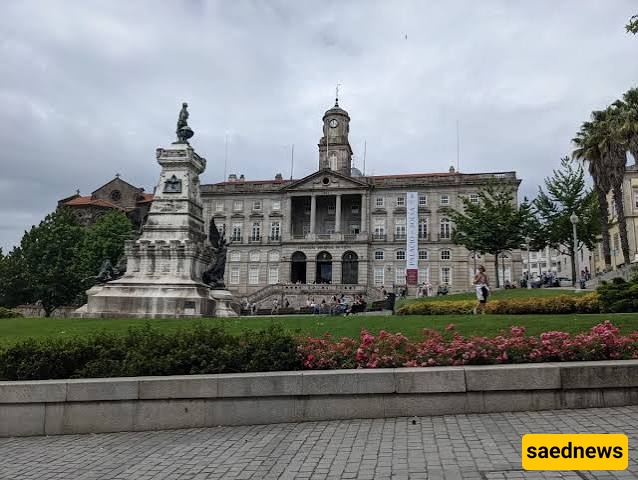
According to Saednews, Palácio da Bolsa (Portuguese for “Stock Exchange Palace”) is a historic building located in Porto, Portugal. The palace was constructed in the 19th century by the city’s Commercial Association (Associação Comercial do Porto) in the Neoclassical style. It stands in Infante D. Henrique Square, in the historic center of Porto, an area recognized by UNESCO as a World Heritage Site.
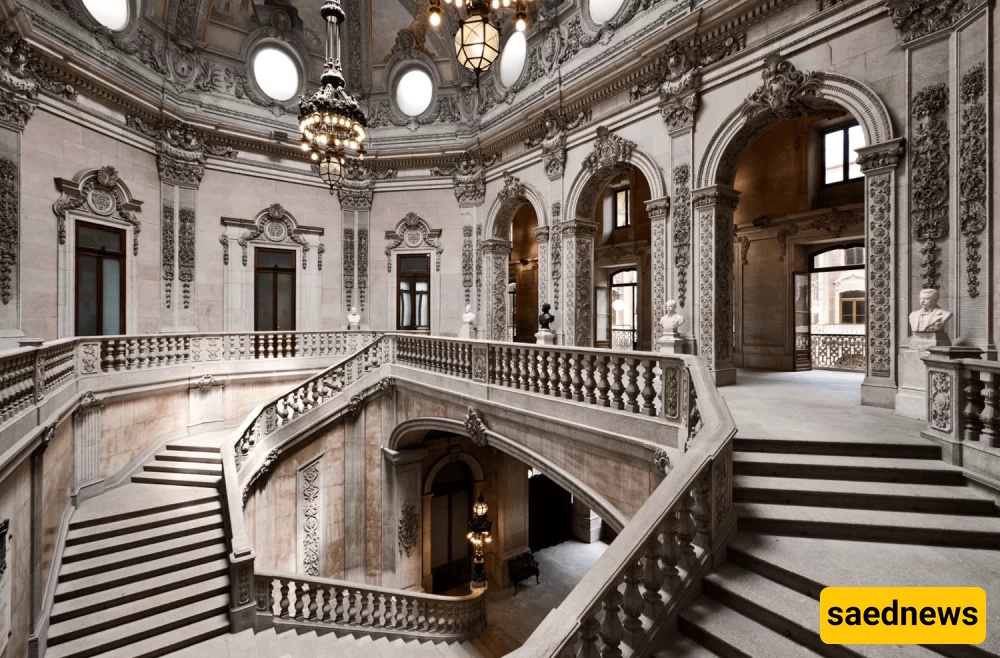
With its magnificent interior decorations and rich artistic details, Palácio da Bolsa has become one of Porto’s most important tourist attractions. The famous Arabian Hall, known for its exquisite ornamentation and Islamic-inspired architectural details, is considered one of the most remarkable and celebrated parts of the palace. Today, the building also hosts various events and ceremonies and remains an important cultural and historical symbol of Porto.
Palácio da Bolsa is located beside the Church of Saint Francis of Porto, which was once part of the Franciscan Monastery founded in the 13th century. In 1832, during the Liberal Wars, a fire destroyed the covered sections of the monastery, leaving only the church intact. In 1841, Queen Maria II donated the remaining monastery ruins to the city’s merchants, who decided to use the site for the headquarters of the Commercial Association.
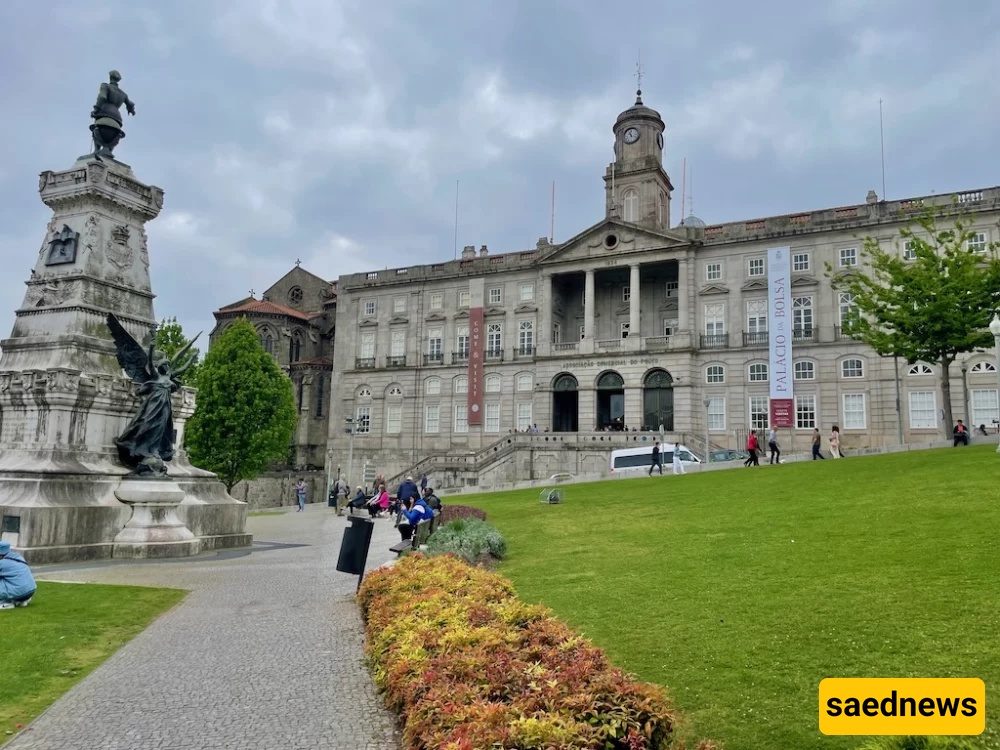
Construction began in 1842 based on the designs of Porto architect Joaquim da Costa Lima Júnior. He created a Neoclassical palace influenced by Palladian architecture and inspired by earlier buildings in the city. Most of the palace structure was completed by 1850, but the interior decoration continued until 1910, involving the work of numerous artists.
Palácio da Bolsa has been classified as a National Monument since 1982.
The first architect of Palácio da Bolsa, Joaquim da Costa Lima Júnior, was responsible for the project between 1840 and 1860. Inspired by Palladian Neoclassical architecture, he designed the overall structure of the building. This style can also be seen in other Porto landmarks, including Saint Anthony’s Hospital, designed by English architect John Carr, the English Factory by John Whitehead, and several works by Portuguese architect Carlos Amarante.
Although the main structure was completed around 1850, later architectural details were entrusted to several architects. Gustavo Adolfo Gonçalves e Sousa designed important elements such as the grand staircase and Arabian Hall, Tomás Augusto Soller created the metal dome over the courtyard, and Joel da Silva Pereira designed the Courtroom.
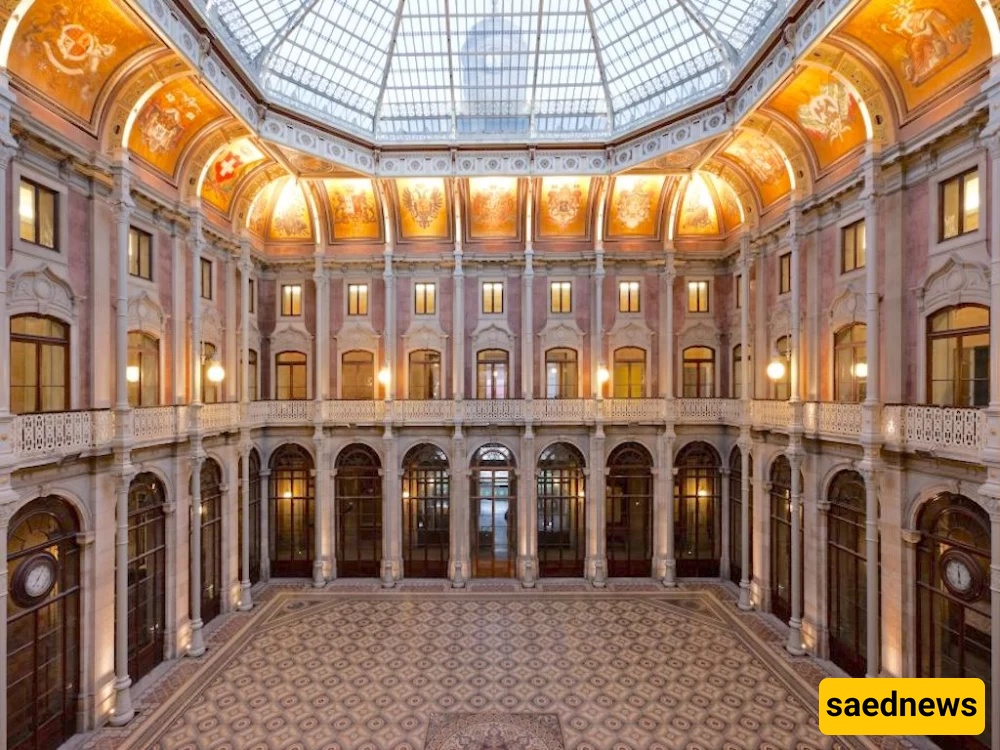
The interior of the palace, completed only in 1910, was decorated with remarkable craftsmanship by many artists. The central courtyard, known as the Nations’ Courtyard (Pátio das Nações), is covered by a large octagonal metal and glass dome designed by Tomás Soller and constructed after 1880.
The lower section of the dome is decorated with Portugal’s national coat of arms and the symbols of countries with which Portugal maintained commercial relationships during the 19th century. At the rear of the courtyard, a magnificent staircase built in 1868 by Gonçalves e Sousa leads to the upper floors. It is decorated with sculptures by renowned artists António Soares dos Reis and António Teixeira Lopes, while the ceiling paintings were created by António Ramalho.
Several rooms inside the palace, including the Courtroom, Assembly Hall, and Golden Room, feature furniture designed by José Marques da Silva, allegorical paintings by José Maria Veloso Salgado and João Marques de Oliveira, sculptures by Teixeira Lopes, and many other artistic works.
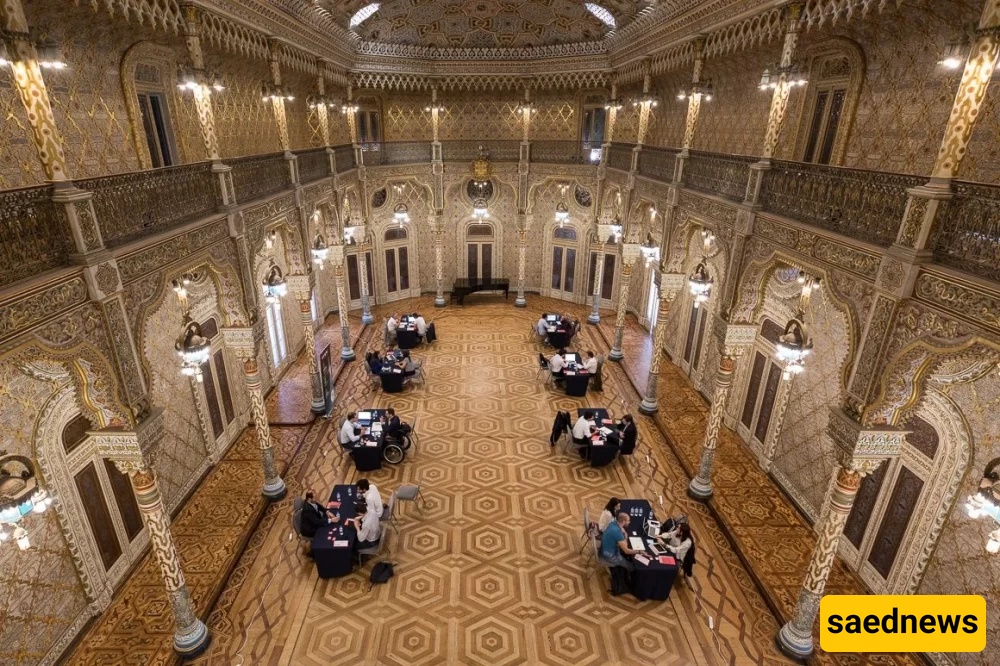
However, the most impressive section of the palace is the Arabian Hall, created between 1862 and 1880 by Gonçalves e Sousa. The room is decorated in the Moorish Revival style, which was fashionable during the 19th century. It serves as a reception hall for visiting dignitaries, officials, and presidents in Porto.
Palácio da Bolsa is situated in the historic center of Porto, Portugal. Due to its remarkable architecture, cultural importance, and historical significance, it is considered one of the city’s most popular attractions.
The Arabian Hall is famous for its luxurious decorations and architectural details inspired by Islamic design. Its intricate patterns, golden details, and Moorish-style elements make it one of the most beautiful and memorable areas of Palácio da Bolsa.
Construction of Palácio da Bolsa began in the 1840s, while the interior decoration was completed in 1910. The palace was originally created as the headquarters of Porto’s Commercial Association and as a center for business activities.
Palácio da Bolsa was designed in the Neoclassical style with strong influences from Palladian architecture. It is considered one of Porto’s most significant examples of this architectural tradition.
Palácio da Bolsa is famous for its outstanding architecture, fascinating history, and luxurious interiors, especially the Arabian Hall. The palace offers visitors a unique opportunity to explore Portugal’s cultural heritage and the historical importance of Porto as a center of trade and commerce.
With its rich history and extraordinary architecture, Palácio da Bolsa remains one of Porto’s most important cultural landmarks. This Neoclassical masterpiece served as a major commercial center in the 19th century and continues to attract thousands of visitors from around the world today.
From the magnificent Arabian Hall to its impressive ceremonial rooms, every corner of Palácio da Bolsa reflects the artistic achievements and proud heritage of Porto. Visiting this historic palace provides a remarkable journey into Portugal’s culture, architecture, and history.