SAEDNEWS: Uplistsikhe is one of the world’s oldest and largest rock-cut cities, featuring ancient caves, tunnels, and stone structures with a history spanning thousands of years.
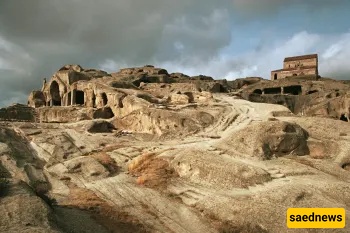
According to Saednews, Among the most remarkable and historically significant attractions in Georgia, located between the two major cities of Tbilisi and Batumi, is the ancient rock-hewn town of Uplistsikhe. This fascinating archaeological site attracts thousands of visitors from around the world every year due to its unique historical and architectural features. In ancient times, Uplistsikhe was considered one of the most important political and religious centers of pre-Christian Georgia, and today it is recognized as one of the largest ancient cave towns in the world.
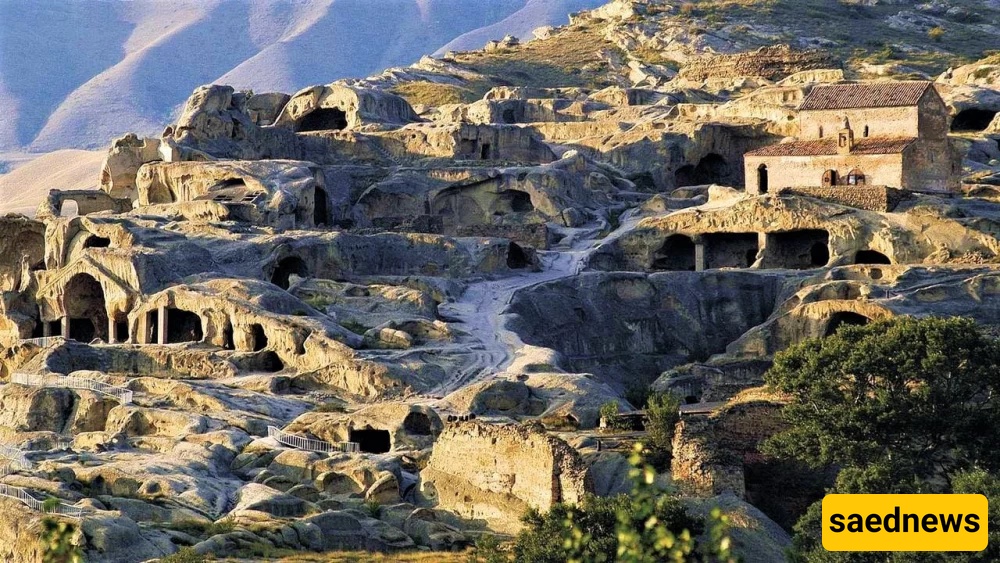
Although only ruins remain today, Uplistsikhe still preserves many valuable historical structures, including an ancient water reservoir, pharmacy, marketplace, amphitheater, and an old church.
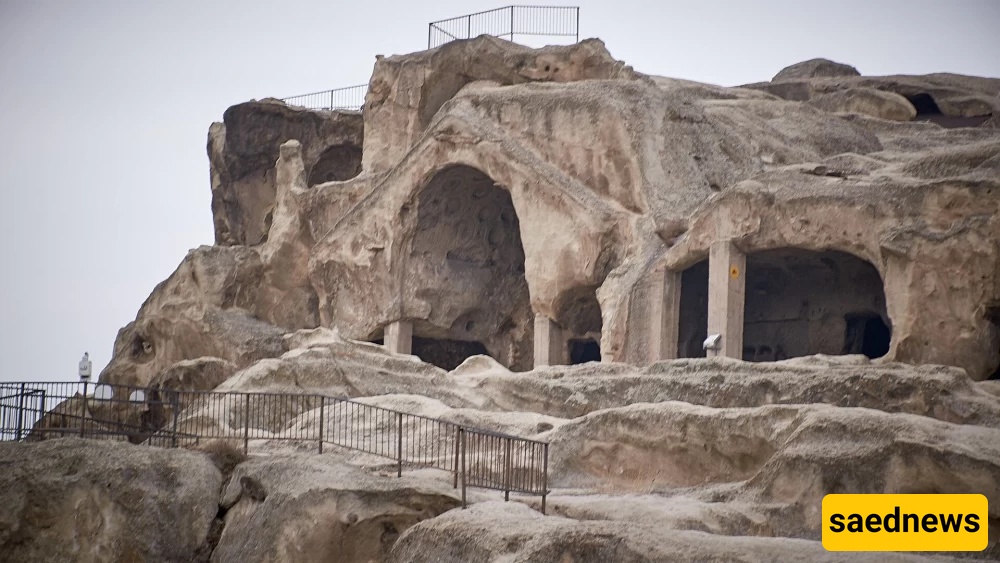
Built on a high rocky cliff along the western bank of the Mtkvari River, Uplistsikhe is one of the most extensive cave cities in the world. The site contains a variety of structures dating from the Early Iron Age to the Late Middle Ages.
Its unique architecture combines unusual rock-cut techniques influenced by Anatolia and the Iranian Plateau, along with the contributions of both Christian and non-Christian architects. This combination has given Uplistsikhe a distinctive character compared with other ancient rock settlements. The history of this remarkable city dates back to the 6th century BC.
Archaeologists and historians consider Uplistsikhe one of the oldest urban settlements in Georgia. Strategically located in the center of the ancient Kingdom of Kartli, it served as a major political, cultural, and religious hub for centuries.
Ancient records mention Uplistsikhe as an important settlement during the medieval period. However, after Christianity became the official religion of Georgia in the early 4th century AD, the city gradually lost its religious significance.
Following the Muslim conquest of Tbilisi during the 8th and 9th centuries AD, Uplistsikhe regained importance as a military stronghold. However, during the 14th century, repeated Mongol invasions and conflicts severely affected the city. Eventually, it was abandoned and became a deserted settlement, occasionally used as a shelter by Georgian warriors.
Many travelers who visit the city of Gori, the birthplace of Joseph Stalin, also include Uplistsikhe in their itinerary. Located approximately 10 kilometers from Gori, this ancient cave city is one of Georgia’s most important historical landmarks.
Parts of Uplistsikhe were damaged by an earthquake in 1920, causing some structures to collapse. Nevertheless, many significant remains continue to attract visitors, including the ancient water system, marketplace, amphitheater, the famous Church of Saint George, prison chambers, underground rooms, and other archaeological features.
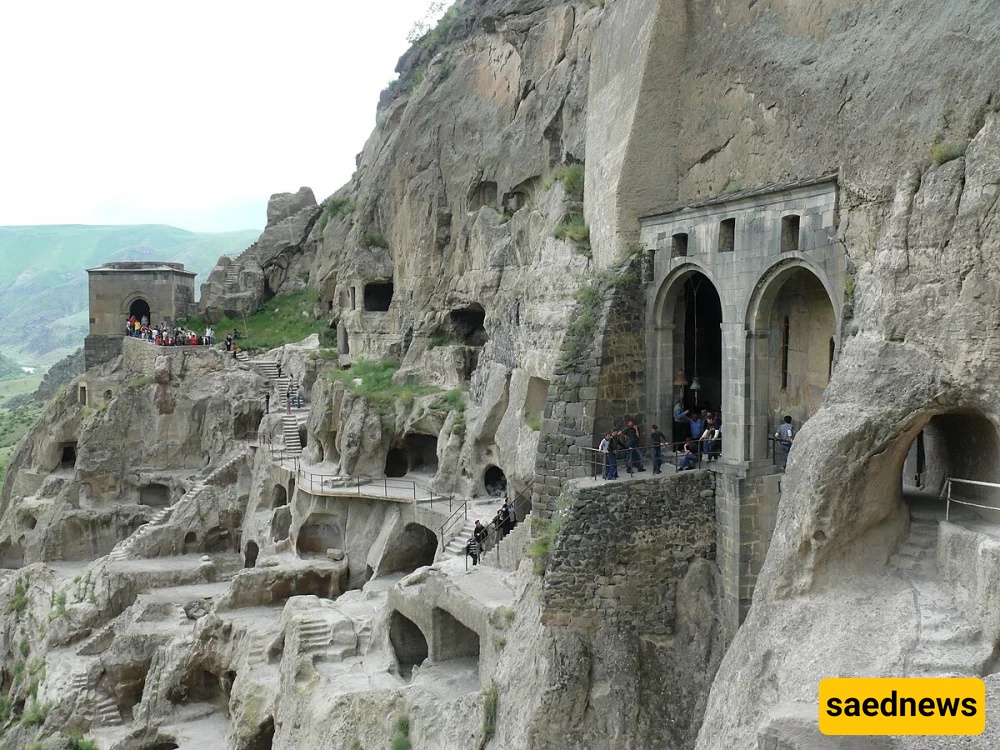
Extensive excavations carried out by archaeologists have revealed evidence of ancient beliefs and religious practices that existed in the region before the arrival of Christianity.
Because of its exceptional historical and cultural value, Uplistsikhe was recognized as one of Georgia’s important heritage sites and was included on the UNESCO World Heritage tentative list in 2007.
Uplistsikhe is divided into three main sections: northern, southern, and central areas. The central section is the largest part of the complex, covering approximately 8 hectares. Most of the structures in this area were carved directly into the rock, creating a remarkable underground and cliffside urban environment.
The central and southern sections are connected through a tunnel system that was once used for transportation and possibly as an escape route.
Most caves within the city are simple and undecorated. However, some larger structures feature beautifully carved ceilings designed to resemble wooden beams and tree trunks, demonstrating the skill of ancient craftsmen.
At the highest point of the complex stands a stone-built structure featuring a distinctive architectural style from the 9th and 10th centuries AD. Archaeological excavations have uncovered numerous artifacts from different historical periods, including jewelry, gold, silver, bronze objects, ceramics, and sculptures.
Many of these valuable discoveries are now preserved in the National Museum of Georgia in Tbilisi.
Located near Uplistsikhe, Gori is an industrial city in the Shida Kartli region of Georgia. Founded by one of Georgia’s most powerful kings, David IV, the city covers an area of approximately 800 hectares and lies between the Mtkvari and Liakhvi rivers. Gori is often considered the heart of the Shida Kartli region.
One of the most notable facts about Gori is that Joseph Stalin was born there and lived in the city until 1894. His childhood home has been transformed into a museum, and a large statue of Stalin was once displayed in the city. Many tourists visit Gori to explore its historical connection with Stalin before continuing their journey to Uplistsikhe, which is only a short distance away.
Distance between Uplistsikhe and Tbilisi: Approximately 98.8 kilometers
Travel time from Tbilisi: Around 1 hour and 34 minutes by car
Uplistsikhe: Georgia’s Timeless Historical Treasure
Uplistsikhe is more than an ancient cave settlement; it is a living record of Georgia’s early civilization, religious transformation, architectural creativity, and cultural heritage. With its rock-carved halls, ancient tunnels, historic temples, and breathtaking location above the Mtkvari River, Uplistsikhe remains one of Georgia’s most unforgettable destinations for history lovers and travelers seeking a journey into the past.