SAEDNEWS: Sosan Plain is, in fact, a vast meadow that encompasses several villages. Its fertile fields, abundant water resources, and suitable climate provide all the necessary conditions for farming and gardening for the warm-hearted Bakhtiari people of this region.
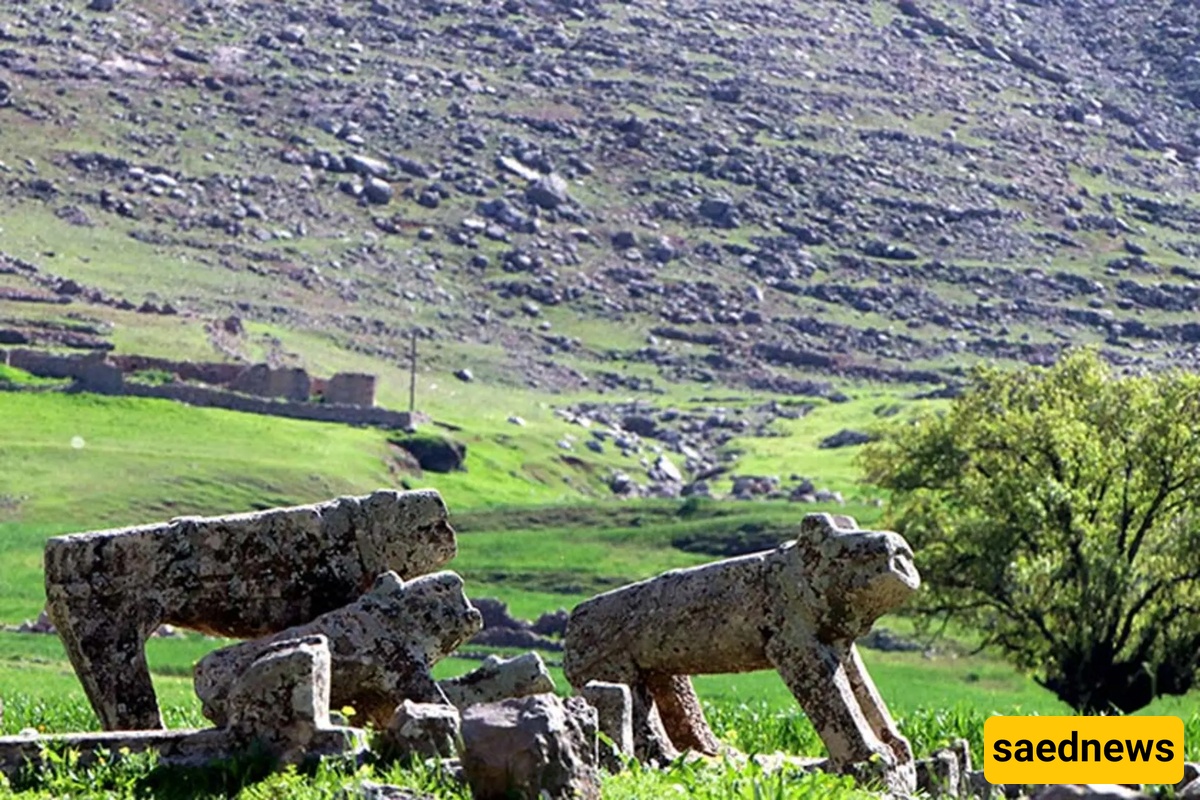
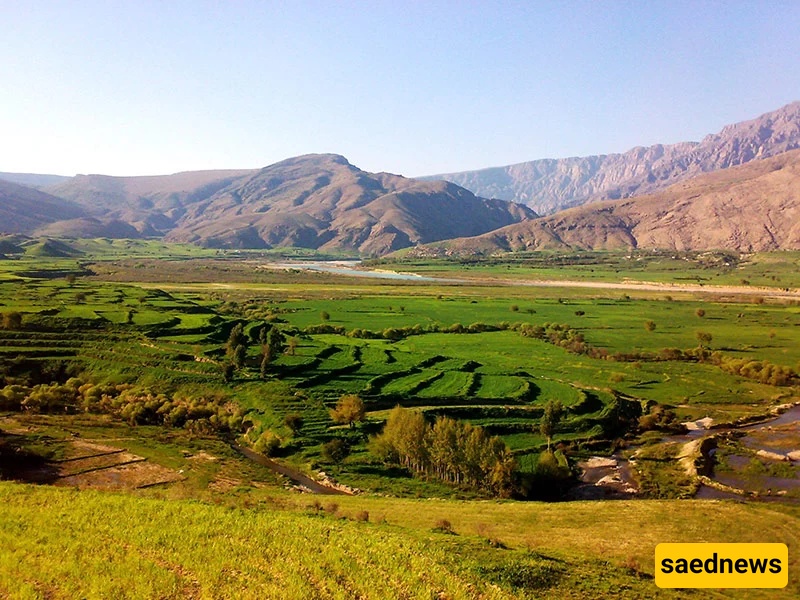
According to Saednews, Dasht-e Sosan (Sosan Plain) in Izeh is a farm-like area filled with natural and historical beauty, located about 35 kilometers from the city of Izeh in Khuzestan Province. It has a distinctive and unique landscape that inspires every nature-loving traveler, especially during Nowruz (the Iranian New Year). The Sosan Plain is a lush green meadow filled with red flowers, and the Karun River divides it into two parts.
Izeh County is one of the counties of Khuzestan Province in Iran. Its administrative center is the city of Izeh. Located in the eastern part of Khuzestan, Izeh is a historical city. The vast majority of its population belongs to the Bakhtiari tribe, one of the largest tribes in Iran.
Izeh has a mild climate in spring and summer, while in winter it is usually the coldest city in Khuzestan Province. The city is primarily agricultural rather than industrial. Its most important product is rice, cultivated mainly in Sosan, Sheyvand, Midavood, and Chit Anbeh areas. Izeh also has stone and mineral mines, but it is best known for its ancient attractions such as Kul-e Farah, the Shekaft-e Salman rock reliefs, Khong-e Azhdar, and of course, Dasht-e Sosan.
The county is divided into three districts: the Central District, Sosan District, and Dehdez District, and includes two cities: Izeh and Dehdez. The Sosan Plain itself is divided into two parts: Western Sosan and Eastern Sosan.
Western Sosan is known for its beautiful narcissus flowers. The center of this rural district is the village of Torshak. Other villages in Western Sosan include stepped villages such as Mehrnan, Lolu, Deh Sheikh, and Deh Sorya. These terraced villages are among the most famous in Iran after Masouleh in the north. They are built in a similar beautiful style and attract many visitors, although fortunately they are not as crowded as Masouleh.
While Western Sosan is ideal for village tourism, Eastern Sosan—centered around the village of Jangeh—offers an excellent opportunity for experiencing untouched natural landscapes. Eastern Sosan includes other villages such as Ab Bid, Shimen, and Faleh. Its oak forests are among the most beautiful natural sights in Iran. The region’s rice fields are also highly scenic and worth visiting.
There are two main routes to reach Dasht-e Sosan:
From Izeh, after passing the villages of Piyan and Takhtor, you will reach a fork. The right path leads to Dasht-e Sosan. After passing the village of Kashgeli, you will encounter another fork; both routes will eventually take you to the Sosan Plain.
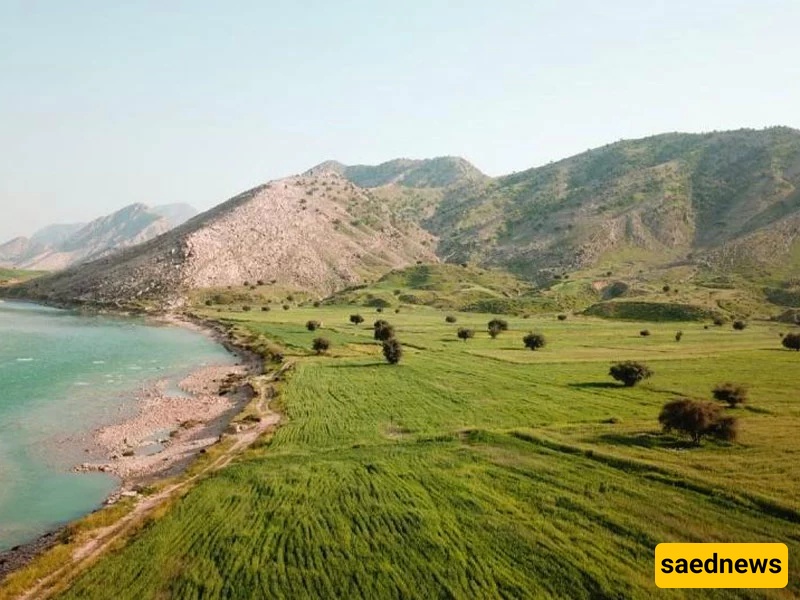
On the first route, if you take the left turn at the first fork toward the Karun 3 Dam and Imamzadeh Sultan Ebrahim, you can park your car and continue the journey toward Dasht-e Sosan by boat along the Karun River—a journey that is both enjoyable and scenic.
The lush and beautiful landscape of Dasht-e Sosan, especially in spring, is its main attraction. Red poppies in a green meadow alongside the Karun River create an exceptional environment for walking and enjoying nature.
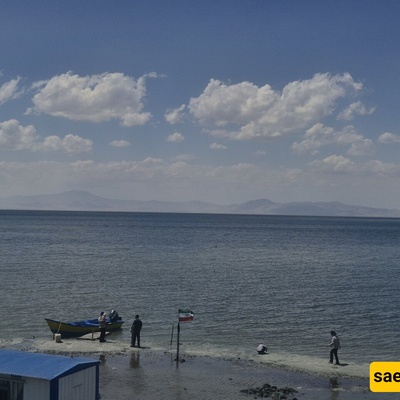
Boating on the Karun River adds to the enjoyment of the trip. In fact, boats are also used as a means of transportation between villages in the region.
Since the area is connected to the Karun River, fishing is one of the common leisure activities for visitors.
The Sosan Plain includes old villages with warm and hospitable residents. Visiting these villages allows travelers to become familiar with the local customs and lifestyle of the people of Izeh.
In addition to its natural beauty, the region offers valuable historical sites. The ancient Dez–Pars route once passed through this area, connecting the central Iranian plateau to Mesopotamia and Shush (Susa). Fortresses were built along this route to support caravans and ensure security. Remains of these ancient structures can still be seen in the region today.
Various archaeological sites, including ancient mounds and lion-shaped stone tombs symbolizing the bravery of the deceased, make Dasht-e Sosan an exceptional destination for historical tourism.
For overnight stays, there are two main options:
Camping in the plain, away from agricultural lands. Visitors should note that there are no shops nearby, so all necessary supplies must be prepared in advance.
Staying in local eco-lodges. One option is the Papila eco-lodge, where visitors can spend memorable nights in Dasht-e Sosan.