SAEDNEWS: Salt shakers are not always meant to be small containers on dining tables. I know a 6-kilometer-long salt shaker, which is called the Namakdan Salt Cave of Qeshm.
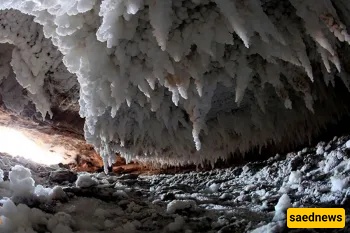
According to Saednews, Seeing salt in its crystallized form stretching through a 6-kilometer-long path is one of the remarkable attractions of Qeshm Island. To experience this extraordinary salt route—where some sections are whiter than snow and others resemble rainbow-like colors—you must head toward Hormuz Island. At the top of a high mountain lies the Namakdan Salt Cave of Qeshm, also known as Qeshm Salt Cave or the “Three Naked Men Cave,” waiting to reveal sights unlike anything you may have seen before.
While walking through Hormuz Island and exploring its diverse attractions, you encounter a dome-shaped mountain rising more than 200 meters high. This mountain, known as a salt dome, has undergone significant natural transformations over time.
These geological processes have formed what is considered the world’s longest salt cave, stretching over 6 kilometers within the heart of this mountain.
The salt formations are believed to date back to the pre-Cambrian era, making them over 500 million years old. Today, the cave—also known as Namakdan Salt Cave or “3N Salt Cave”—is recognized as part of a global geopark and was officially registered on Iran’s National Natural Heritage list in 2011.
To visit the attractions of Qeshm Island, you first need to know their exact locations.
The salt cave is located about 90 kilometers from Qeshm City, in the southwestern part of the island. Near the southern coast of Hormuz Island, visitors can witness this astonishing natural artwork shaped over thousands of years.
Hormuz Island
There are two main routes to reach Qeshm Namakdan Salt Cave:
From Qeshm City, pass through Ramkan, Tanban, and Tabl villages. Continue along the northern coastal road, passing Chahoo and Darkoo villages. Then head south toward Gouri village and Kani village. After a 10-kilometer dirt road, you will reach the cave.
Again start from Qeshm City through Ramkan, Tanban, and Tabl. Then head south toward Salkh village. From there, continue on a 22-kilometer dirt road until you arrive at the salt cave.
The Qeshm Salt Cave is a natural site and is accessible at any time of the day or night. However, due to the presence of native wildlife such as bats and birds, it is recommended to visit during the early morning hours until a few hours before sunset for safety and better visibility.
Salt caves typically form in dome-shaped geological structures in hot and dry regions like Qeshm. Low rainfall plays a key role in their formation. As precipitation decreases, underground salt layers gradually rise toward the surface due to their buoyant nature and lower density compared to surrounding rocks.
Over time, geological shifts have created multiple chambers within the cave.
The first chamber is located about 700 meters from the entrance and contains minerals such as magnesium, which are believed to be beneficial for athletes. The mineral-rich environment is also considered potentially helpful for respiratory conditions like asthma.
The cave was officially discovered in 1998 by Czech geologists working in collaboration with the University of Shiraz. Since then, it has attracted visitors from around the world.
The name “Three Naked Men” originates from the discovery expedition. Due to extremely salty water around the cave, researchers had to work without clothing because salt sticking to fabric made movement difficult and dangerous.
The cave consists of multiple corridors. The first is open to the public, while the second requires crawling through narrow passages. The third is reserved for experienced cavers.
The main entrance faces south, allowing sunlight to illuminate the cave up to 20 meters inside. Beyond 100 meters, artificial lighting such as flashlights is required to explore safely.
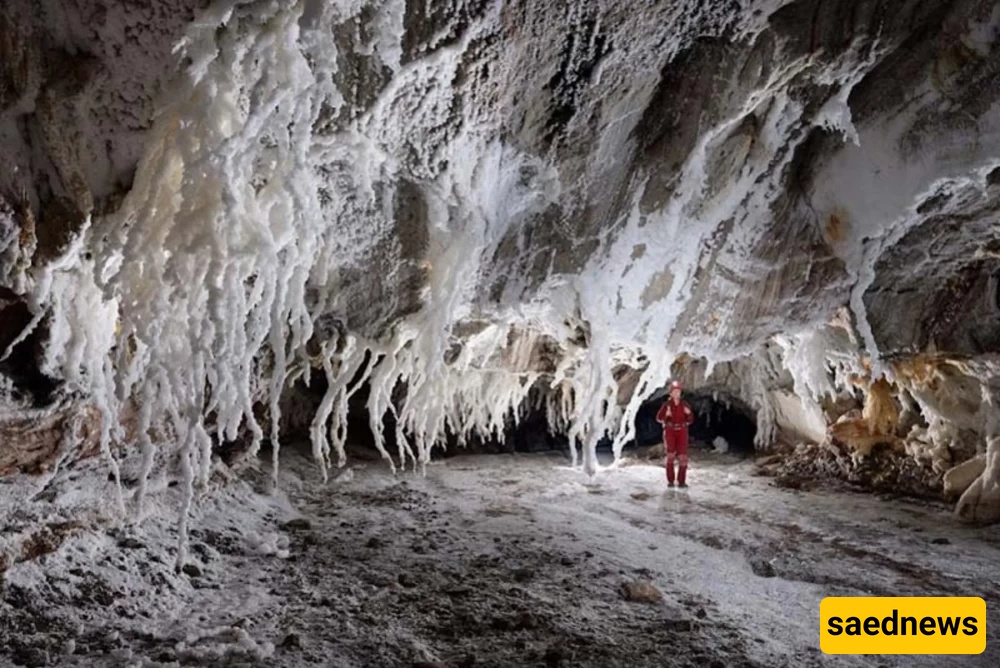
Inside the cave, visitors can observe stunning crystallized salt structures:
Salt chandeliers hanging from the ceiling formed by moisture and mineral crystallization
Stalactites and stalagmites creating crystal-like formations along walls and floors
Continuous airflow inside the cave leads to ongoing formation of new structures
These formations create a surreal and colorful underground landscape.
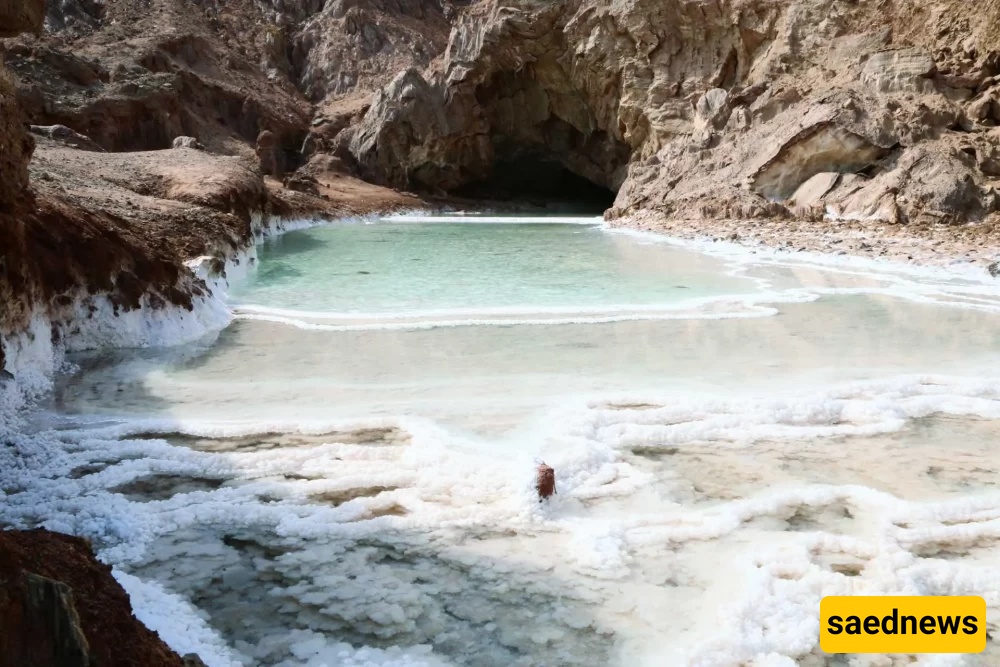
Deeper inside the cave, a continuous water stream can be heard. This natural spring reflects surrounding formations like a mirror, enhancing the beauty of the environment. Minerals such as iron oxide and hematite are also found in the area.
The salt cave is surrounded by many attractions on Qeshm Island:
Chahkooh Canyon (43 km away)
Hara Mangrove Forest (54 km away)
Zeytoon Park (about 100 km away)
Other nearby sites include Goran village, Galleh Dari Bath, and Bām-e Qeshm viewpoint.
The best time to visit is from mid-autumn to mid-spring (October to April), when the weather in southern Iran is most pleasant. Days can be hot, while winter nights may become cold, so early morning visits are recommended.
Bring a flashlight or headlamp, light snacks, and water
Do not enter without a guide if you are inexperienced in caving
Avoid touching or removing salt formations
Proper caving equipment is required for deeper chambers
Bats and small white insects live inside the cave
Entry is free of charge
Qeshm Namakdan Salt Cave is one of the most extraordinary natural formations in Iran and the world. With its ancient geological history, vast underground corridors, and stunning salt crystallizations, it offers a unique experience for nature lovers and adventure seekers exploring Qeshm Island.