SAEDNEWS: 140-Year-Old Historic Mansion of Anis al-Dawla, Queen of Iran
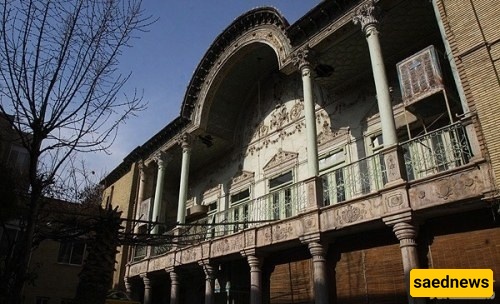
According to the tourism desk of Saed News, the Anis al-Dawla House is a mansion whose history is unknown to most passersby. It is a white-painted building located behind a bus stop, with none of the outward grandeur typical of Qajar-era houses. What immediately draws attention to this structure is a large sign reading “Tehran Sheep Meat Supply and Distribution Union.”
This historic mansion, with 140 years of history, belonged to Fatemeh Soltan Khanom Anis al-Dawla, the third legally married wife of Naser al-Din Shah Qajar, known as the Queen of Iran. Anis al-Dawla was a prominent and influential wife of Naser al-Din Shah (1848–1896). This house, named after her, is believed to have been her residence during the final months of her life after the assassination of the Shah.
Anis al-Dawla was the most beloved and influential figure in the court of Naser al-Din Shah. Her status was higher than that of the other royal wives, and she can practically be considered the unofficial queen of Iran. She received royal honors such as the Sun Sash and an imperial portrait.
Born Fatemeh, she was an orphan girl who rose to become the favorite consort in the Shah’s large inner court. She was from the village of Emamé in Lavasan. During one of Naser al-Din Shah’s hunting trips, he saw her while she was tending her uncle’s sheep. After a brief conversation, the young Fatemeh captured the Shah’s attention. Upon returning from the hunt, he brought her to the palace and entrusted her to one of his favored wives, Jeyran, to be trained in court etiquette and royal manners.
After Jeyran’s death, the Shah married Anis al-Dawla. Following her marriage, she steadily rose in influence and became an unofficial queen of Iran. Despite not matching modern standards of beauty, the Shah was deeply attached to her, and she reportedly had the authority to dismiss or appoint officials.
Among the 84 women of Naser al-Din Shah’s harem, only one was said to have truly loved him. It is recorded that after his assassination, when her monthly allowance was brought to her bearing his portrait, she cried so intensely that she fell ill and eventually died from grief.
Her charitable endowments were also significant, including donations such as a diamond aigrette to the shrine of Imam Ali (AS), a pearl curtain to the shrine of Imam Hussein (AS), a silver shrine structure for the martyrs of Karbala, a diamond tiara to the shrine of Imam Reza (AS), renovation of the gilded silver door of Goharshad Mosque, endowment of Kashanak village, and the construction of a bridge in Naserabad in Lavasan, among others.
The Anis al-Dawla mansion is located in the southern section of Tehran’s longest street, Valiasr Street, above the Molavi crossroads, opposite the Mahdieh of Tehran.
During the Pahlavi era, the original Qajar owners sold the property to the Ministry of Education. It was converted from a residential house into a school, where Professor Mahmoud Hesabi was among its students. In 1951, the building was acquired by a private owner named Nader Esfahani. From the 1970s, due to its proximity to the slaughterhouse, it was repurposed as the Tehran Sheep Meat Union building, a function it still serves today.
The mansion is a two-story building with an area of 721 square meters. It has two entrances from the street: one leading directly into the building and the other into the courtyard. The courtyard features a large central pool surrounded by ancient tree trunks.
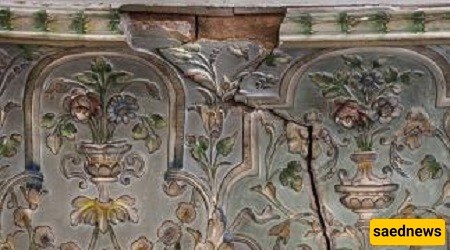
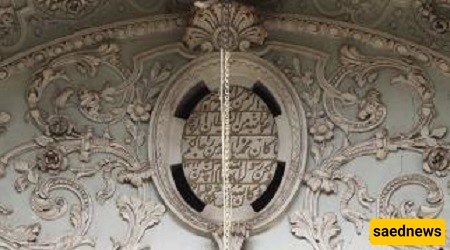
Its decorative elements include Greek-style column capitals, carved columns with plaster bases, painted stucco work, and old fireplaces.
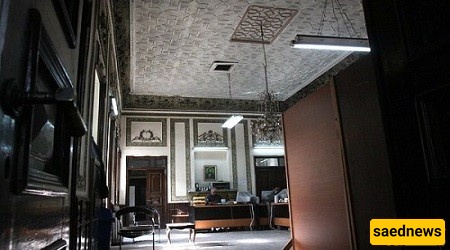
The ground floor is slightly lower than the courtyard level and includes a southern-facing veranda, two main rooms north of the veranda, a storage room on the western side, and kitchen, bathroom, dressing room, and toilet facilities on the eastern side.
The upper floor also has a southern veranda, two large halls to the north of it, a service area (pantry), and an antechamber on the eastern side of the halls. A staircase on the western side connects it to the lower floor.
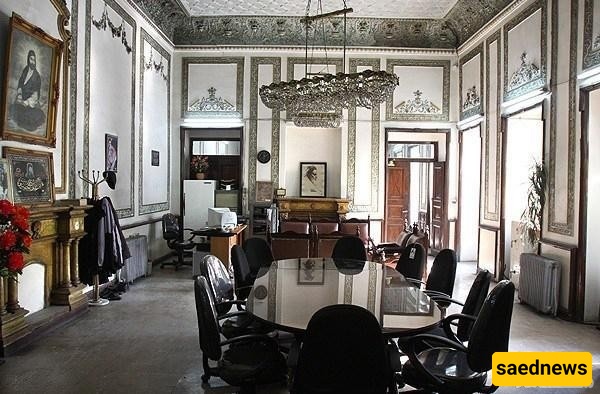
According to the head of the butchers’ union, who has grown tired of working in a building over which they have no authority to make changes, numerous correspondences have been sent to the Cultural Heritage Organization and the municipality requesting the purchase of the building and its transformation into a cultural center. However, these efforts have so far been unsuccessful. The Cultural Heritage Organization has only carried out restoration work, while the owner’s main request remains the sale of the property.