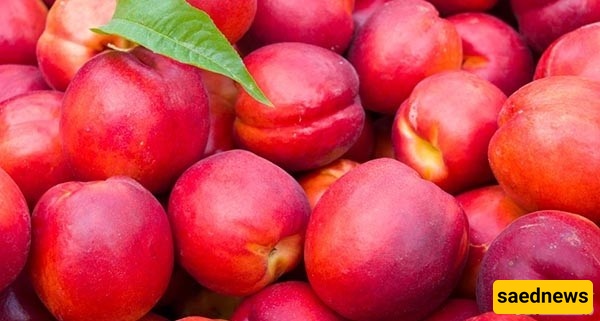
SAEDNEWS: Nectarine is a variety of peach with a recessive gene that produces fruit without fuzz. For this reason, it is also known as a smooth-skinned peach. It has a pleasant aroma and a sweeter, more enjoyable taste compared to regular peaches.
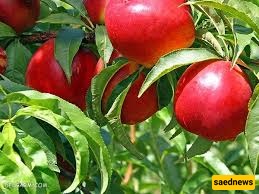
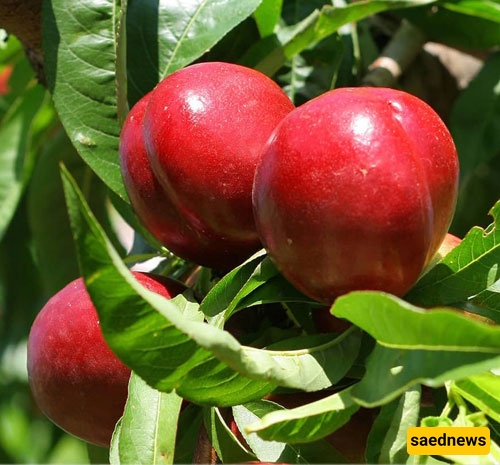
According to Saednews, Nectarine is a fruit from the peach family. It is a type of peach with a recessive gene that produces fruit without fuzz, which is why it is also known as a smooth-skinned peach. It has a pleasant taste and is generally sweeter than a peach.
Nectarine is a type of peach that originated from a vegetative mutation in one of the peach genes and has existed for as long as peaches themselves. This mutation occurs frequently in nature and can shift in both directions (from peach to nectarine and from nectarine back to peach). As a result, peaches lose the fuzz on their skin and develop the distinctive color, aroma, and flavor of nectarines, while nectarines may revert back to peaches.
Peaches and nectarines can also be produced from each other’s seeds and are mutually cross-compatible for pollination. In Iran, around 20 nectarine varieties exist, the most important being the yellow nectarine and red nectarine, both associated with Mashhad.
In many fruit trees, seed propagation is uncommon because cross-pollination leads to variable offspring. However, seeds from stone fruits such as nectarines and peaches often retain many desirable traits from their parents. Nectarine trees grown from seeds usually produce fruit similar to the parent fruit.
The best time to collect seeds is in summer from fully ripened fruit. Some early-ripening varieties may produce underdeveloped seeds that do not germinate well.
Remove the seed from ripe nectarines and allow it to dry for 3–4 days. Drying makes it easier to extract the inner seed by cracking the hard shell. Carefully crack the pit without damaging the kernel inside.
Nectarine seeds contain natural germination inhibitors. Cold storage, such as refrigeration, helps deactivate these substances. In nature, winter cold serves the same purpose. After cold treatment, seeds are soaked in water for one night and then planted in pots at a depth of about twice the seed’s length. Germination typically occurs within one month at around 23°C.
Seed-grown nectarine trees begin to bear fruit after approximately 5–7 years.
Climate: Nectarines are less cold-hardy than apples and pears, similar to quinces. Critical winter damage occurs around –21°C, while sudden drops to –9°C to –13°C can damage buds and young shoots. They require 400–1000 chilling hours below 7°C to break winter dormancy. Nectarines tolerate summer heat well and produce high-quality fruit in warm climates.
Tree lifespan: Nectarine trees are relatively short-lived due to their brittle wood. The wood’s fragility is linked to a high ratio of bark to central core. For this reason, they are often trained using an open-center system to prevent branch breakage.
Pollination: Flowers appear in spring before leaves, either singly or in pairs, with a diameter of 2.5–3 cm, pink color, and five petals. Most varieties are self-pollinating. Wind can assist pollination, but introducing bee hives increases yield. Dry weather during flowering is preferred. Blooming occurs in early spring after almond and apricot and about three weeks before apple. Early varieties ripen in early summer, while late varieties ripen in early autumn.
Soil: Nectarine roots are sensitive to poor soil aeration and highly susceptible to waterlogging. They grow best in light soils with a depth of 1–1.5 meters and proper drainage.
Nectarines are commonly propagated through grafting, similar to peaches. They can be grafted onto peach, apricot, almond, and plum rootstocks.
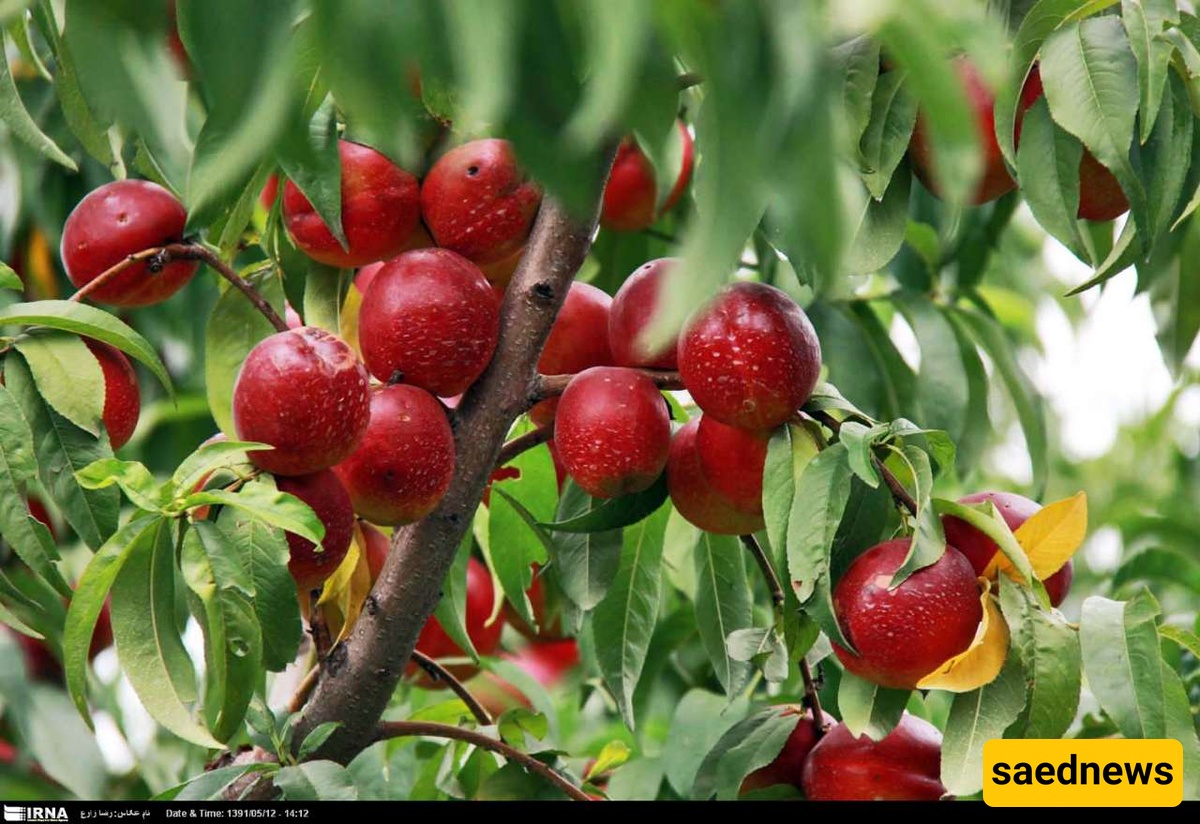
Plant spacing for standard varieties is typically 6–7 meters. A well-managed orchard can yield 40–50 tons per hectare. In trellis systems, planting density is higher and yields can reach up to 110 tons per hectare.
When planting nectarines in pots, selecting suitable seeds is important. Dwarf varieties are recommended if fruit production is desired; otherwise, any nectarine seed can be used for ornamental purposes.
A pot diameter of 45–90 cm is recommended as the tree grows. Do not chew the seed to remove fruit flesh, as saliva may affect germination ability.
Separate the seed from the fruit flesh. Drying the fruit for 3–4 days in the shade helps with removal.
Carefully crack the hard shell without damaging the kernel.
Cold-stratify the seed in a plastic bag inside a refrigerator for several days to deactivate germination inhibitors. Avoid storing near bananas, as ethylene can reduce germination ability.
Soak the seed in water overnight.
Plant in a pot filled with a suitable soil mix (garden soil and sand), at a depth twice the seed’s length.
Keep the pot at around 23°C. Germination occurs within about one month. With proper care, the seedling will grow and may bear fruit in 5–7 years. As it grows, transplant into a larger pot and apply regular fertilization.