SAEDNEWS: How to Make Delicious, Thick, and Creamy Persian Lentil Soup: Traditional Restaurant-Style Recipe with Potato, No Tomato Paste, Healthy, and Elegant Variations, Plus Tips for Perfect Texture and Rich Flavor.

According to Saednews, Adasi, also known as Persian lentil soup, is a simple, traditional dish made with affordable, everyday ingredients. It is a popular choice for breakfast or a light meal. A perfectly cooked Adasi should be rich in flavor, aromatic, thick, and creamy, without being too watery or overly heavy.
In this guide, you will learn how to make authentic Persian Adasi step by step, along with practical tips and techniques to achieve a delicious, restaurant-quality result.
This recipe serves 4 people. To prepare Adasi for two, simply halve all the ingredients.
Ingredient | Amount |
|---|---|
Lentils | 2 cups |
Onions | 2 medium |
Tomato paste | 1 heaping tablespoon |
All-purpose flour | 1 level tablespoon |
Butter (optional) | As needed |
Vegetable oil | 2 tablespoons |
Turmeric and black pepper | To taste |
Ground cumin (optional) | ¼ teaspoon |
Salt | To taste |
Boiling water | Approximately 5–6 cups |
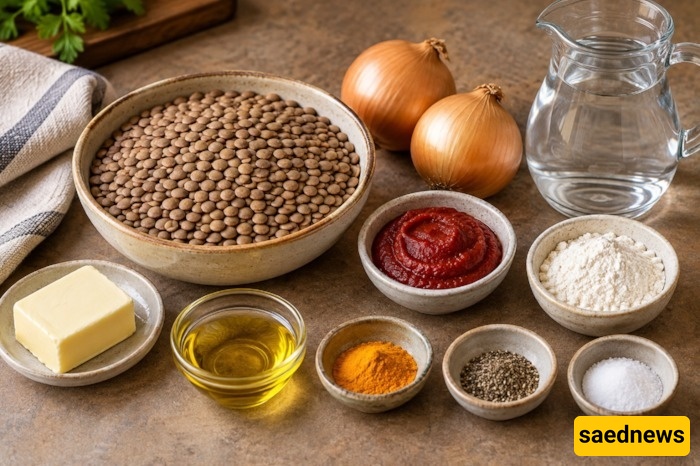
Follow these steps carefully to prepare thick, flavorful lentil soup with a rich texture.
Sort through the lentils and remove any stones or unwanted particles. Rinse them several times under cold water until the water runs clear.
Soaking lentils is not essential, but if they are relatively old or you want a more predictable cooking time, soak them in water for approximately 30–60 minutes. Drain before cooking.
Older lentils generally take longer to soften, and cooking times can vary depending on the variety and freshness.

Finely and evenly chop the onions.
Heat the vegetable oil in a large pot over medium heat. Add the onions and sauté until soft and golden brown. Do not rush this step, as properly caramelized onions create the foundation of Adasi's flavor.
Set aside approximately one-third of the fried onions for garnishing later.
Add turmeric and black pepper to the remaining onions. Stir for 30–45 seconds until fragrant. Avoid overheating or cooking the turmeric for too long, as it can develop a bitter taste.

Add the rinsed lentils to the pot and pour in approximately 5 cups of boiling water.
Increase the heat until the water reaches a boil, then reduce the heat to low and allow the lentils to simmer gently.
Leave the pot partially covered to allow excess steam to escape and make it easier to control the consistency.
Cook for approximately 30–45 minutes, stirring every 10–15 minutes.
If the water evaporates before the lentils become tender, add boiling water, about half a cup at a time. Avoid adding cold water.
Cooking time depends on the type and age of the lentils. Some varieties soften quickly, while others require additional time.

Once the lentils are almost tender, melt the butter in a small pan over low heat.
Add the tomato paste and sauté for approximately 2 minutes until its color deepens and its raw smell disappears.
Transfer the fried tomato paste to the lentil pot and stir well.
Frying the tomato paste separately improves its flavor and removes its raw taste. It also allows the lentils to become mostly tender before acidic ingredients are introduced.

Avoid adding flour directly to the pot, as it may form lumps.
Add one level tablespoon of flour to the same pan used for frying the tomato paste. Add a little butter or oil and cook over low heat for approximately one minute, just long enough to remove the raw flour smell without significantly changing its color.
Gradually add approximately one cup of hot lentil broth to the flour mixture while stirring continuously until smooth.
Slowly pour this mixture into the pot, stirring the lentils constantly.
Tip: A small amount of flour is commonly used in restaurant-style Adasi recipes to create a thicker consistency. However, adding too much can make the soup pasty.

Once the lentils are completely tender, remove one ladleful of the soup.
Use the back of a spoon or a potato masher to partially crush the lentils. Return the mixture to the pot and stir.
There is no need to puree all the lentils. The goal is to break down some of them so their natural starch thickens the broth.
This simple technique creates a naturally creamy and rich consistency.

After adding the tomato paste and flour mixture, season with salt and reduce the heat to low.
Allow the soup to simmer gently for another 15–20 minutes.
Stir occasionally, making sure to scrape the bottom of the pot to prevent sticking, especially as the soup becomes thicker.
If the Adasi becomes too thick, add a little boiling water. If it is still too thin, leave the pot uncovered and continue cooking for a few more minutes.

Keep in mind that hot Adasi should be slightly thinner than your desired serving consistency. It will naturally thicken as it rests and cools.
How do you know when Adasi is ready?
The lentils should be completely soft but should still retain some of their shape.
When you run a spoon through the soup, the trail should remain visible for one or two seconds before slowly filling in.
If the liquid immediately flows back into place like water, the soup needs more cooking time.
Remove the pot from the heat and let the Adasi rest for 5–10 minutes.
Check the seasoning and consistency once more. Garnish with the reserved fried onions and, if desired, add a small piece of butter on top. It will melt into the hot soup and enhance its flavor.

If the lentil flavor tastes slightly raw or heavy, add a small amount of fresh lemon juice or verjuice (sour grape juice) toward the end of cooking. Its mild acidity helps balance the flavor.
For a different aroma, add a little cumin or cinnamon. Use these spices sparingly so they do not overpower the natural flavor of the lentils.
If serving Adasi for breakfast, adding butter just before serving provides better flavor than using a large amount at the beginning of cooking.
If lentils cause digestive discomfort, briefly soaking them and discarding the soaking water before cooking may help some people.
To store leftover Adasi, allow it to cool and transfer it to an airtight container in the refrigerator. Add a little water when reheating because the soup thickens as it chills.
If you plan to freeze Adasi, keep it slightly thinner than your preferred serving consistency. It will become thicker after thawing and reheating.

To prepare Adasi with potatoes, peel one medium potato and cut it into small cubes.
Follow the original recipe for cooking the lentils. When they are approximately halfway cooked, add the diced potatoes to the pot and continue cooking until both ingredients are completely tender.
There is no need to add flour in this version. The natural starch from the potatoes, combined with the starch released by the lentils, is enough to thicken the soup.
Toward the end of cooking, mash some of the softened potatoes together with a little of the cooked lentils using a spoon or potato masher. Return the mixture to the pot and stir well.
Add the tomato paste, spices, and salt as described in the original recipe.
Allow the soup to simmer for another 10–15 minutes over low heat with the lid partially open.
If it becomes too thick, add a little boiling water. If it remains too thin, continue cooking uncovered until it reaches your desired consistency.

To make a more elaborate version of Adasi, start with the basic recipe and introduce a few flavorful additions.
Replace regular water with chicken stock, beef broth, or bone broth for a deeper and richer flavor.
For a more special presentation, sauté sliced mushrooms separately and add them toward the end of cooking.
To make Adasi with ground meat, sauté some ground beef with onions, tomato paste, and spices. Spoon it over the lentil soup when serving. Shredded cooked beef is another delicious option.
For entertaining guests, prepare the soup slightly thicker than usual. Once it has cooled slightly and the surface has settled, garnish it with fried onions, mushrooms, cooked meat, chopped parsley, or a small amount of kashk (fermented whey), cream, or strained yogurt.
If using dairy-based garnishes, allow the soup to cool slightly before decorating so the toppings maintain their appearance.
To prepare Adasi without tomato paste, finely chop the onions and sauté them in a little vegetable oil or butter over medium heat until golden and fragrant.
Add turmeric and black pepper and stir for a few seconds.
Add the rinsed lentils and boiling water to the pot. Reduce the heat and allow the lentils to simmer gently until completely tender.
Since tomato paste is not used in this version, the fried onions play a more important role in developing the flavor.
To achieve a thick consistency, prepare one level tablespoon of flour separately. Sauté it with a little butter or oil until its raw smell disappears.
Gradually add some hot lentil broth, stirring until smooth. Pour the mixture into the pot and cook for another 10–15 minutes over low heat.
Finally, adjust the salt and add a little cumin, cinnamon, or lemon juice if desired.
The result is a lighter-colored lentil soup with a more pronounced lentil and onion flavor, proving that delicious, thick Adasi does not require tomato paste.
For a lighter version of Persian lentil soup, follow the original cooking method with a few simple adjustments:
Skip the butter and use only one teaspoon of vegetable oil to sauté the onions.
Omit the flour. Instead, mash some of the cooked lentils toward the end of cooking to thicken the soup naturally.
Avoid adding potatoes if you want to keep the overall calorie content lower.
You can still use a small amount of tomato paste, approximately half to one tablespoon. Eliminating tomato paste is not necessary for weight management.
For additional flavor without extra fat, use lemon juice, black pepper, and a little cumin.
When serving, be mindful of the amount of bread and other calorie-dense toppings, as the overall portion size and added fat have a greater impact on the meal's calorie content.
The traditional spices used in Adasi are turmeric and black pepper.
For a deeper flavor, you can also add small amounts of cumin and paprika. Cumin pairs particularly well with lentils, while paprika adds mild aroma and color.
Fresh ginger and red pepper flakes are optional. Ginger provides a warmer flavor, while red pepper flakes can be sprinkled on top when serving for a little heat.
Use spices moderately to preserve the natural taste of lentils and fried onions.
One of the most common reasons is using old lentils, which generally take longer to soften.
Also, acidic ingredients such as lemon juice and vinegar should preferably be added after the lentils have become tender, as acidity can slow the softening process.
When stored in an airtight container in the refrigerator, Adasi is best consumed within 3–4 days.
You may need to add a little water when reheating because the soup becomes thicker during refrigeration.
Adasi is traditionally served with:
Sangak bread
Barbari bread
Whole-grain bread
Fresh lemon juice
Fresh herbs and vegetables
If serving it for breakfast or as a light meal, adjust the bread and side dishes according to the size of your portion.
Traditional Persian Adasi does not require any specific herbs.
However, you can add a little fresh parsley or cilantro when serving for extra fragrance and freshness. These herbs are optional rather than essential ingredients.