SAEDNEWS: In this article, we’ll explore the principles of indoor cactus care step by step to help you prevent stem elongation, root rot, and other common problems.
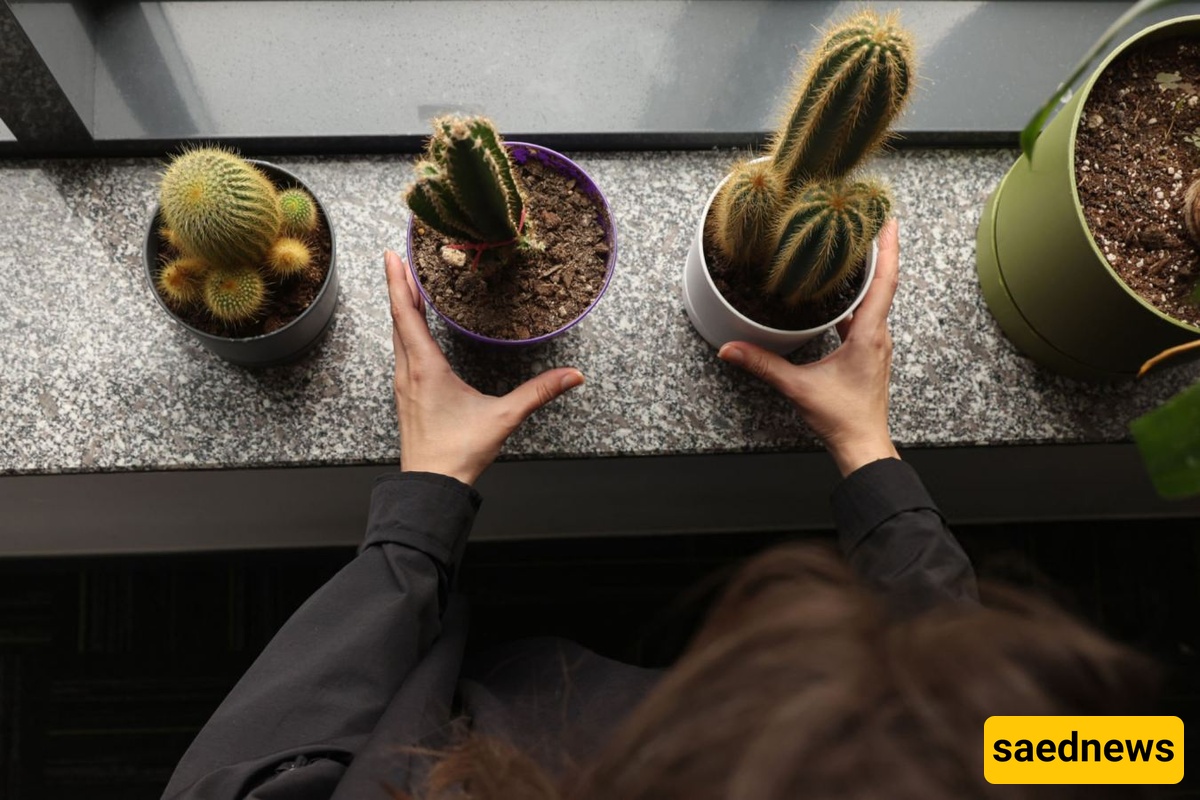
According to Saednews, Cacti are among the most popular houseplants because of their attractive appearance, wide variety, and relative hardiness. Many people assume that cacti require very little care and can survive under almost any conditions. However, growing cacti indoors without understanding their actual needs can lead to elongated stems, root rot, flower drop, and eventually plant death.
Like other living plants, cacti need adequate light, careful watering, well-draining soil, and moderate temperatures.
This guide explains the essential principles of growing cacti indoors in a simple yet detailed, step-by-step format to help you cultivate healthy, thriving plants in your home.
Compared with many other houseplants, cacti require less frequent watering and can tolerate longer intervals between watering sessions. This makes them ideal for people who do not have enough time for daily plant care.
Their diverse sizes and shapes also make it easy to choose varieties that complement your apartment's interior design. However, it is important to remember that a cactus's resilience does not mean it can survive without proper care.
Successful indoor cactus cultivation depends on creating environmental conditions that resemble the plant's natural habitat as closely as possible.
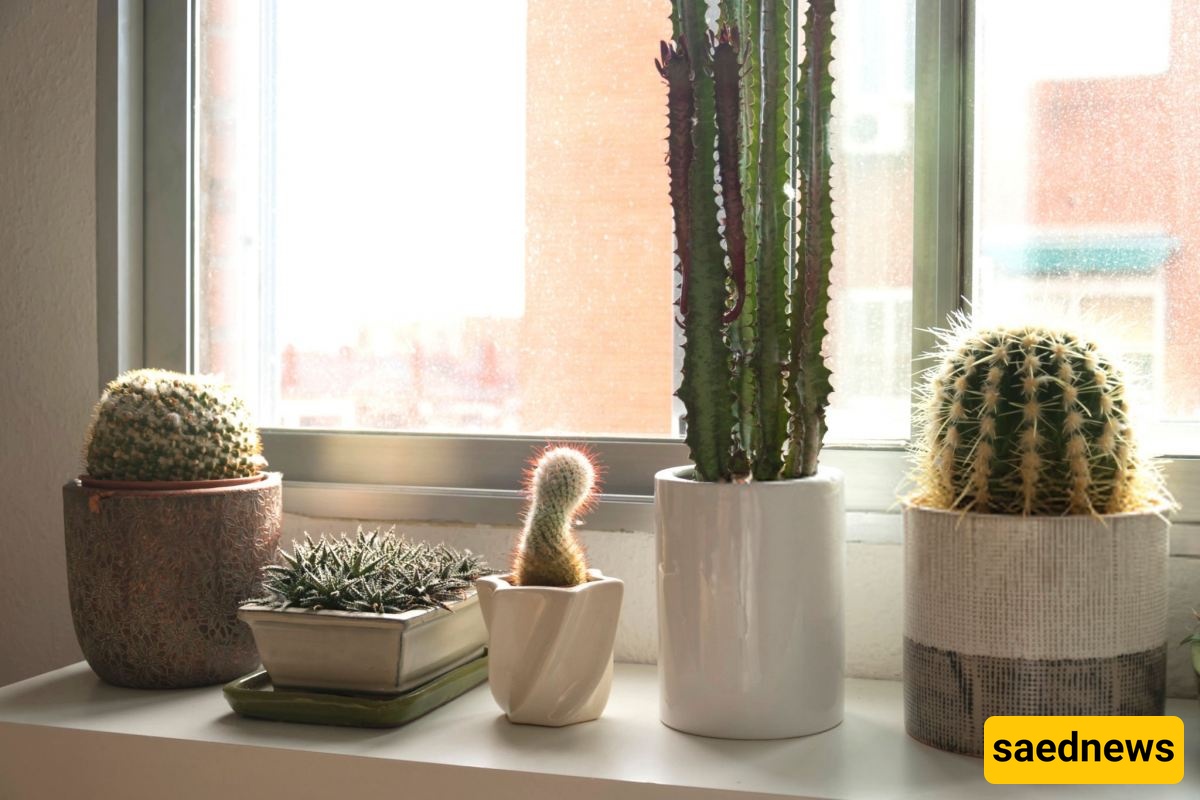
Before purchasing a cactus, consider the amount of natural light available in your apartment. If your windows face south or east and receive several hours of direct sunlight, you will have many varieties to choose from.
In apartments with limited natural light, consider more adaptable varieties, such as certain globular cacti, Echinocactus, and Mammillaria. Tall, columnar cacti generally require stronger light and may become elongated and thin when grown in dim conditions.
When purchasing a cactus, examine its overall appearance, check for soft brown spots, and ensure that its roots are healthy. Choosing the right plant is the first step toward successful indoor cultivation.
Light is the most important factor in growing cacti indoors. Most cacti require abundant light, and many need several hours of direct sunlight each day. Placing a cactus far from a window is usually insufficient, even if the room appears bright.
The best location is generally close to a window. However, sudden exposure to intense sunlight, particularly during the hottest hours of the day, should be avoided to prevent sunburn.
If your apartment does not receive enough natural light, you can use specialized grow lights.
Rotating the pot periodically also encourages balanced growth and prevents the stem from leaning toward one side.
Incorrect watering is one of the most common causes of cactus damage in apartments.
The golden rule is to allow the soil to dry out completely between waterings. During the growing season, particularly in spring and summer, water the plant once the soil has dried thoroughly.
In autumn and winter, cacti generally require much less water, so the intervals between watering sessions should be extended.
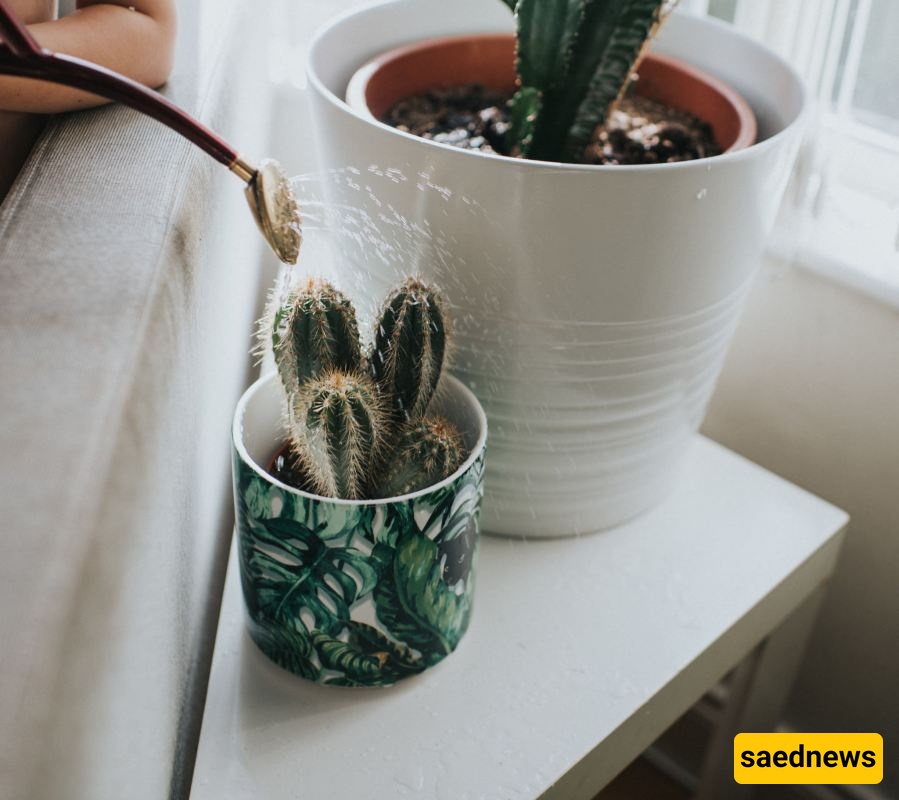
When watering, pour water into the pot until it drains through the drainage holes, ensuring that the roots are thoroughly moistened. Then empty any excess water from the saucer.
Leaving water in the saucer increases the risk of root rot.
Never rely on a fixed weekly watering schedule. The appropriate watering frequency depends on light levels, temperature, and soil composition.
Cactus soil should be lightweight, porous, and highly well-draining. Ordinary garden soil is unsuitable on its own because it retains too much moisture and may suffocate the roots.
A suitable mixture can include cactus potting mix, pumice, perlite, and coarse sand.
The pot must also have drainage holes. Terracotta pots are often preferable because moisture evaporates through their porous walls. However, plastic pots can also work well if they provide adequate drainage.
Choose a pot that matches the size of the root system. An excessively large pot can retain moisture for too long, increasing the risk of root rot.
Most cacti prefer warm, moderate temperatures. For many varieties, a daytime temperature of approximately 20–30°C (68–86°F) is suitable.
Avoid placing your cactus near heaters, in the path of cold air from an air conditioner, or next to open windows during winter.
High indoor humidity is generally undesirable for many cacti because it can encourage fungal diseases. Gentle air circulation is therefore important.
During winter, many cacti enter a dormant period and benefit from cooler temperatures, provided they are protected from freezing. Allowing the plant to rest during this period can encourage better flowering in the following growing season.
Cacti do not require large amounts of fertilizer. Excessive fertilization, especially with nitrogen-rich products, can cause soft, watery growth and reduce the plant's resilience.
During the growing season, apply a diluted fertilizer formulated for cacti approximately once every four to six weeks.
Stop fertilizing during autumn and winter. Before applying fertilizer, make sure the soil is slightly moist to reduce the risk of root burn.
If you have recently repotted your cactus, wait several weeks before fertilizing it.
Understanding the plant's nutritional requirements is an important part of successful indoor cactus care.
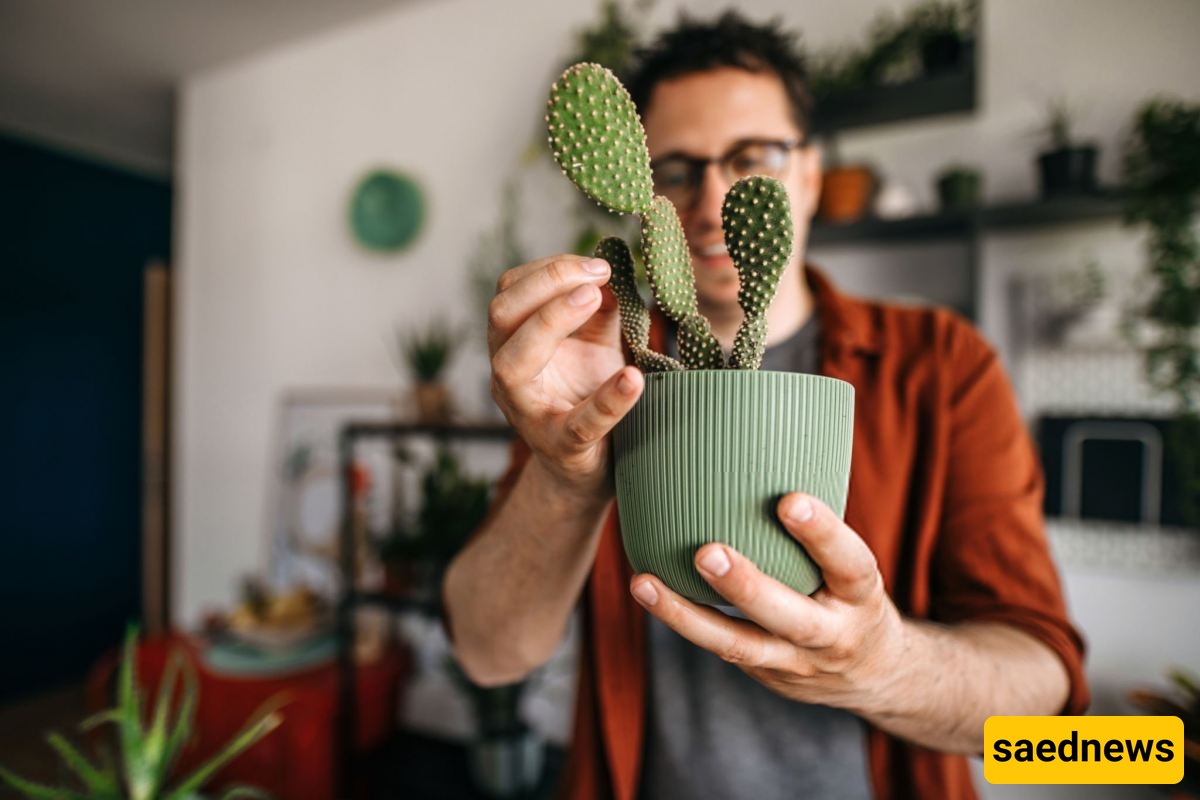
Cacti generally need repotting every two to three years, preferably at the beginning of the growing season.
Repotting may be necessary when roots emerge through the drainage holes or when the soil becomes compacted or depleted.
Before removing the plant from its pot, allow the soil to dry slightly. Carefully inspect the roots and use sterilized scissors to remove any rotten or dried sections.
Place the cactus in a suitably sized pot filled with fresh soil.
After repotting, wait approximately one week before watering to allow any damaged roots to heal.
Indoor cacti can be affected by pests such as mealybugs, spider mites, and aphids.
Mealybugs appear as white, cotton-like clusters on the stems, while spider mites may be identified by fine webbing and yellow spots.
To prevent infestations, inspect your plants regularly and avoid excessive dust accumulation on their surfaces.
If you notice pests, isolate the affected cactus from other plants and take appropriate action, such as manually removing the insects or using a suitable pesticide.
Proper ventilation and correct watering practices also help plants remain more resistant to pests.
One of the most common problems in indoor cactus cultivation is stem elongation and thinning, which usually indicates insufficient light. Move the plant to a brighter location, making the transition gradually.
Root rot is often caused by excessive watering and poor drainage. Symptoms such as a softening stem or discoloration should be taken seriously.
Sunburn appears as brown or white patches on the plant's surface. It can be prevented by gradually acclimating the cactus to stronger sunlight.
A drying stem tip may result from severe dehydration or excessive soil salinity.
Identifying these symptoms early can prevent serious damage.
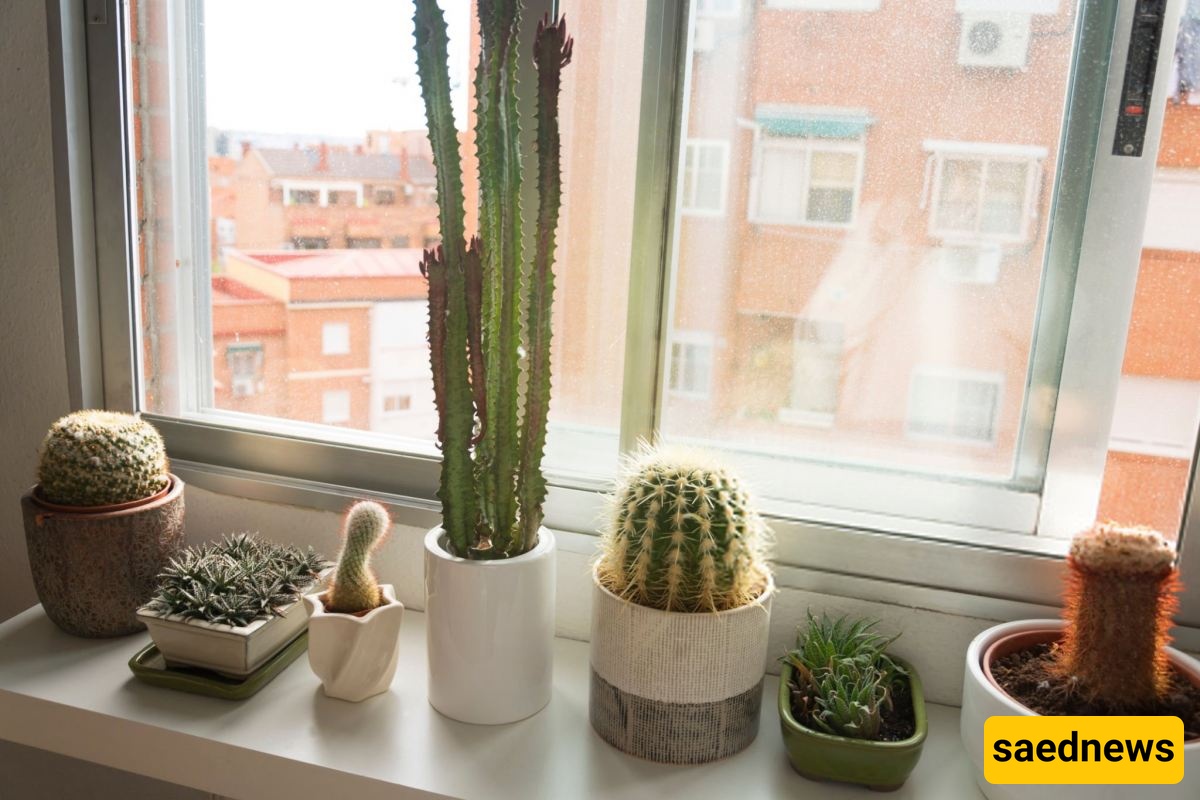
Dust accumulating on cactus stems can interfere with light absorption and photosynthesis. Every few weeks, gently clean the plant's surface with a soft brush or dry cloth.
Avoid frequent or excessive washing, as additional moisture on the stem may encourage rot or fungal diseases.
Cacti can be sensitive to abrupt changes in their surroundings. If you want to move a plant from a dim location to a sunny windowsill, do so gradually over several days to prevent sunburn.
Avoid moving the pot unnecessarily, as the plant generally benefits from a stable environment.
Even suitable soil cannot compensate for a pot without drainage holes. Before planting, make sure the holes are open and unobstructed.
If desired, you can add a thin layer of gravel or pumice at the bottom of the pot, but remember that this does not replace the need for drainage holes.
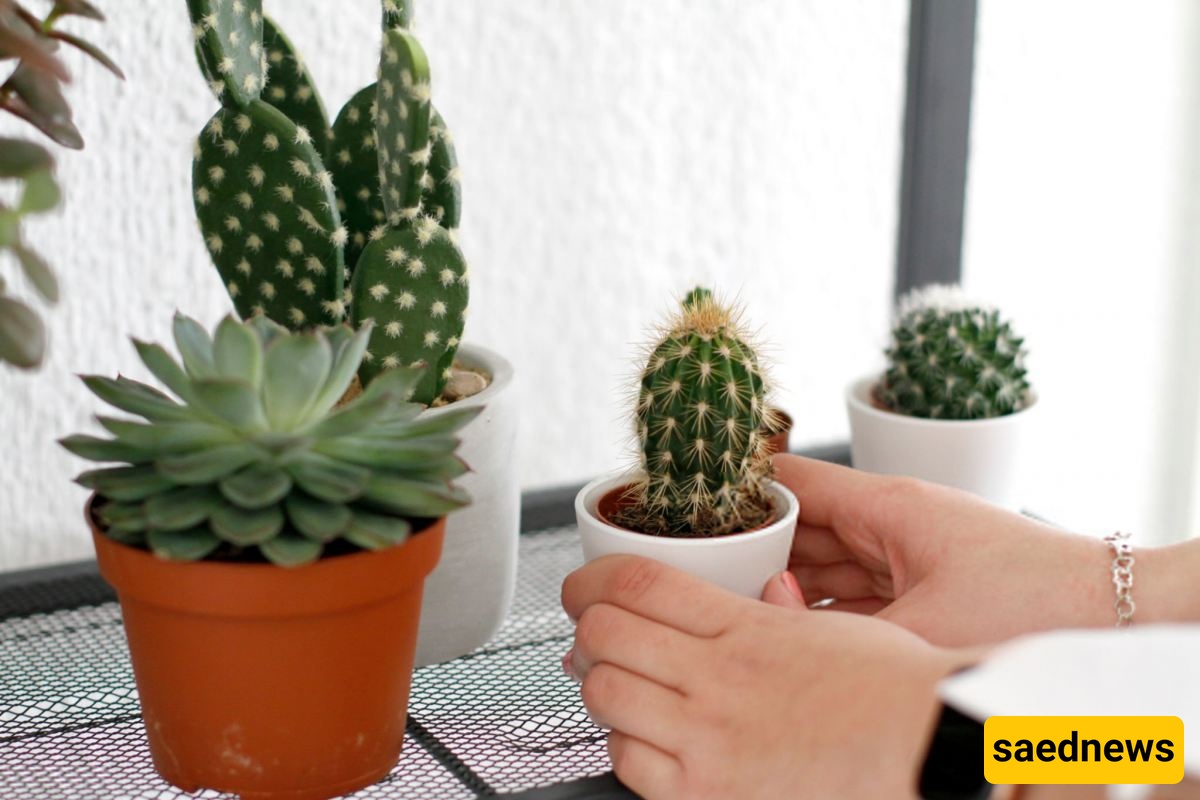
Soil dries more quickly in warm, dry apartments, while it remains moist for longer in cool, poorly lit rooms.
Therefore, a fixed watering schedule is not appropriate throughout the year. Always check whether the soil has dried out rather than relying solely on its surface appearance.
After each watering session, empty any water that has collected in the saucer.
Standing water creates a damp, poorly aerated environment around the roots and increases the risk of root rot. This simple step is one of the most important ways to maintain a healthy cactus.
Spring and summer: These are the main growing seasons. Provide adequate light, water when the soil dries completely, and apply diluted fertilizer as needed.
Autumn: Gradually increase the intervals between watering sessions and reduce or stop fertilization.
Winter: Most cacti benefit from a dormant period. Water sparingly, protect the plant from direct cold, and avoid fertilizing.
Watering too frequently without checking soil moisture.
Keeping the plant in a dark corner while expecting healthy growth.
Using heavy soil with poor drainage.
Placing the pot near a cold air-conditioning draft or directly beside a heater.
Applying too much fertilizer in an attempt to accelerate growth.
Repotting at an unsuitable time or watering immediately after repotting.
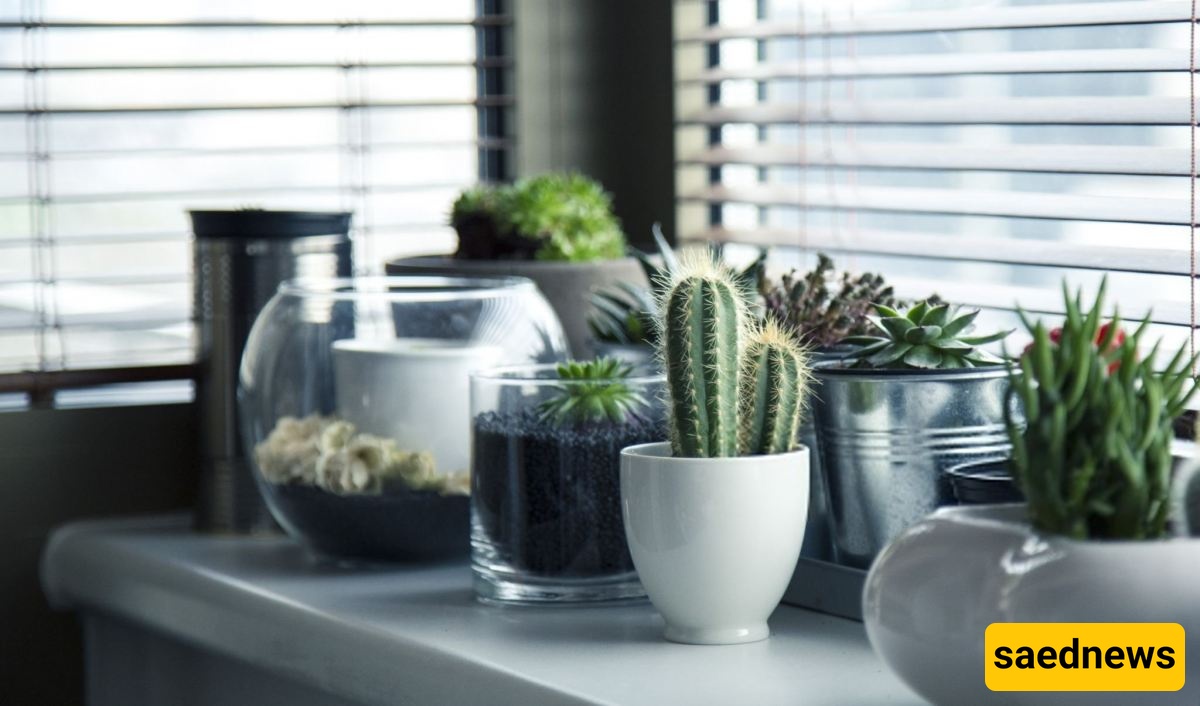
Place the plant near a bright window.
Use lightweight, well-draining soil.
Make sure the pot has drainage holes.
Water only after the soil has dried completely.
Empty excess water from the saucer.
Protect the plant from freezing temperatures and excessive heat.
Regularly inspect for pests and unusual spots.
Reduce watering and stop fertilizing during winter dormancy.
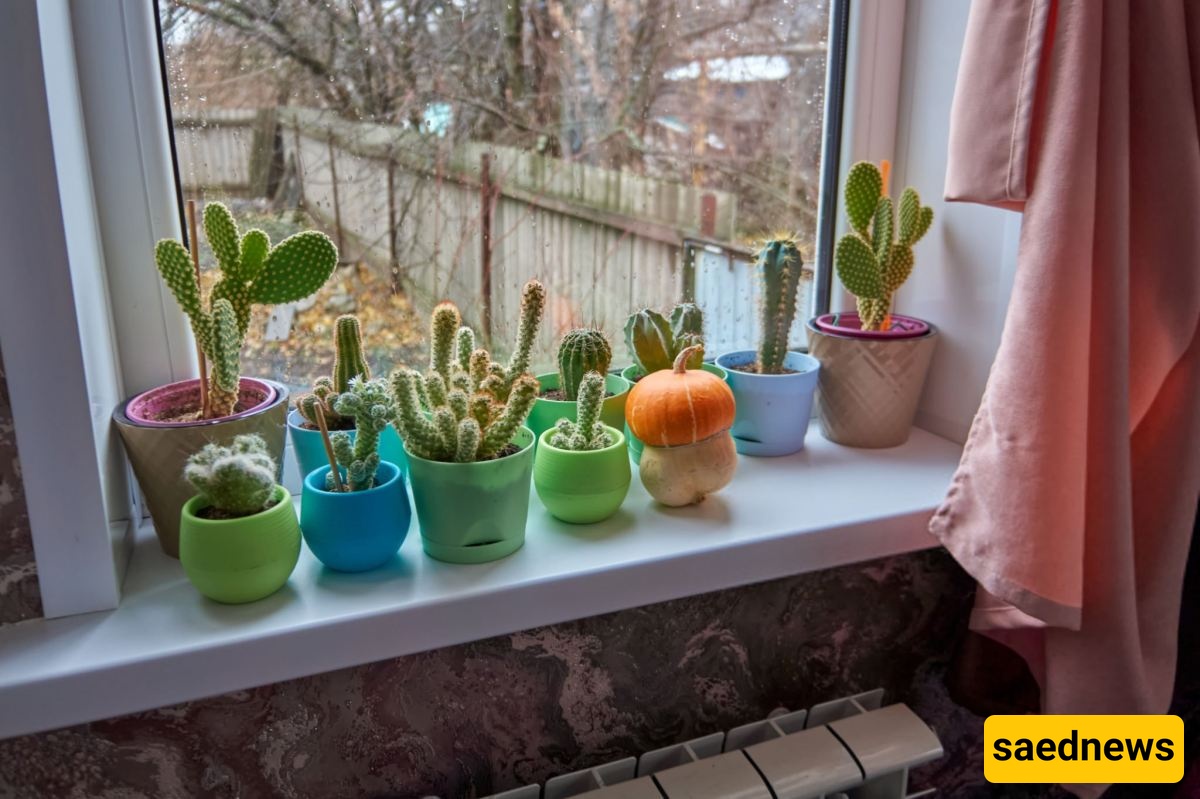
Growing cacti successfully in an apartment is possible by following a few essential principles: providing sufficient light, watering carefully, using lightweight and well-draining soil, maintaining suitable temperatures, and avoiding excessive care.
Contrary to popular belief, a cactus cannot simply be left unattended under any conditions. By understanding its needs, you can enjoy a healthy, attractive plant for many years, and in many cases, encourage it to flower.
The most important recommendation is to observe your plant and its indoor environment rather than follow a rigid care schedule. Adjust your routine according to the cactus's actual needs and the conditions in your home.