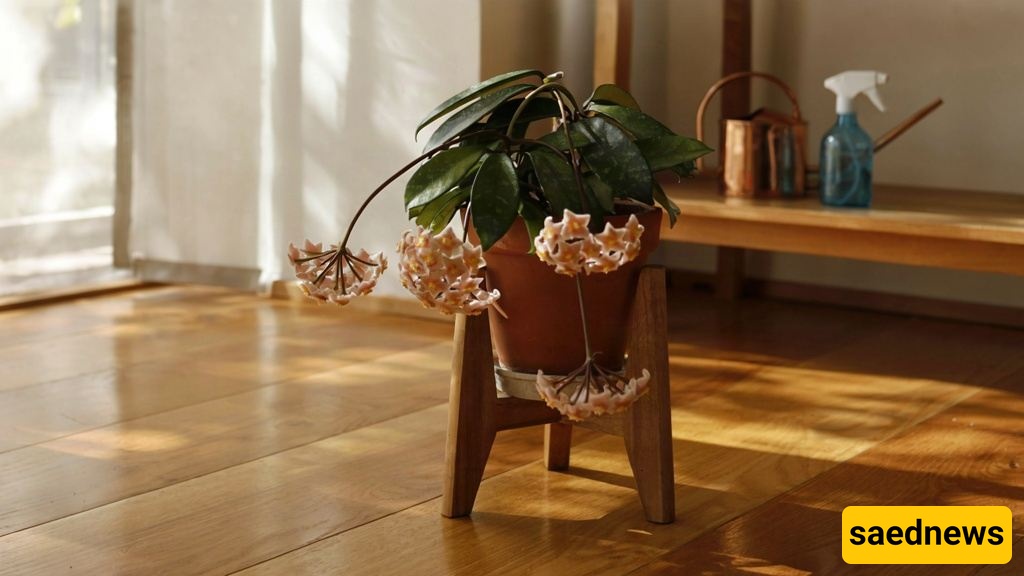
SAEDNEWS: Hoya, also known as the wax plant, is a popular houseplant with leathery leaves and fragrant, waxy flowers. Its distinctive beauty has made it a favorite among plant enthusiasts. This article explores the ideal growing conditions, propagation methods, and common problems associated with caring for Hoya plants.

According to Saednews, The Wax Plant, commonly known as Hoya, is one of the most beautiful and distinctive houseplants. With its leathery leaves, waxy flowers, and pleasant fragrance, it has a special place among ornamental plant enthusiasts. Scientifically known as Hoya, this plant belongs to the Apocynaceae family and is native to tropical regions of Asia and Australia. This guide provides comprehensive information about Hoya varieties, propagation methods, common problems, and essential care tips.
Hoya plants thrive in bright, indirect light. Placing the pot near an east- or south-facing window is generally a good choice. Strong direct sunlight can scorch the leaves, so protect the plant from intense afternoon sun.
The ideal temperature range for Hoya is between 18 and 25°C (64 and 77°F). Avoid sudden temperature changes and keep the plant away from cold drafts, heaters, and excessive heat.
As a tropical plant, Hoya prefers moderate to high humidity, generally around 40–60%. You can increase humidity by using a humidifier or placing the pot on a tray filled with pebbles and water.
Hoya needs a lightweight, well-draining growing medium. A mixture of leaf mold, perlite, and peat moss can provide suitable drainage and aeration for healthy root development.
Hoya requires regular watering, but the soil should never remain waterlogged. Allow the surface of the soil to dry slightly before watering again. Reduce watering during the winter months when the plant's growth slows down.
To encourage healthy growth and flowering, use a liquid fertilizer formulated for ornamental houseplants or a fertilizer with an appropriate potassium content. During the active growing season, fertilize approximately once every two weeks and follow the product's recommended dosage.
Hoya can be propagated using several methods, with stem cuttings being the most common.
Stem cuttings are the most popular way to propagate Hoya. Cut a healthy stem containing at least two nodes, then place the cutting in a suitable moist growing medium or in water. With suitable conditions, roots will gradually develop.
Leaf propagation is less common and is only successful with certain Hoya species. A healthy leaf can be removed and planted in an appropriate growing medium, although simply producing roots does not always guarantee the development of a new plant.
For Hoya species that grow in a bushier form, dividing the root system can be an effective propagation method. Carefully separate the established plant into sections, ensuring that each section has healthy roots and shoots before replanting.