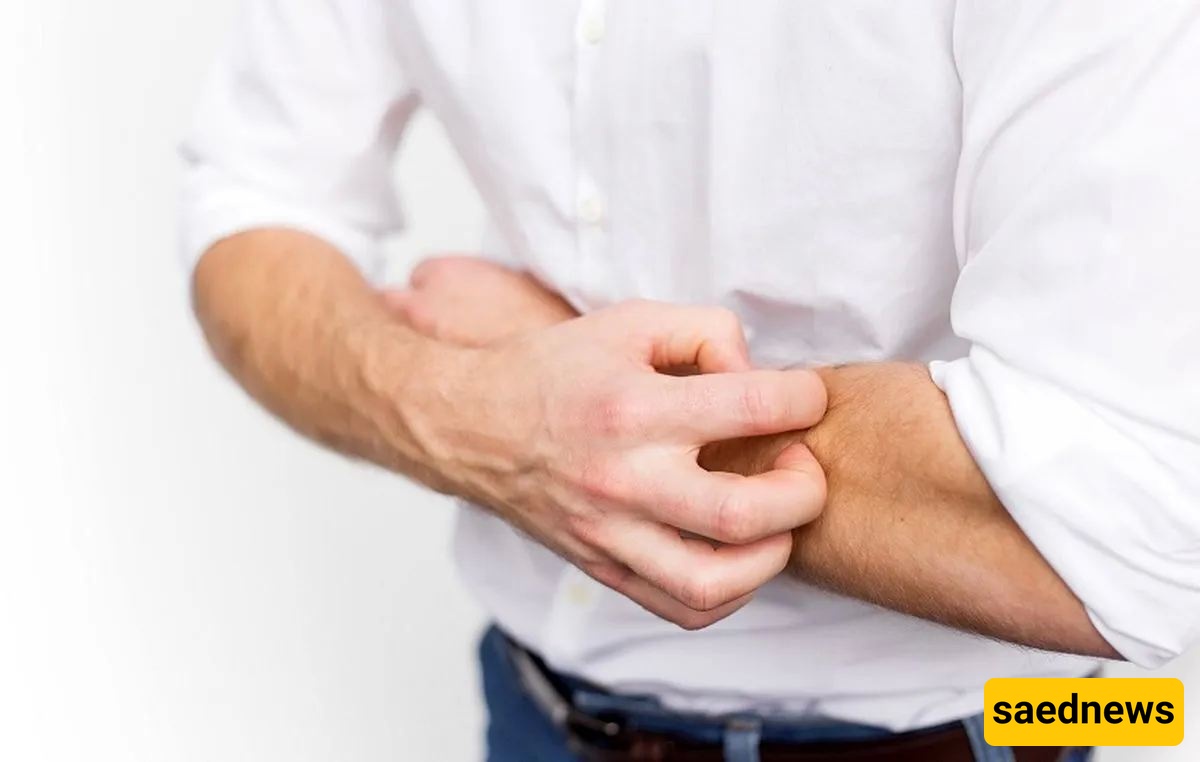
SAEDNEWS: Scratching creates feelings of pleasure and relaxation through a combination of neural mechanisms, endorphin release, and evolutionary instincts. However, it is important to know that frequent scratching can damage the skin.
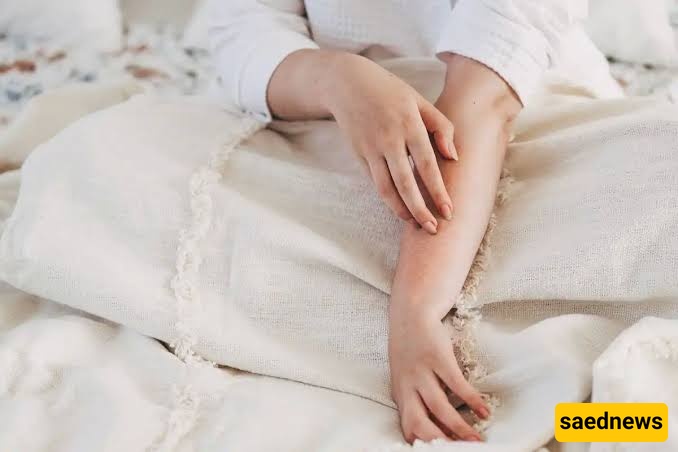
According to Saednews, Scratching is one of the body's natural responses to an itch, but why does it feel so satisfying even though it can sometimes cause damage? The answer lies in a combination of neurological, chemical, and evolutionary mechanisms.
Our brains cannot process two different sensations from the same area of skin with equal intensity at the same time. When we scratch, the unpleasant sensation of itching is temporarily interrupted by the mild pain and pressure caused by a fingernail or the palm of the hand.
This is similar to the “gate control theory” of pain: touch and pressure signals can reach the spinal cord faster than itch signals, temporarily reducing the transmission of the itch sensation. As a result, the brain receives a different signal instead of focusing on the itch, giving us a feeling of relief.
Even mild scratching can trigger the release of endorphins, the body's natural pain-relieving chemicals, as well as serotonin in the brain. These chemicals can contribute to feelings of pleasure and relief, acting like a natural reward.
In simple terms, the brain is essentially saying, “Do that again—it feels good!”
Interestingly, serotonin can also reinforce itch signals after a short period, contributing to the familiar itch-scratch cycle. This is one reason why excessive scratching can sometimes make an itch even worse.
An itch is often a warning that something unwanted is affecting the skin, such as an insect, parasite, irritant, or allergen.
Beyond being uncomfortable, leaving these irritants on the skin could potentially cause injury or infection. The urge to scratch may therefore have provided an evolutionary advantage by helping our ancestors remove harmful substances or organisms from their skin.
Over time, natural selection may have favored this behavior by linking itch relief with a sense of reward.
The brain naturally rewards us when an unpleasant sensation disappears—much like the relief we feel after satisfying hunger, quenching thirst, or removing prolonged physical discomfort.
Scratching temporarily reduces the unpleasant sensation, and that relief itself can feel pleasurable, regardless of what originally caused the itch.
Despite the momentary satisfaction, intense or repeated scratching can damage the skin, weaken its protective barrier, trigger inflammation, and even make the itch-scratch cycle worse, particularly in conditions such as eczema or hives.
In these situations, safer approaches—such as applying a cold compress or using appropriate anti-itch treatments—may be preferable.
But for an ordinary, temporary itch, a brief and controlled scratch really can be one of life's small pleasures.