SAEDNEWS: Accurately measure your foot size and use the brand’s size chart to shop for shoes online with confidence—no more worrying about the wrong fit.
According to Saednews, Online shoe shopping offers convenience and variety, but finding the right size can be challenging. Unlike shopping in a physical store, you cannot try the shoes on before buying. Instead, you need to rely on accurate foot measurements and the sizing chart provided by the brand.
Choosing the wrong size can lead to discomfort, wasted time, and return costs. This guide explains how to measure your foot accurately and choose the right shoe size with confidence.
Many people assume their shoe size stays the same throughout their lives. In reality, foot size can change because of aging, weight changes, pregnancy, physical activity, and other factors.
Sizing can also vary between brands. A size 42 from Adidas, for example, may not fit exactly like a size 42 from Nike. For this reason, measuring your feet and comparing the results with the specific brand's sizing chart is the safest way to choose the correct size.

You only need a few simple items:
A large sheet of white paper, preferably A4 or larger
A ruler or measuring tape
A pencil or pen
A flat wall
Thin socks similar to those you normally wear with the shoes
The best time to measure your feet is in the afternoon or at the end of the day. Your feet naturally swell slightly after walking and standing throughout the day.
Measuring early in the morning may result in a smaller measurement, which could lead to shoes feeling tight later in the day.
Place the paper on a hard, flat surface.
Position the paper against a wall so your heel can rest against the wall.
Put on the socks you intend to wear with the shoes.
Stand naturally on the paper with your weight distributed evenly.
Ask someone to trace around your foot with a pencil.
Keep the pencil perpendicular to the paper and avoid pressing it against your foot.
Important: Measure both feet. It is common for one foot to be slightly larger than the other. When choosing shoes, use the measurements of your larger foot.
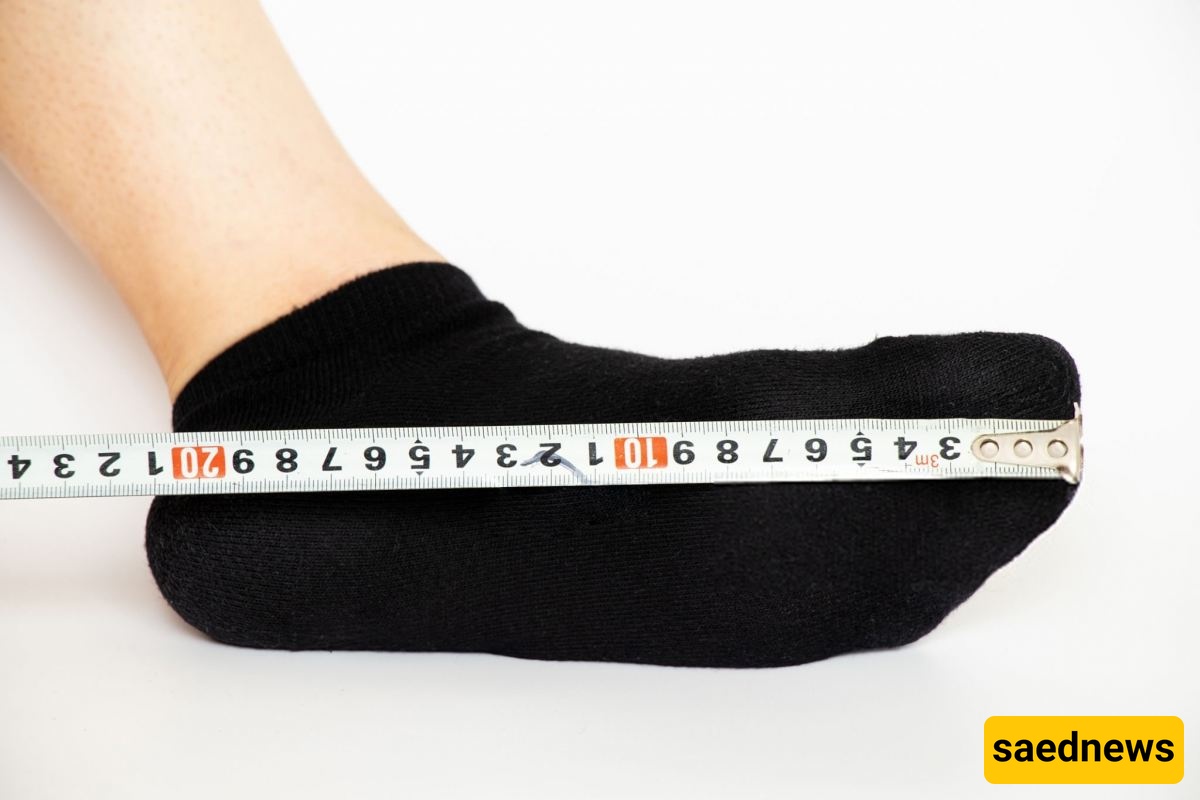
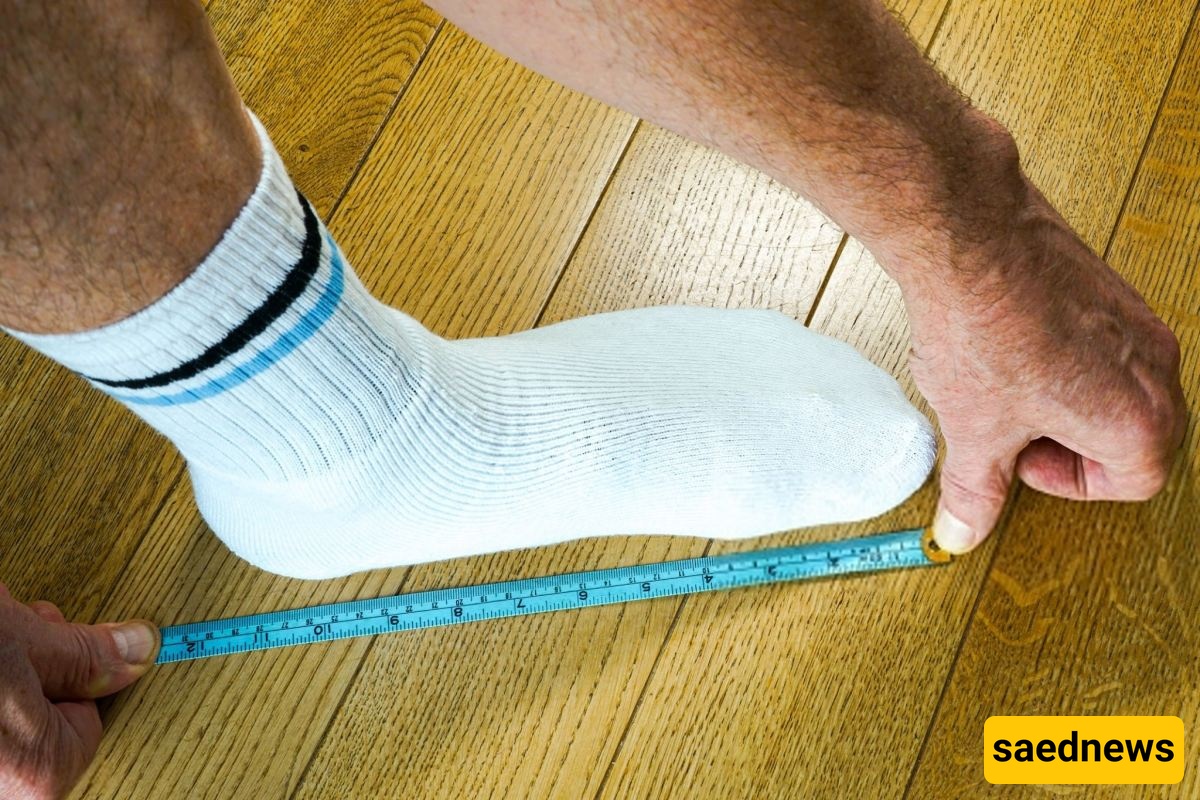
Use a ruler to measure the longest distance from the back of your heel to the tip of your longest toe.
Record the measurement in centimeters.
Find the widest part of your foot, usually across the area near the toes.
Measure the distance between the two widest points and record the result in centimeters.
Once you know your foot length and width, you can compare them with the appropriate shoe-sizing system.
EU sizing is widely used in Europe and Iran. A commonly used approximate formula is:
EU size = (foot length in cm × 1.5) + 2
However, brand-specific sizing charts should always take priority over formulas.
US sizing is commonly used in the United States and Canada. Men's and women's sizes use different scales.
UK sizing is used in Britain and generally follows a different scale from US sizing.
Japanese sizing is based directly on foot length in centimeters, making it relatively straightforward to understand.
Foot Length (cm) | EU | US Men's | US Women's | UK |
|---|---|---|---|---|
22.5 | 35 | 4 | 5.5 | 3 |
23.0 | 36 | 4.5 | 6 | 3.5 |
23.5 | 37 | 5 | 6.5 | 4 |
24.0 | 38 | 5.5 | 7 | 4.5 |
24.5 | 39 | 6 | 7.5 | 5 |
25.0 | 40 | 6.5 | 8 | 5.5 |
25.5 | 41 | 7 | 8.5 | 6 |
26.0 | 42 | 8 | 9 | 7 |
26.5 | 43 | 8.5 | 9.5 | 7.5 |
27.0 | 44 | 9 | 10 | 8 |
27.5 | 45 | 9.5 | 10.5 | 8.5 |
28.0 | 46 | 10 | 11 | 9 |
This table is a general reference. Always check the individual brand's sizing chart before ordering.
Never rely solely on your usual shoe size. Look at the sizing chart for the exact brand and model you want to purchase.
Reviews can reveal whether a particular shoe runs large, small, narrow, or wide. If several customers report that a model runs larger than expected, you may need to consider a smaller size.
If you plan to wear thick socks with the shoes, measure your feet while wearing them. For formal shoes worn with thin socks, use thin socks during measurement.
If your foot falls between two sizes, choosing the larger size is often more comfortable. Extra room can generally be managed with an insole or thicker socks, whereas shoes that are too tight can cause discomfort and blisters.
Length isn't the only factor that matters. Some brands offer narrow, standard, and wide versions of their shoes. If your feet are particularly wide or narrow, check the width specifications before ordering.
Some online retailers offer augmented-reality or virtual fitting features that can help shoppers visualize how footwear may fit. These tools can be useful as an additional reference, but they should not replace the manufacturer's sizing information.
Your feet behave differently when you are sitting because your full body weight isn't being placed on them. Always measure while standing naturally.
Old shoes may have stretched or changed shape over time. Your previous shoes may also have been the wrong size without you realizing it.
One foot is often slightly larger than the other. Always use the measurements of your larger foot when selecting a shoe size.
Measuring with unusually thick socks can produce an unnecessarily large measurement. Use socks appropriate for the type of footwear you intend to buy.
Sports shoes generally benefit from a little extra room. Around 1 cm of space between your longest toe and the front of the shoe is often recommended.
Dress shoes should provide a secure, comfortable fit without excessive empty space. Too much room can cause your foot to slide inside the shoe.
For boots, consider both foot length and calf circumference. Some boot designs have narrow shafts that may not accommodate larger calves comfortably.
Width and overall foot placement are particularly important for sandals. They should fit securely enough to prevent your foot from sliding around.
Finding the right shoe size online doesn't have to be difficult. By measuring both feet carefully, checking your measurements against the brand's own sizing chart, and considering factors such as width and sock thickness, you can significantly improve your chances of getting a comfortable fit.
It is also a good idea to remeasure your feet periodically because their size and shape can change over time.
If you are between two sizes, the larger option is often easier to adjust with an insole or thicker socks. A shoe that is too small, however, can cause persistent discomfort.
With a few minutes of careful measurement, you can shop for shoes online more confidently and avoid many of the problems associated with choosing the wrong size.