SAEDNEWS: The Greatest Boast in History by a Medieval Woman Who Saved a Nation
According to Saed News’ Society Service, the historic city of Monção, located on the northern border between Portugal and Spain, is a region famous for the refreshing and distinctive drink Vinho Verde. This quiet Portuguese border town is also known for its hot springs, traditional cuisine, a 14th-century castle, and its remarkable history. However, what makes this city even more special is a story that is explained below.
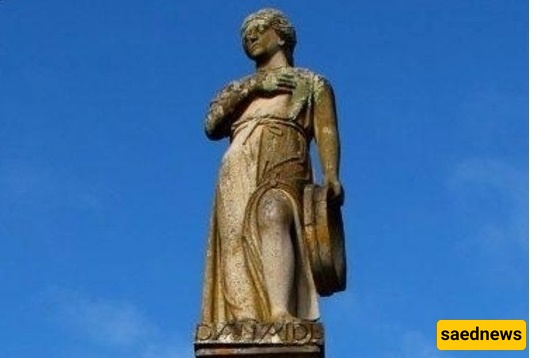
At the highest point of the city stands a statue of a woman on top of medieval fortifications, holding two loaves of bread. According to a local legend, this woman, known as Deu-la-Deu Martins, was a medieval leader who defended the city against a Spanish attack.
According to the Algarve History Association, in 1369 the Portuguese were at war with the neighboring Kingdom of Castile. The death of Peter the Cruel, King of Castile and León, created a major succession crisis, and Ferdinand I, King of Portugal, was among several claimants to the Castilian throne. In fact, the crown was held by Peter’s illegitimate half-brother, Henry of Trastámara, who opposed Ferdinand’s ambitions. As a result, 1369 was a year of political turmoil and several small military campaigns. As part of a strategic effort against Ferdinand, Henry decided to attack several fortified border towns along the Castile–Portugal frontier.
Monção was one such town: a fortified settlement designed to protect the Portuguese from northern invasions. However, when Henry’s army arrived at the gates, the town was not well prepared for a siege, and Vasco Gomes de Abreu, the governor of Monção, had fled his home. According to the Algarve History Association, his wife, Deu-la-Deu Martins, remained behind to lead the town’s defense.
Monção was a fortified city, and its high walls could resist enemy attacks for a limited time. As supplies dwindled, the suffering of the inhabitants increased, and more people began to consider surrender.
However, a siege can also be costly for the attackers. Henry’s forces continued their assaults on the walls, suffering losses with each attack, yet failing to breach the defenses. His army also faced shortages of food and water, and the prolonged siege caused growing unrest among his men. Henry realized he could not remain outside Monção indefinitely.
Deu-la-Deu understood this as well. As the town’s supplies ran low and people gathered inside the fortress, she decided to stage a clever deception. She gathered the last remaining flour she could find in the city and ordered two loaves of bread to be baked.
Holding the bread, she stood atop the fortifications and mocked the Castilian soldiers. She threw the two loaves down and shouted, “Deus lo deu, Deus lo há dado!” meaning that God had blessed the people of Monção so abundantly that they could even afford to give some to their enemies.
Henry, alarmed by what appeared to be abundant food supplies, believed the town was prepared for a long siege and decided to withdraw his forces.
Deu-la-Deu succeeded in saving her city through this clever ruse. Her story quickly spread and she became a local legend.
Even today, Deu-la-Deu is honored in the city, and in the 19th century a statue was erected in the central square in her memory. Although historians debate the historical accuracy of her life and deeds during the siege of Monção, her legend remains an important part of the city’s modern identity. She is remember