SAEDNEWS: The Ketani plant includes both annual and perennial species. It typically grows to a height of about 30 to 60 centimeters. It has straight, slender, waxy, elongated stems that are highly branched.
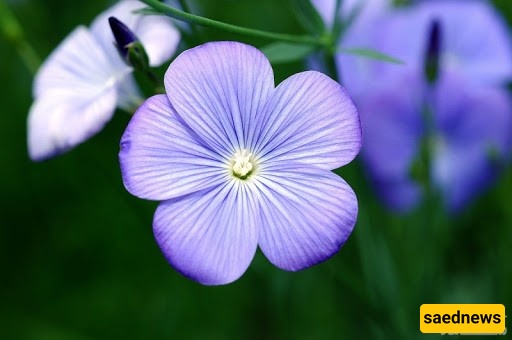
According to Saednews, Its origin is the Mediterranean region. It includes both annual and perennial species. The plant grows to a height of approximately 30–60 cm. It has smooth, slender, elongated, and highly branched stems. The stem tips divide into branches, and at the end of each branch there is one or more flowers.
The flowers are funnel-shaped with five petals. Annual flax flowers appear in white, pink, and red, while perennial varieties are seen in yellow, sky blue, and purple. The leaves are narrow, elongated, pointed, and light green with a slight bluish tint.
The peak flowering period lasts about 2 to 3 months, with blooming occurring throughout the summer. This ornamental plant is widely appreciated for its prolonged and colorful flowering season.
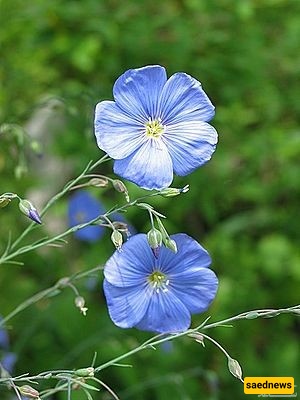
This plant is resistant to cold and requires full sunlight exposure. It grows best in well-drained soil rich in organic matter. Moderate and regular watering is necessary, but excessive watering should be avoided, as it can lead to root rot and eventually plant death.
Flax is propagated by seeds. Perennial species can be propagated by seed sowing or by root division in spring or autumn. Each year, the aerial parts are removed at the end of the season, and the roots regenerate shoots and flowers in the following year.
Annual species can be sown directly in early spring or autumn and then thinned. Some varieties are grown in cold frames in September or March and later transplanted to the main field in spring. However, direct sowing is preferred, as transplantation can damage the plant and result in weaker growth.
Plants grown from autumn-sown seeds are typically stronger, more branched, and flower earlier. Seeds germinate about 20 to 25 days after sowing. Once the seed capsules dry on the plant, the seeds can be harvested and stored for future use.
This plant is not edible and should not be consumed.