SAEDNEWS: One of humanity’s long-standing concerns has been discovering the origin and source of music. In this article, we discuss the origins of music, the invention of musical instruments, and its influence on human relationships.
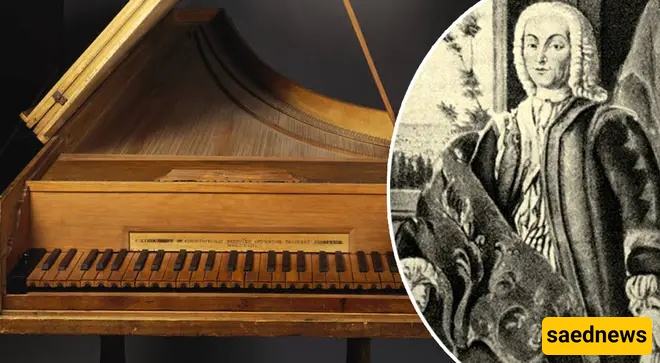
According to Saednews, Music is an art through which humans express all their emotions and feelings using sounds. This art has been an inseparable part of human life from ancient times to the present, and people have always found peace and pleasure in listening to it.

There has always been a question in the human mind about the origin of music. People have long wondered whether music is an invention of civilized humans or whether it dates back to much earlier times. Who first invented music?
If you also have such questions, this section helps you find the answers.
The history of music goes back to very ancient times. Before the emergence of language, humans were already familiar with music. The earliest steps toward the creation and development of music were rhythms, melodies, and even vocal sounds produced from the human throat.

After the earliest human species, Neanderthals inhabited the Earth, followed by newer human species spreading across Europe. Over time, human populations—more intelligent than Neanderthals—grew significantly, and eventually Neanderthals became extinct.
There were many differences between our species and Neanderthals. Neanderthals lived in caves and did not decorate them, but when our ancestors inhabited caves, cave walls became canvases for artistic expression. Early humans created rhythmic sounds by clapping, which may have been linked to primitive musical instruments.
Evidence suggests that early humans produced sounds by striking natural objects such as stone formations inside caves, which acted as resonators. Therefore, music has very ancient origins and may have existed since the earliest stages of human development.
Humans used music as a tool for communication and mate attraction. Music also had a spiritual role and was used in worship, prayer, and religious rituals.
Music also served many other functions, including dance, movement, and entertainment. One of its most important roles was bringing people together in groups.

After entering Europe, humans began carving figures of humans and animals on bone and ivory, and they used these materials to create musical instruments.
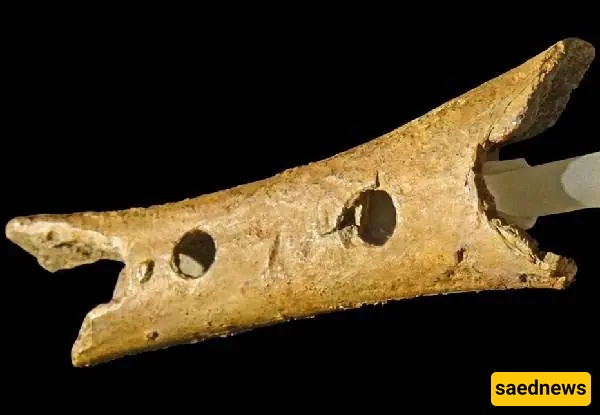
Some of the earliest discovered instruments were flutes made from bird bones such as swans and vultures, dating back between 39,000 and 43,000 years. In southwestern Germany, eight flutes were discovered at three different sites.
Some scholars believe that the art and musical instruments that appeared in Europe 40,000 years ago were already highly advanced and complex.
There are many hypotheses about the origin of music. Some researchers believe it dates back to Neanderthals or early humans.
Some scientists argue that Neanderthals may not have been as primitive as commonly assumed, as archaeological discoveries show they used tools 100,000 years ago for mixing pigments in caves in southern Africa.
One researcher from the Gibraltar Museum believes that the cognitive abilities of Neanderthals and modern humans were similar, suggesting that Neanderthals may also have created musical instruments, although this has not been confirmed.
A flute discovered in Slovenia, dating back 43,000 years, has been attributed to Neanderthals. Some researchers argue that their vocal anatomy was similar to ours, suggesting they may have been capable of producing music or vocal sounds.
Studies of fossils show that Neanderthals had a hyoid bone similar to modern humans, indicating some ability for speech and possibly singing, although less developed than in modern humans.
However, other researchers argue that musical instruments made of perishable materials may never be discovered, making it difficult to confirm whether Neanderthals used them.
Another approach compares human anatomy with that of chimpanzees. Early human skulls show relatively large brain sizes, suggesting advanced cognitive abilities and vocal capacity.
Another argument is based on human child development. Human infants are highly dependent and cannot cling to their mothers like other mammals. Mothers often speak to their babies in soothing, rhythmic tones, which may have contributed to the development of musical speech patterns.

Some mammals can perceive musical patterns and distinguish differences in melodies and speech patterns. Some monkeys can even recognize subtle variations in sound patterns.
Although animals do not create music, they can perceive it, suggesting that sensitivity to sound may have deep evolutionary roots.
Charles Darwin suggested that male birds use singing to attract mates and warn of danger, although this idea is still debated.
Some researchers propose that singing behavior may be linked to monogamy in evolution, although the exact reasons remain unclear.
Although theories about the origin of music differ, all agree that the ability to create and perceive music is an important step in human evolution.
Music plays a key role in building social relationships. It strengthens social bonds and contributes to human success, as both music and language evolved to help early humans communicate and express emotions.