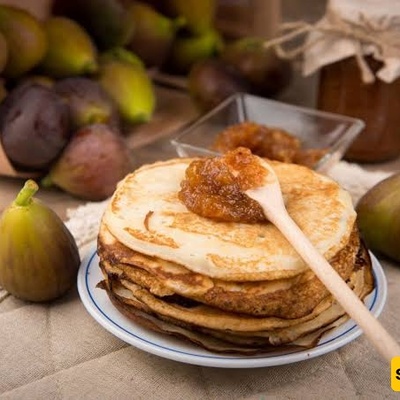
SAEDNEWS: Golden yellow fig jam with its beautiful color and delightful aroma is a wonderful choice for a homemade breakfast. In this guide, you’ll learn the ingredients, step-by-step cooking method, professional tips, and secrets for making a clear, glossy, and long-lasting fig jam.
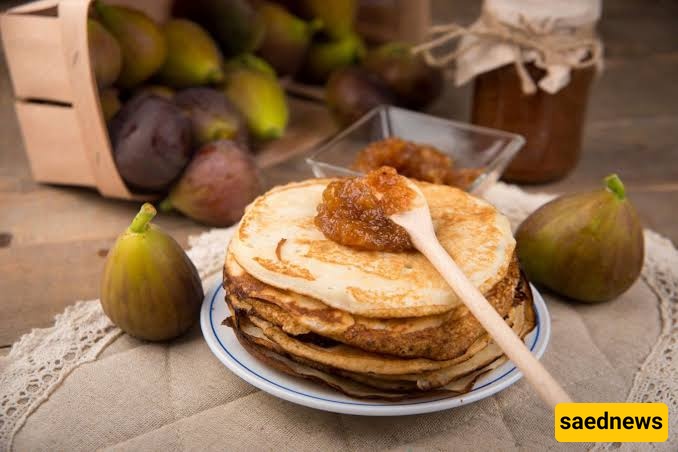
According to Saednews, Yellow figs are widely available during summer and early autumn, and they are usually reasonably priced. Making homemade yellow fig jam is therefore an economical way to enjoy this delicious fruit. Homemade jam also contains no industrial preservatives, and you can adjust the amount of sugar and flavorings according to your taste. The combination of rose water and saffron gives this jam a traditional, authentic flavor that is difficult to match with commercially produced varieties.
Yellow figs: 1 kilogram
Sugar: 700 grams
Water: 1 cup
Lemon juice: 1 tablespoon
Rose water: 1 tablespoon
Brewed saffron: 2 tablespoons (optional)
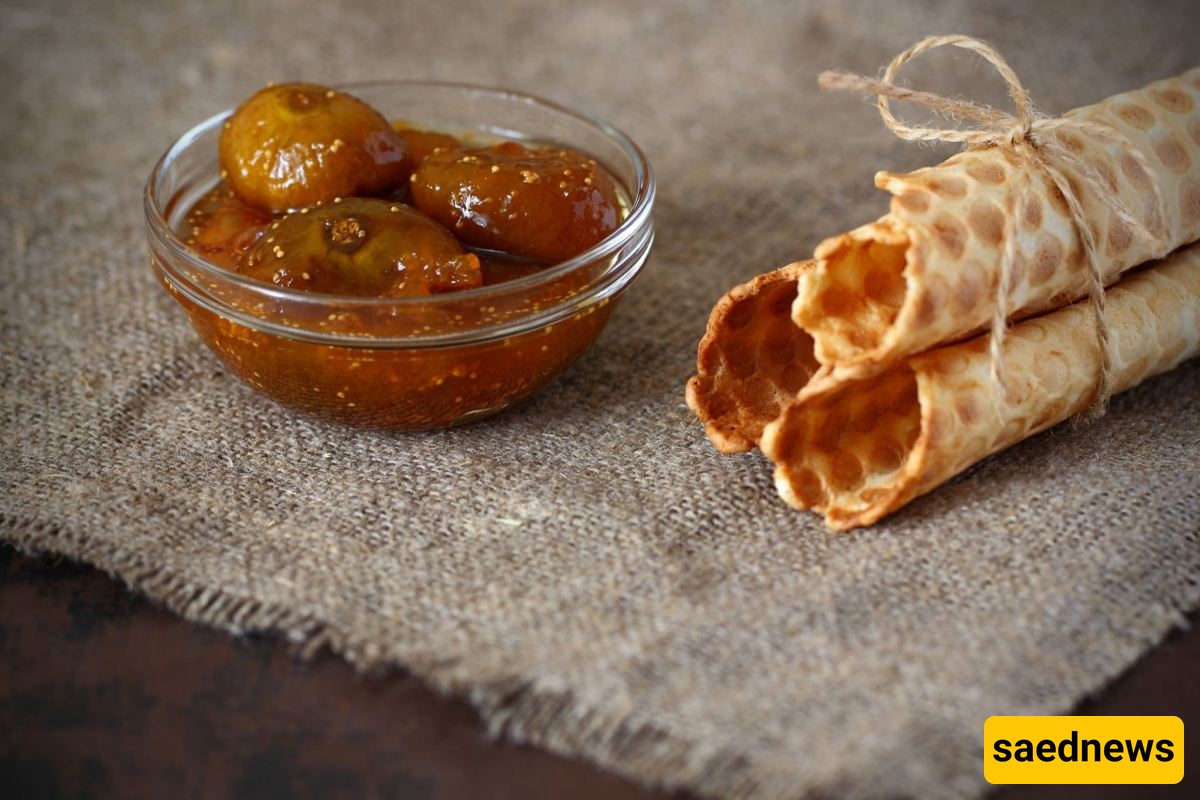
Before starting, keep a few important points in mind. Choose figs that are fresh, firm, and free from blemishes. Overripe figs are not ideal for jam because they can break apart during cooking and lose their shape. Use a stainless-steel, copper, or enamel pot, and avoid aluminum cookware, as it may affect the color and flavor of the jam.
Wash the yellow figs thoroughly and remove their stems. If the figs are large, you can cut them in half. However, if you want whole, intact pieces of fruit in your jam, use smaller figs and leave them whole.
To prevent the figs from bursting during cooking, make several small holes in their surface using a fork or toothpick. This allows the syrup to penetrate the fruit and helps produce a more evenly flavored jam.
Combine the water and sugar in a suitable pot and place it over low heat. Stir until the sugar has completely dissolved.
Bring the syrup to a boil, then use a slotted spoon to remove any foam that forms on the surface. This helps keep the jam clear. Allow the syrup to boil for about 5–10 minutes until it becomes slightly thicker.
Carefully add the prepared figs to the boiling syrup. Reduce the heat so that the syrup maintains a gentle simmer.
Avoid stirring the figs too much. Instead, gently shake the pot every few minutes to keep the figs from sticking together.
Allow the figs to cook over low heat for approximately 30–40 minutes, until they become tender but do not completely fall apart.
For clear, beautifully colored yellow fig jam, remove the pot from the heat after the initial cooking stage and allow the jam to rest at room temperature for at least 6–8 hours or overnight.
During this time, the figs will absorb more of the syrup, giving them a more even texture and flavor. This resting period is one of the key steps for achieving high-quality homemade fig jam.
After resting, return the pot to low heat. Warm the jam gently until it comes to a boil.
Add the lemon juice. It helps regulate the consistency, improve shelf life, and reduce the risk of crystallization.
About 10 minutes before the end of cooking, add the rose water and brewed saffron. These ingredients provide a pleasant aroma and beautiful color. Avoid boiling them for too long, as excessive heat can diminish their fragrance.
To check whether the jam has reached the right consistency, place a spoonful of the syrup on a chilled plate. If it becomes slightly firm after a few seconds and does not spread easily, the jam is ready.
Another method is to place a small drop of syrup between two fingers. If it stretches slightly like a thread, the consistency is suitable.
If the jam is still too thin, continue cooking it over low heat for a few more minutes and test it again.
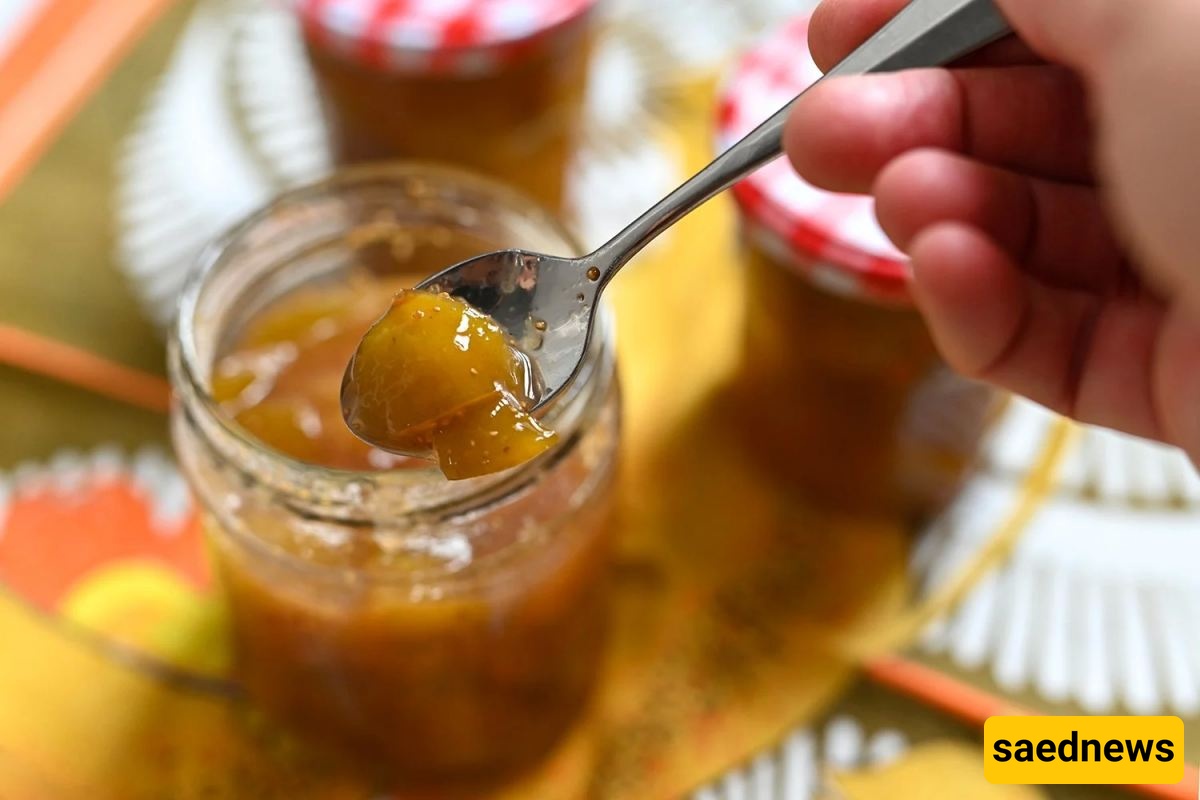
Wash the jam jars thoroughly and sterilize them in boiling water or in the oven.
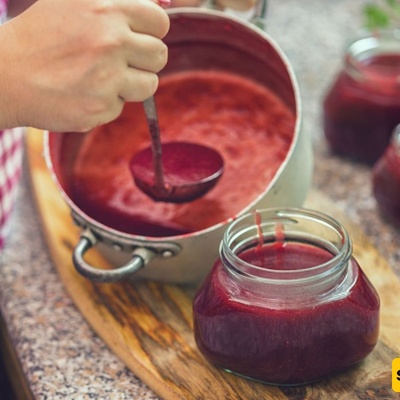
While the jam is still hot, transfer it into clean, completely dry jars. Cover the surface with a thin layer of syrup to reduce the fruit's exposure to air.
Seal the jars tightly. Once they have cooled, store them in a cool, dark place.
For the clearest and most attractive yellow fig jam, use fresh, firm figs. Keep the heat low throughout the cooking process and avoid vigorous stirring.
Regularly skimming the foam from the syrup also helps improve the clarity of the finished jam. Adding lemon juice toward the end of cooking can help maintain the figs' bright color.
If you want the figs to remain whole and intact, cook them gently in several stages with resting time between the cooking sessions.