SAEDNEWS: On this page, Delgarm provides a step-by-step guide to making Sangak bread at home.
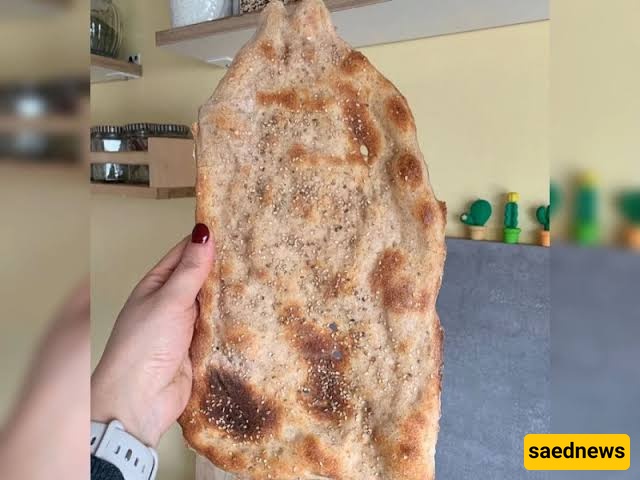
According to Saednews, Homemade Sangak bread can be prepared quite easily at home. If you would like to learn how to make this traditional Persian flatbread, follow the recipe below from start to finish.
Compared with some other types of bread, Sangak can be a little more challenging to prepare. Below is a step-by-step method that you can follow to make homemade Sangak successfully.
Sangak without stones is a common homemade version. In this recipe, we explain how to bake Sangak in the oven, both with and without stones.
350 g cool water
10 g salt
300 g Sangak flour
90 g all-purpose flour
2 tablespoons active dry yeast
80 g sourdough starter
Sesame seeds, as desired
Black cumin seeds (Nigella seeds), as desired
Preparation time: About 1 hour 20 minutes
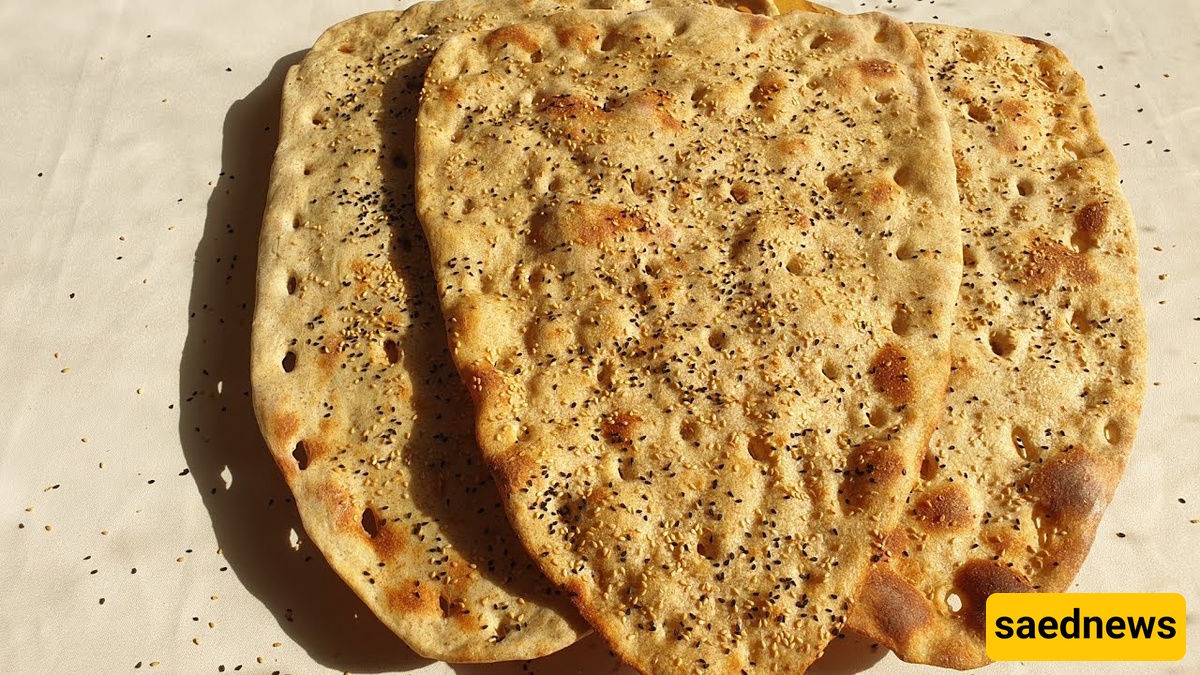
Place a little more than half a cup of flour in a bowl.
Add half a glass of water and mix well until combined.
Place the sourdough starter in a bowl, cover it with plastic wrap, and make a few small holes in the wrap. Keep it somewhere warm until the starter becomes bubbly and rises.
Choose a suitably sized bowl for mixing the Sangak dough.
Add the Sangak flour to the bowl.
Add the all-purpose flour and mix.
Add the sourdough starter to the flour mixture.
Add the yeast and mix everything thoroughly.
Once the dough is well combined, add the salt and mix again.
Cover the dough with plastic wrap and leave it in a warm place at room temperature to rest. After about 1 hour, mix the dough again and allow it to rest once more.
After another hour or so, transfer the dough to a wet baking tray. Using your fingertips, gently stretch and shape it into a triangular form.
Sprinkle sesame seeds and black cumin seeds over the surface, according to your preference.
Place the dough on parchment paper in the middle rack of the oven. Preheat the oven to 180°C (350°F), then place the bread inside and bake until done.
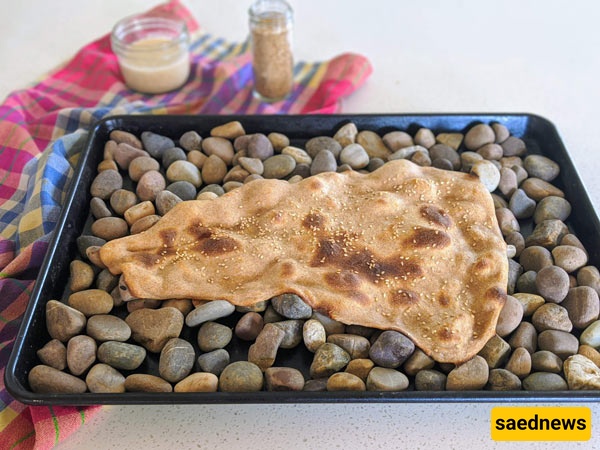
Sangak dough should be relatively wet and loose compared with ordinary bread dough.
After baking, wrap the bread in a clean cotton cloth. This helps keep it soft.
You can use only sesame seeds, only black cumin seeds, both, or neither.
To make Sangak with stones, spread a layer of suitable baking stones on the oven tray, level the surface, and place the dough on top.
If you use stones, a higher oven temperature is generally preferable for achieving a more traditional result.
You can use an active, ready-to-use sourdough starter in the dough.
Wet your hands before shaping the dough so that the sticky dough does not cling to your fingers.
Some versions of Sangak are also topped with sunflower seeds.
Keep a close eye on the bread while baking to prevent it from burning.