SAEDNEWS: Yellow Fig Jam Recipe: How to Make a Beautiful, Flavorful Jam with Expert Tips and the Benefits of Yellow Figs
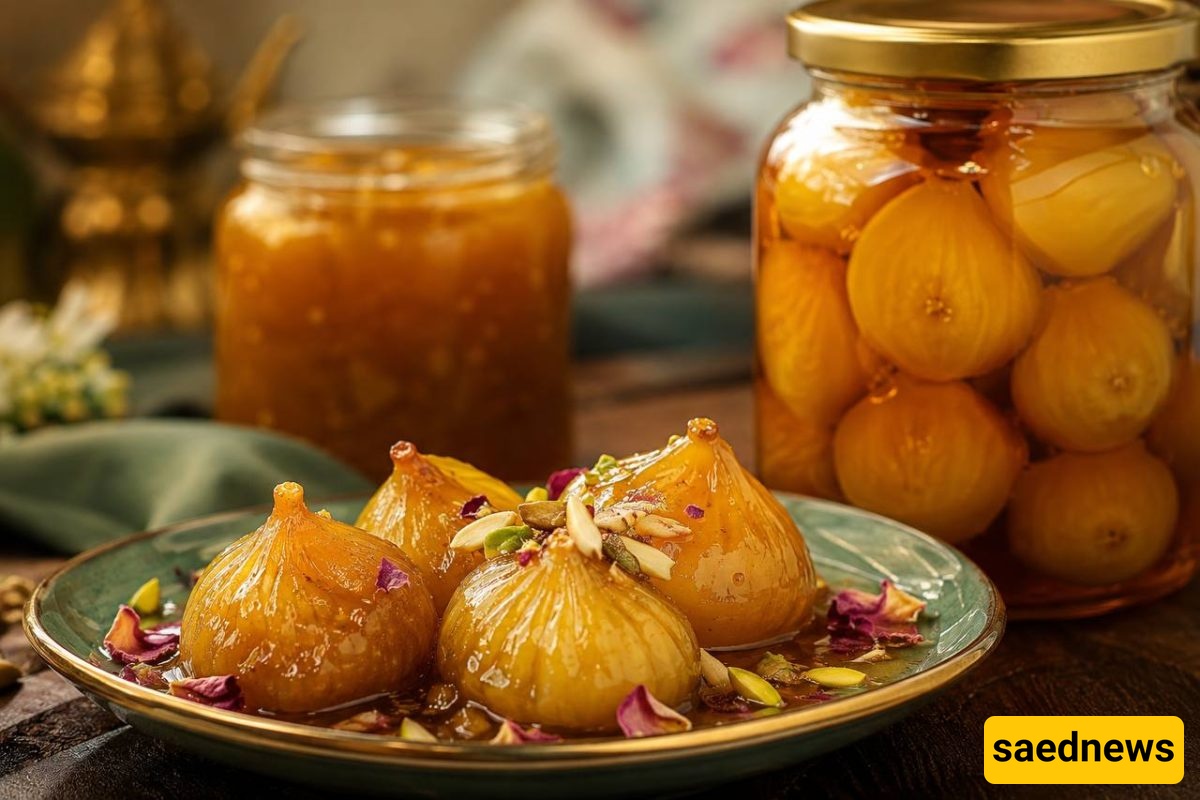
According to Saednews, Yellow fig jam is a beautifully colored, fragrant homemade preserve that can be prepared with whole figs, clear syrup, and a delicious flavor by following a few simple tips. Some people prefer an elegant fig jam with intact figs, while others enjoy a softer, mashed texture.
This recipe explains two methods for making yellow fig jam: a classic whole-fig version and a mashed version, along with useful tips for keeping the figs intact, achieving clear syrup, preventing crystallization, and making a flavorful homemade jam.
Ingredient | Amount |
|---|---|
Fresh yellow figs | 1 kg |
Sugar | 800 g (about 4 cups) |
Water | 2 cups |
Strong brewed saffron | 2 tbsp |
Fresh lemon juice | 1 tbsp |
Cardamom, optional | 2–3 pods |
Vanilla, optional | About ¼ tsp |
Rose water, optional | 1–2 tbsp |
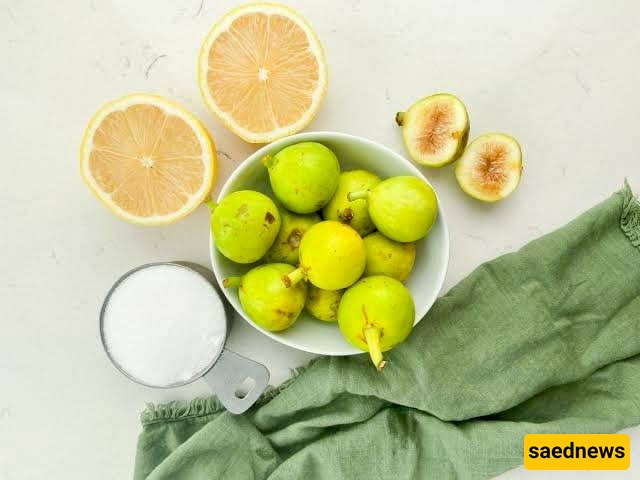
For an elegant, whole-fig jam, choose fresh, evenly sized figs that are healthy and slightly firm. Wash them gently and place them in a colander to drain completely.
Using a toothpick, make several small holes in each fig. This allows the syrup to penetrate the fruit and gives the jam a richer flavor.
Combine the sugar and water in a pot and place it over medium heat. Stir just enough for the sugar to dissolve completely.
Let the syrup boil for a few minutes until it begins to thicken. Avoid excessive stirring, as this can encourage crystallization and make the syrup less clear.
Carefully place the prepared figs into the syrup and reduce the heat to low. Let them cook gently for about 30–45 minutes, allowing the syrup to penetrate the figs while maintaining their shape.
For an attractive presentation and extra flavor, some people also add a small amount of chopped walnuts.
To prevent the figs from breaking apart, do not stir them with a spoon. If they need to be repositioned, gently shake the pot instead. Remove any foam that forms on the surface with a spoon to keep the finished syrup clear and attractive.
Once the figs are tender and the syrup has reached the desired consistency, add the strong brewed saffron and fresh lemon juice.
Allow the jam to cook for a few more minutes over low heat so the saffron and lemon flavors blend with the figs.
If desired, add a little rose water or a few cardamom pods at this stage for additional fragrance.
Remove the pot from the heat and allow the jam to cool completely. Transfer it to clean, completely dry glass jars and store them in the refrigerator.
Always use a clean, dry spoon when serving the jam to help maintain its quality for longer.
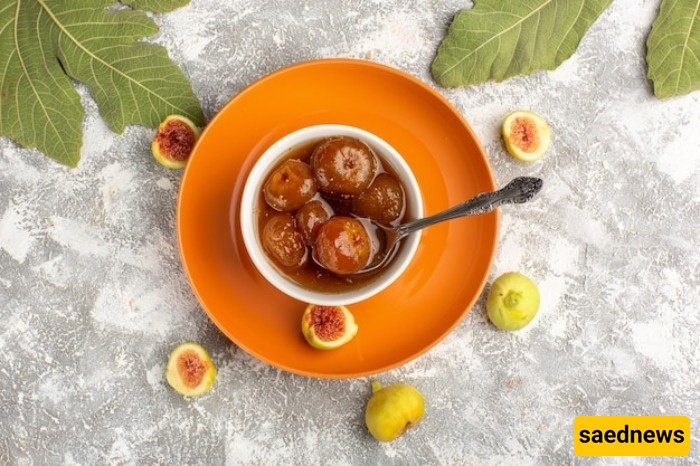
The ingredients are the same as for the whole-fig version. The main difference is the type of figs and the cooking method.
For a smoother mashed jam, use softer, fully ripe figs.
Wash the figs and cut them into smaller pieces, or gently break them apart by hand.
Place the figs and sugar in a pot and let them sit for several hours so the figs release their juices and absorb some of the sugar.
Add the water and place the pot over low heat.
Allow the figs to soften gradually. You can gently mash them with the back of a spoon to create a more uniform texture.
Remove any foam that forms on the surface.
When the syrup reaches the desired thickness, add the brewed saffron and lemon juice.
Cook for a few more minutes, then remove from the heat.
Once completely cool, transfer the mashed fig jam to a clean, dry jar and refrigerate.
Do not cover the pot while cooking. Steam can make the jam cloudy, and boiling syrup may overflow.
For a different flavor, add about 1 teaspoon of freshly grated ginger instead of vanilla or rose water.
If using cardamom, it is usually best not to combine it with vanilla, ginger, or rose water, as cardamom already provides a strong aroma.
If the figs have different levels of ripeness, separate them. Add firmer figs first and softer figs about 10 minutes later so they all maintain a suitable texture.
Add vanilla during the final minutes of cooking, just before turning off the heat. Excessive heat can negatively affect its flavor.
Instead of fresh lemon juice, a very small amount of citric acid—about the tip of a teaspoon—can be used to help prevent crystallization.
A copper or enamel-coated pot is recommended for making jam.
For a deeper color and better flavor, let the finished jam rest in the pot for several hours before transferring it to jars. At this stage, the pot may be covered.
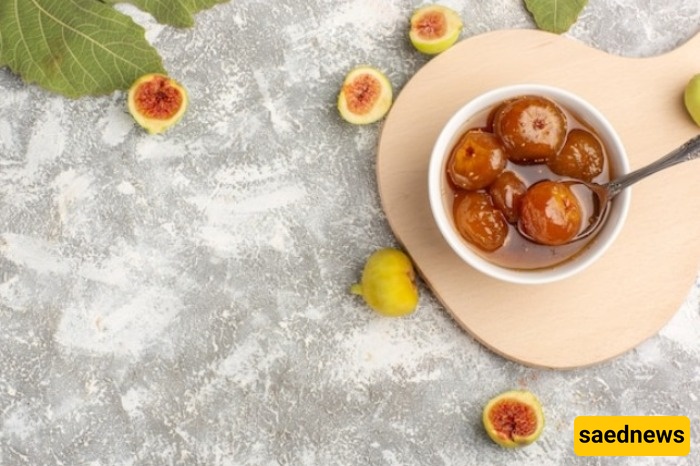
Yellow figs contain antioxidants and dietary fiber, while the fruit itself provides naturally occurring sugars and various nutrients. However, because jam contains a significant amount of added sugar, it should be enjoyed in moderation.
Figs contain antioxidant compounds that help protect cells from oxidative stress and contribute to overall health.
The dietary fiber naturally found in figs can support healthy bowel function and may help with constipation.

Because fig jam contains a considerable amount of sugar, it provides a concentrated source of carbohydrates and energy.
Fig jam is calorie-dense because of both the figs and added sugar. It can contribute calories to the diet, although it should not be considered a special treatment for weight gain.
While figs provide useful nutrients, claims that yellow fig jam directly boosts immunity, reduces inflammation, or treats heart pain should not be overstated. Jam is primarily a sweet preserve, and its high added-sugar content means that its health benefits are more limited than those of fresh figs.