SAEDNEWS: Freezing is an excellent way to preserve the quality of many foods. In this article, we have provided several tips for properly freezing high-quality fish. Stay with us.
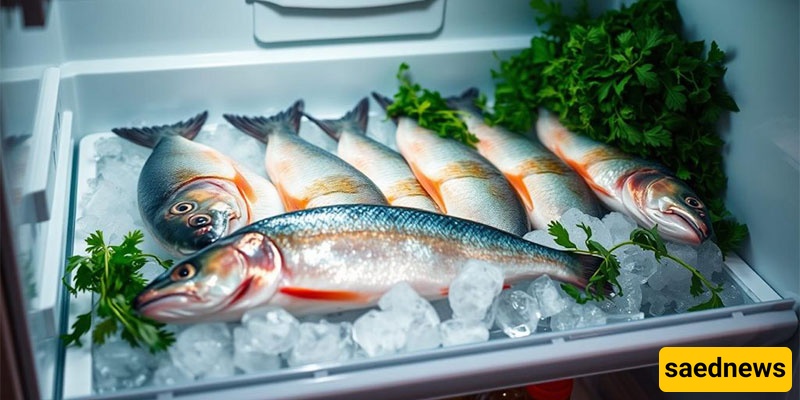
According to SAEDNEWS, It has probably happened to you that the amount of fish you purchased is more than you can consume in one meal, so you need to store the extra fish in the freezer.
Since fish usually stays fresh in the refrigerator for no more than two days, freezing is necessary for longer storage. In this article, we will provide a complete guide on storing fish from the time of purchase to freezing and finally explain the proper method for thawing it.
Keep fish in a cold environment or on ice after purchasing it.
When you arrive home, place the fish in a container filled with ice.
If the fish is not already cleaned, remove the scales and clean it thoroughly.
It is better to cut the fish into pieces and place them in a container with ice.
Finally, wash the fish properly and dry it completely.
Place the cleaned fish inside freezer bags.
Remove all the air from the bags and seal them tightly.
Spread the fish pieces flat inside the bags and avoid stacking them on top of each other so they freeze faster.
After packaging the fish, make sure to write the date on each package.
To freeze fish properly, keep it at a temperature between -18 and -20 degrees Celsius.
Make sure the plastic bags used for storing fish pieces do not have any holes. If fish is exposed to air, it can become tough and dry.
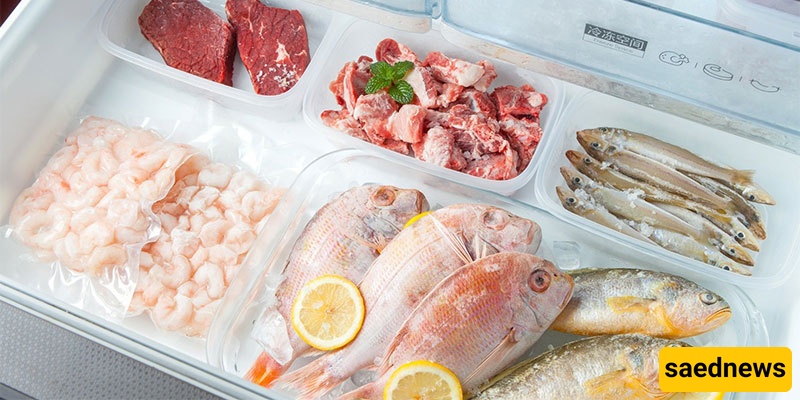
The maximum storage time for low-fat fish is one to two days in the refrigerator and four to six months in the freezer. However, fatty fish can be stored for one to two days in the refrigerator and two to three months in the freezer.
To prevent frozen foods from losing their quality and nutritional value, they should be thawed correctly after being removed from the freezer. Once the fish has been properly defrosted, it can then be prepared and consumed.
There are three methods for thawing fish: thawing in the refrigerator, thawing in cold water, and thawing using a microwave.
In the refrigerator thawing method, the package of fish should be transferred from the freezer to the refrigerator 24 hours before use. Do not open the package or sprinkle salt on it to speed up the thawing process, as these actions can seriously damage the food.
For thawing with cold water, place the sealed package of fish or meat in cold water without removing it from the packaging. The water should be changed every 30 minutes so that the food remains in cold water until it is completely thawed. Otherwise, any potential harmful microorganisms in the food may become active and contaminate it.
For microwave thawing, follow the instructions provided with the appliance. Carefully adjust the temperature to ensure that the food is thawed rather than partially cooked. In addition, foods thawed in the microwave should be used immediately.
Avoid placing frozen fish under hot water, leaving it at room temperature, putting it in warm water, or using any method that causes a sudden change in the package temperature.
Keep in mind that frozen fish that has been illegally thawed by sellers and marketed as fresh fish spoils very quickly. Such fish often has a soft, loose texture and contains excess liquid or blood-like fluid.
Therefore, always buy southern fish in frozen form from reputable centers and stores, and try to purchase fish (whether fresh or frozen) in properly packaged form.