SAEDNEWS: How to Prepare Unboiled Verjuice (Sour Grape Juice)
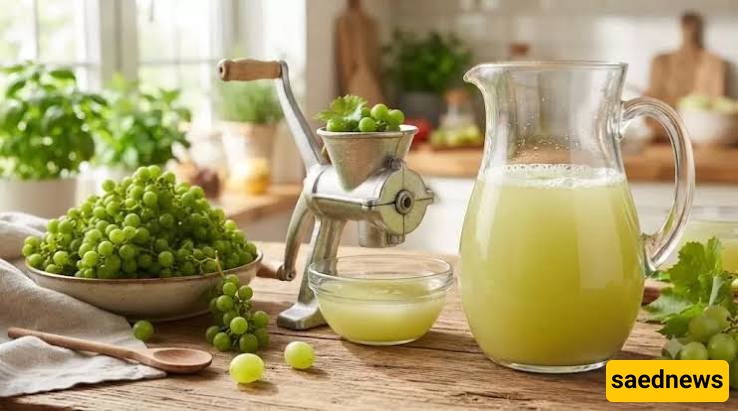
According to Saednews, Verjuice, known as Abghooreh in Persian cuisine, is one of the oldest and most authentic Iranian culinary seasonings. It is made from the juice of unripe grapes and is valued for its naturally sour flavor, fresh aroma, and wide range of uses in traditional dishes. Unlike some commercial verjuice products that may contain preservatives or additives, homemade verjuice prepared from fresh sour grapes offers a more natural taste and better quality.
Many people think making verjuice at home is complicated, but the process is actually simple. With a few careful steps, you can prepare a clear, flavorful, and long-lasting homemade verjuice. One common question is whether verjuice should be made without boiling or after boiling. Both methods have their own advantages, and the best choice depends on how you plan to use and store it.
This guide explains the complete method of making verjuice without boiling, followed by the boiling method, storage techniques, ways to prevent mold, choosing the best sour grapes, and important tips for preparing high-quality homemade verjuice.
Preparing verjuice at home is not only more economical than buying ready-made products, but it also allows you to control the quality of ingredients and the final product. Homemade verjuice contains no artificial colors, artificial flavors, or unnecessary preservatives when prepared properly.
Another advantage is that you can adjust the level of sourness, thickness, and amount of salt according to your preference. This is especially useful for people who prefer natural seasonings or follow a low-sodium diet.
Ingredients for Homemade Verjuice Without Boiling
You do not need complicated ingredients to prepare delicious homemade verjuice.
Ingredient | Amount |
|---|---|
Fresh, healthy unripe grapes | 5 kilograms |
Salt (optional) | 1–2 tablespoons |
Not every type of sour grape is suitable for making verjuice. The best grapes have:
Thin skin
Plenty of juice
A balanced sour flavor
Firm texture
Traditional varieties such as Asgari grapes and Shirazi sour grapes are commonly used because they produce a flavorful and aromatic verjuice.
When selecting grapes:
Choose grapes that are firm and completely unripe.
Avoid grapes that are bruised, damaged, or moldy.
Do not use grapes with brown spots.
Fresh grapes should have a bright green color and strong texture.
Making verjuice does not require special equipment. Common kitchen tools are enough.
You will need:
Juicer or blender
Clean cotton cloth or cheesecloth
Fine strainer
Stainless steel pot (for boiling method)
Sterilized glass bottles
Funnel
Wooden or stainless steel spoon
First, remove the grapes from their stems. Discard all leaves, stems, damaged grapes, and unhealthy pieces.
Even a small amount of spoiled grape can affect the flavor of the entire batch and increase the chance of spoilage.
Place the grapes in a colander and wash them several times with cold water to remove dust, dirt, and possible chemical residues.
If desired, soak the grapes briefly in water mixed with vinegar or a fruit and vegetable cleaning solution, then rinse them again with clean water.
One of the most important secrets to making high-quality verjuice is ensuring that the grapes are completely dry.
After washing, spread the grapes on a clean cotton cloth and allow all moisture to disappear.
Extra water can reduce shelf life and increase the possibility of fermentation or mold growth.
After drying, extract the juice from the grapes.
A juicer usually provides the best result because it separates much of the skin and seeds, creating clearer verjuice.
If using a blender:
Crush the grapes completely.
Pour the mixture through a clean cloth or fine strainer.
Press gently to separate the juice.
If you do not have electrical equipment, crush the grapes using a mortar or masher and squeeze the juice through a cloth.
Clearer verjuice has better appearance and quality.
Filter the juice one or two times through a fine cloth or strainer to remove:
Grape skin particles
Seeds
Solid grape pulp
Pour the filtered verjuice into a clean glass container.
Leave it in a cool place for about one hour so that fine particles settle at the bottom.
Slowly transfer the clear liquid into another bottle without disturbing the sediment.
This improves clarity and appearance.
Choose sterilized and completely dry glass bottles.
Using a funnel, pour the verjuice into bottles and leave around two centimeters of empty space at the top.
Close the lid tightly to reduce air exposure.
For unboiled verjuice, store the bottles:
In the refrigerator
In a cool place
Away from direct sunlight
Some people boil verjuice to increase its shelf life.
The process:
Pour the filtered verjuice into a stainless steel or enamel pot.
Heat gently.
Allow it to boil for around 10–15 minutes.
Remove any foam from the surface.
Let it cool.
Filter again.
Transfer into sterilized glass bottles.
Boiling can improve storage life, but some heat-sensitive nutrients, including vitamin C, may decrease during heating.
The answer depends on your purpose.
Advantages:
Fresher aroma
More natural flavor
Better preservation of heat-sensitive nutrients
Best for:
Regular household use
Consumption within a few months
Refrigerator storage
Advantages:
Longer shelf life
Lower risk of spoilage
Best for:
Long-term storage
Situations where refrigeration space is limited
To prepare clear, flavorful, and long-lasting verjuice:
Use fresh and healthy grapes.
Dry grapes completely before juicing.
Filter the juice carefully.
Use sterilized glass bottles.
Store away from heat and sunlight.
Always use a clean, dry spoon.
These simple steps greatly improve the quality and shelf life of homemade verjuice.
Mold is one of the most common storage problems.
Main causes include:
Remaining moisture inside bottles encourages mold growth.
A few damaged grapes can contaminate the entire batch.
Poorly sealed bottles allow oxygen to enter and encourage mold formation.
A wet or dirty spoon can introduce bacteria and cause spoilage.
High temperatures speed up yeast and mold growth.
Removing only the visible mold layer is not recommended.
Mold roots may spread throughout the liquid even when they cannot be seen.
If mold appears, it is safer to discard the entire bottle.
If bubbles appear or gas escapes when opening the bottle, fermentation has likely started.
Possible reasons:
Grapes were not completely dry.
Equipment was contaminated.
The bottle was stored in a warm place.
The juice was not filtered properly.
The bottle was not sealed correctly.
Proper filtering, sterilized bottles, and cool storage help prevent this problem.
Bitterness can develop because of:
Poor-quality grapes
Excessive crushing of seeds
Too much grape skin or pulp remaining
Long storage in warm conditions
When using a blender, avoid grinding seeds too much.
The best storage container is:
Dark glass bottle
Strong airtight lid
Narrow opening
Size suitable for your consumption needs
Small bottles are often better because less juice is exposed to air after opening.
Glass containers are recommended.
Because verjuice is acidic, long-term storage in some plastic containers may reduce quality.
Glass is a safer and more suitable choice for acidic seasonings.
For better preservation:
Keep away from direct sunlight.
Store in a cool place.
Refrigerate after opening.
Keep away from heat sources.
Long exposure to sunlight is not recommended because it may affect flavor and quality.
Shelf life depends on preparation and storage conditions.
Method | Storage Condition | Approximate Shelf Life |
|---|---|---|
Without boiling | Refrigerator | Several months |
With boiling | Cool place, then refrigerator after opening | Usually longer |
Better hygiene during preparation results in longer storage life.
How to Sterilize Verjuice Bottles
Place bottles in a pot.
Cover with water.
Boil for about 15 minutes.
Remove and dry completely.
Place washed bottles in a low-temperature oven.
Heat for 20–30 minutes.
Allow them to cool.
The bottles must be completely dry before filling.
Common Mistakes When Making Verjuice
Mistake | Result |
|---|---|
Using damaged grapes | Lower quality and spoilage risk |
Not drying grapes | More chance of mold |
Using plastic containers | Reduced long-term quality |
Not filtering juice | Excess sediment |
Frequently opening bottles | More air exposure |
Using wet spoons | Contamination |
No. Adding salt is optional.
Some people add a small amount of salt to increase preservation, but proper hygiene, sterilized bottles, and correct storage conditions are more important.
If you prefer a natural flavor or a low-sodium diet, you can prepare verjuice without salt.
Summer is the ideal season, especially from mid-July to early August.
During this period, sour grapes have:
Enough growth
Higher juice content
Ideal natural acidity
Verjuice contains natural compounds such as:
Organic acids
Polyphenols
Flavonoids
Vitamin C
However, it should be considered a food ingredient, not a replacement for medical treatment.
Moderate consumption as part of a balanced diet may provide benefits such as:
Verjuice can replace some high-calorie sauces while adding a pleasant sour taste.
Unripe grapes contain antioxidants that help protect cells from oxidative stress.
Some people consume a small amount with meals, especially fatty foods, as they feel it supports digestion.
Verjuice itself does not cause weight loss, but its low calorie content makes it a useful alternative to heavier sauces.
People who should consume it carefully include:
Individuals with acid reflux
People with stomach ulcers
Those with very sensitive stomachs
Anyone following a medically prescribed diet
People with digestive conditions should consult a healthcare professional regarding suitable amounts.
If prepared correctly, stored in sterilized bottles, and refrigerated, it can last for several months.
Foaming usually indicates fermentation caused by contamination, moisture, or warm storage.
Slight color changes over time can be normal. However, unpleasant odors, mold, or gas formation indicate spoilage.
Yes. Large quantities can be frozen in suitable containers. Once thawed and opened, it should be consumed quickly.
A small amount may help, but cleanliness and proper storage have a greater effect.
It is commonly used with:
Salads
Stews
Traditional Iranian dishes
Sauces
If drinking it on an empty stomach causes discomfort, consume it with food instead.
Making homemade verjuice without boiling is one of the best ways to preserve the fresh aroma and natural sour flavor of unripe grapes. By choosing healthy grapes, sterilizing bottles properly, filtering the juice, and storing it correctly, you can enjoy a natural homemade seasoning for months.
For longer storage, short-term boiling can be a more reliable option. Regardless of the method, cleanliness, glass containers, and protection from moisture and contamination are the most important factors for maintaining high-quality verjuice.