SAEDNEWS: Halva is a famous Iranian dessert and sweet that is also distributed as a votive offering (nazri), but choosing the right flour is very important because the softness of halva depends on selecting good-quality flour.
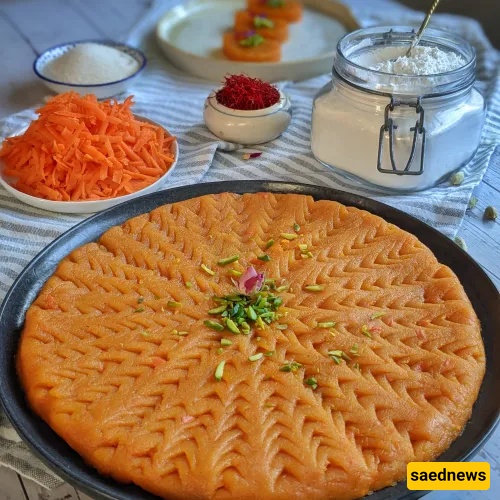
According to Saednews, Halva is a famous and traditional Iranian dessert and sweet made from a combination of flour, cardamom, rosewater, saffron, and sugar. It is usually served at memorial ceremonies and also offered as charity food during the months of Ramadan, Muharram, and Safar. Halva has many varieties and is prepared differently in various cities across Iran. In this section, we will explain which type of flour makes halva more delicious.
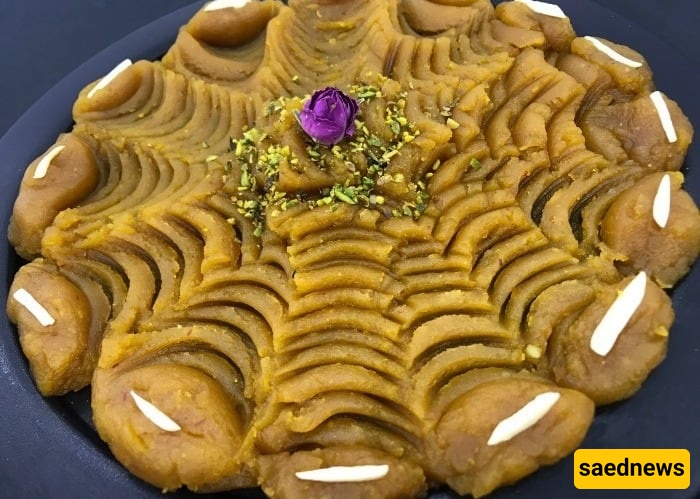
Step-by-step guide to making halva
To prepare halva, you can use wheat flour, white flour, rice flour, chickpea flour, sprouted wheat flour, or other types. However, the best flours for making halva are sangak flour, fortified flours, and whole wheat flour. Using these flours results in halva that is more nutritious, better colored, and more flavorful.
Wheat bakery flour has high gluten content, while whole wheat or sangak flour has lower gluten. This produces a softer halva that does not become hard or overly stretchy.
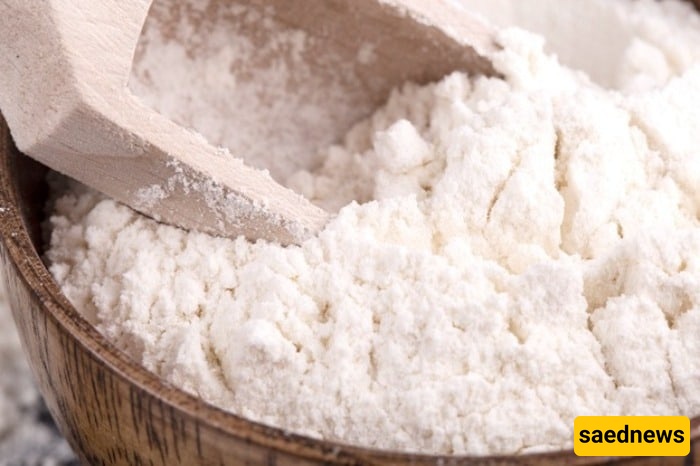
While roasting the flour, keep the heat low to prevent it from burning.
Sift the flour before use. Some people also sift the roasted flour to achieve a smoother texture before mixing it with oil.
Heat the oil beforehand so it is the same temperature as the roasted flour when combined.
Solid shortening or solid oil helps the flour roast better and makes the halva lighter and fluffier.