SAEDNEWS: Burger King combined data, location targeting, smart messaging, and automation to create a successful mobile campaign—proving that the right message at the right time can boost engagement, app installs, and sales.
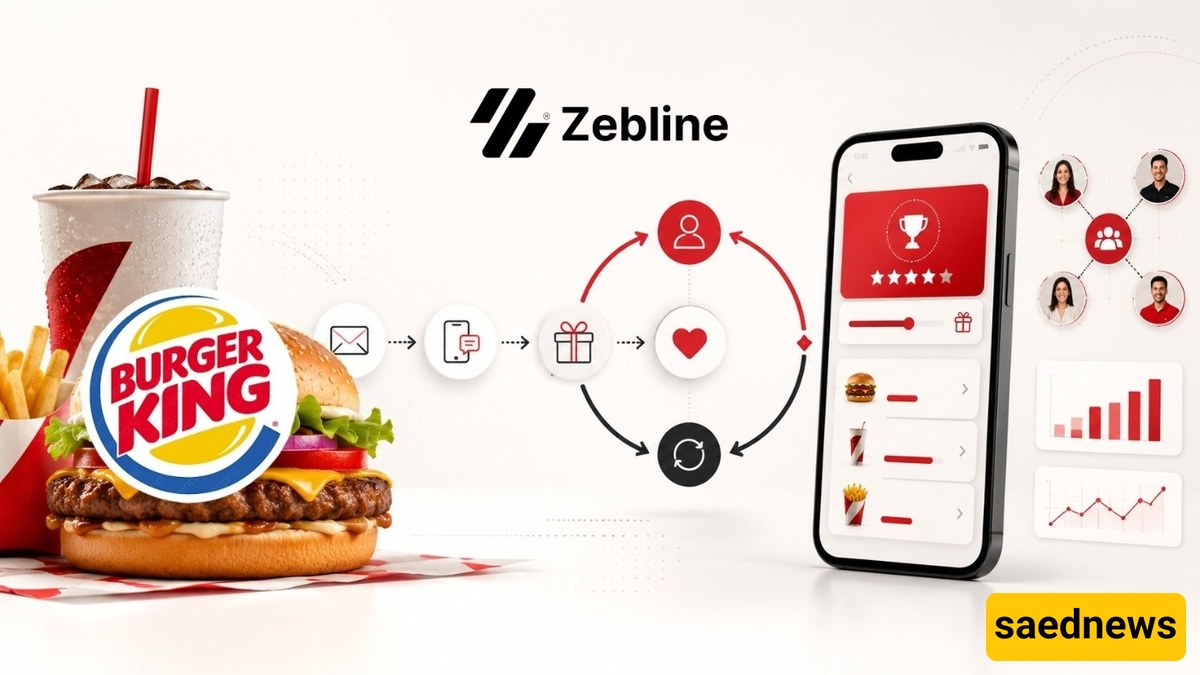
According to Saednews, Burger King did not become famous through a creative idea alone. The brand successfully combined data, location intelligence, smart messaging, and marketing automation to create one of the most impressive mobile-first campaigns. The campaign demonstrated that when brands truly understand user behavior and deliver the right message at the right moment, even a simple offer can drive stronger engagement, app adoption, and sales growth.
In the collaboration between Burger King and Braze, the main objective was to increase mobile app usage and build stronger relationships with customers. The results were remarkable: a 53.7% increase in monthly active app users, 3.2 million new users acquired, a 143% increase in users sharing their location data with Burger King, and an impressive 37x ROI from the famous Whopper Detour campaign.
The Whopper Detour campaign became one of the most recognized examples of creative location-based marketing and intelligent customer messaging.
The idea was simple but highly strategic: Burger King encouraged users to open the Burger King app and, when they were near a McDonald’s location, they received a special offer to purchase a Whopper.
The campaign combined location data, in-app messaging, push notifications, and a mobile-focused customer experience. Instead of sending messages randomly, Burger King reached users at moments when they were most likely to pay attention and take action. This precise timing and personalization helped the campaign go beyond awareness and actually influence customer behavior.
The key lesson is that marketing automation is not simply about sending automated messages. Its real value comes from helping brands create meaningful interactions based on customer behavior, location, journey stage, and real-time data.
Several important elements worked together to make the campaign successful from both a creative and performance perspective.
Instead of sending the same message to everyone, Burger King used location data to reach customers who were in the right place at the right time. The message was not only personalized but also connected to the user’s real-world context.
Users were not simply exposed to an advertisement. They entered an interactive journey. In-app messages, location permission requests, push notifications, and the purchase process were all connected into one seamless experience.
Burger King used message testing capabilities to improve communication with users and optimize campaign performance. This highlights an important point: even highly creative campaigns require data analysis and continuous testing to achieve maximum impact.
Marketing automation was the foundation that powered this campaign. It enabled Burger King to deliver the right message, to the right customer, through the right channel, at the right time.
Initially, users received an in-app message encouraging them to enable location access. After that, when they entered a specific area, they received a relevant offer. The campaign was triggered by customer behavior and location rather than relying on a fixed schedule.
This same approach is used in many successful modern campaigns. For example:
If a customer views a product but does not purchase, brands can create reminder journeys.
If a customer has been inactive for a long time, businesses can launch reactivation campaigns.
If a user has recently registered, companies can create onboarding journeys.
The common factor behind all these scenarios is that communication is based on customer behavior rather than assumptions.
Not every company can launch a campaign exactly like Whopper Detour, but the strategy behind it can be applied across many industries.
Any business communicating with customers through multiple channels can learn from this approach.
For example, an online store can identify users who repeatedly viewed a product but did not complete a purchase. It can then create a multi-step communication journey: first sending an email or push reminder, followed by an SMS message, and finally offering a relevant incentive or limited-time discount.
A service platform can identify inactive users and send different messages based on their previous interactions. A newly registered customer and a previous buyer who has become inactive should not receive the same communication.
In B2B environments, companies can create dedicated journeys for leads who have viewed demo pages, pricing information, or case studies. Through email, messaging, and relevant content, these leads can gradually be guided toward requesting a demo or starting a sales conversation.
Zibline helps marketing teams move beyond scattered message delivery and create customer communication strategies based on data, behavior, and customer journey stages.
With Zibline, businesses can segment users based on behavior, engagement, purchases, activity levels, and different customer attributes. Instead of sending identical messages to everyone, each customer group receives communication that matches its specific situation.
Zibline’s Journey capabilities allow businesses to design customer paths in advance. If a user opens a message but does not take action, the next message can be different. If the customer makes a purchase, they can automatically leave the previous journey. If they remain inactive, they can enter a re-engagement campaign.
This represents the difference between simply “sending messages” and intelligently managing customer relationships.
The Burger King campaign proved that the combination of creativity, data, and marketing automation can create results far beyond a traditional advertising campaign.
The 53.7% increase in monthly active users, 3.2 million new users, 143% growth in location sharing, and 37x ROI were not achieved through a creative idea alone. They were the result of a carefully designed, data-driven, multi-channel customer experience.
Zibline is built around the same principle: helping businesses create smarter email, SMS, and push notification campaigns based on customer data and behavior, improve customer experiences, and manage campaigns with greater intelligence and measurable results.
Businesses looking to create more customer-focused and data-driven campaigns can explore how Zibline can support their marketing automation strategy.