SAEDNEWS: The US Space Force has introduced Meadowlands, a mobile electromagnetic warfare system designed to disrupt satellite communications without physically destroying the spacecraft or creating clouds of orbital debris.
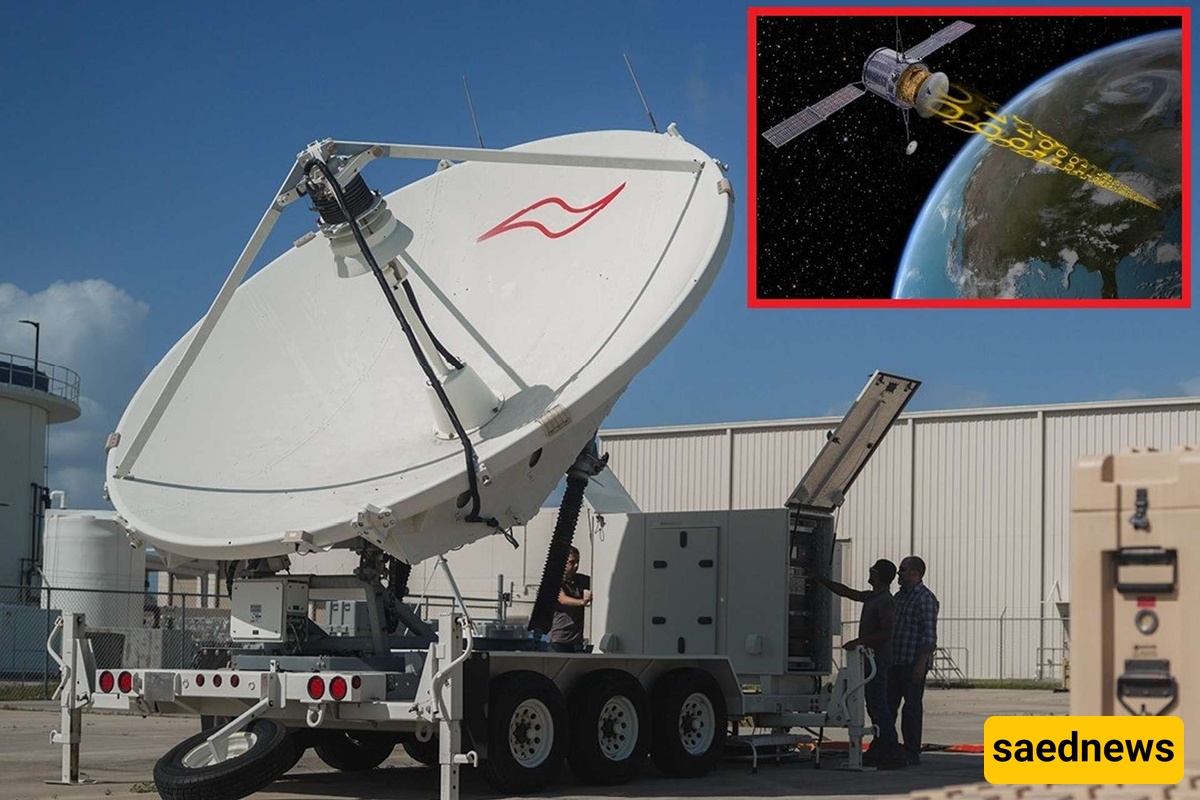
According to SaedNews: A satellite does not necessarily have to be blown apart to be taken out of action. The United States has now unveiled a new approach to space warfare that focuses on something far less visible: the electromagnetic signals connecting satellites with the ground.
The US Space Force has introduced a system called Meadowlands, a new anti-satellite capability developed by L3Harris Technologies. Rather than physically striking an orbiting spacecraft, the system is designed to interfere with the communications that allow a targeted satellite to receive commands and exchange information with ground stations.
The result could be a satellite that remains physically intact but is unable to perform its normal operational functions.
According to information released by the US Space Force, Meadowlands joined the service's electromagnetic warfare fleet on June 8. The system is intended to detect, disrupt and weaken an adversary's space capabilities, making it part of a broader effort to strengthen US electronic warfare capabilities beyond Earth.
One of the most notable features of Meadowlands is what it does not do.
Traditional destructive anti-satellite weapons can physically collide with spacecraft and destroy them. Such attacks can generate large quantities of debris, potentially leaving fragments traveling through orbit and creating additional hazards for other spacecraft.
Meadowlands takes a different route.
The system uses electromagnetic beams to interfere with the uplink and downlink communications of a targeted satellite. Uplink refers to signals sent toward a satellite, while downlink involves information transmitted from the spacecraft back toward the ground.
If those communication links are disrupted, the satellite can lose the ability to receive instructions or exchange data with its ground infrastructure. Its software and operational capabilities can consequently be impaired even though the spacecraft itself has not been physically shattered.
That distinction is becoming increasingly important as military and civilian activities in space depend on increasingly interconnected satellite networks.
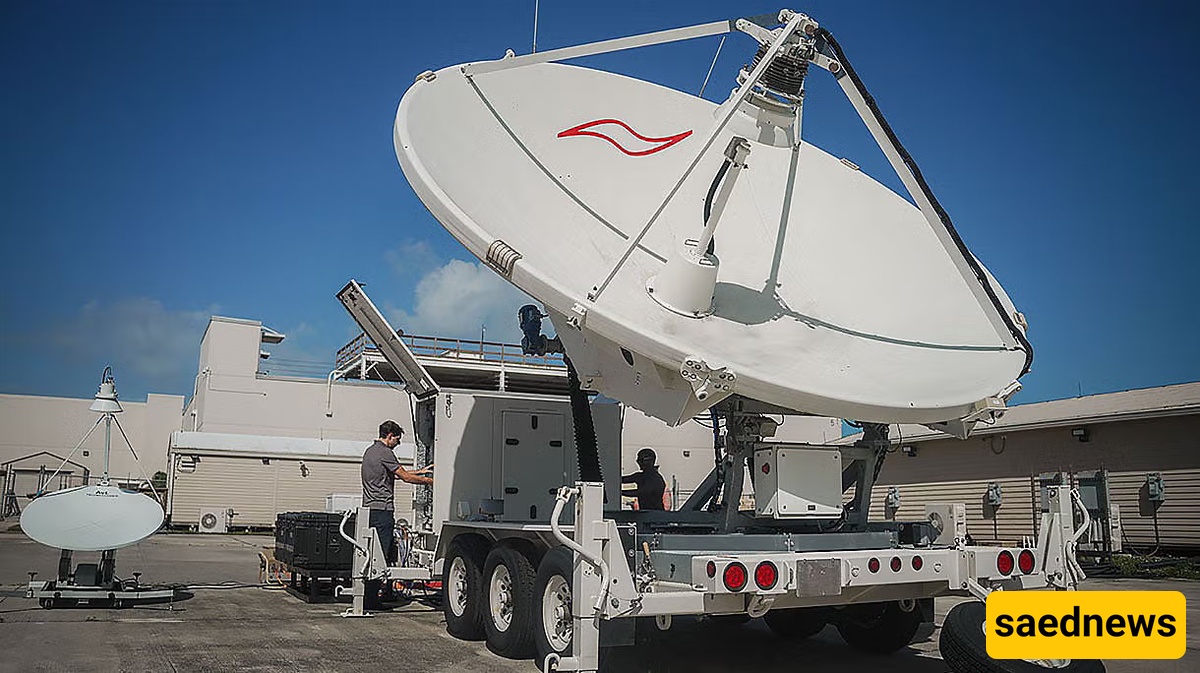
Meadowlands is reportedly an upgraded version of the Counter-Communications System, or CCS Block 10.2. Unlike a fixed installation, the new system is mounted on a mobile trailer. That configuration allows it to be moved and transported relatively quickly, including by military transport aircraft.
Mobility gives the system another important characteristic: it does not have to remain tied to a single permanent location.
The unveiling also comes against a significant backdrop in US space policy.
Since 2022, the United States has voluntarily stopped conducting destructive anti-satellite weapon tests that generate orbital debris. Washington has also called on other countries to avoid such tests.
The emergence of Meadowlands therefore highlights a different direction in anti-satellite warfare.
Instead of relying primarily on physical destruction, the system represents a focus on electronic interference—attempting to deny an adversary the ability to communicate with or effectively control a satellite while leaving the spacecraft itself intact.
That does not make the technology harmless. A satellite that suddenly loses its communication links can still suffer serious operational consequences. For military systems in particular, the ability to receive commands and transmit information can be central to their mission.
The key difference is the mechanism.
A conventional kinetic anti-satellite attack attempts to destroy its target through physical force. Meadowlands is designed to affect the electromagnetic environment around the satellite's communications, disrupting the connection between space and ground without creating the same type of physical debris.
The system's addition to the US Space Force's electromagnetic warfare fleet signals how the definition of conflict in space is expanding.
Space warfare is not necessarily about spectacular explosions visible from the ground. It can also involve invisible signals, disrupted communications and attempts to interfere with the systems that allow spacecraft to function as part of larger networks.
For military planners, that creates a different set of possibilities—and challenges.
A mobile electromagnetic system must be capable of identifying relevant targets and affecting their communications while operating as part of a broader space and electronic warfare architecture. The technology therefore reflects an emphasis on disrupting capability rather than simply destroying hardware.
The timing is also notable. Washington's decision to halt destructive anti-satellite tests in 2022 was closely connected to concerns about debris generated by such weapons. Orbital debris can remain around Earth and pose risks to spacecraft operating in the same environment.
Meadowlands offers an alternative concept: disable the target without physically turning it into thousands of fragments.
The system does not change the fact that competition between major powers is increasingly extending into space. Instead, it illustrates how that competition can take less visible forms.
A satellite can look perfectly intact from the outside while its connection to Earth is being disrupted.
That may be one of the most important aspects of the new system. In future conflicts, the decisive action in space may not always be the destruction of a spacecraft. It could be the moment when that spacecraft can no longer receive a command, transmit information or communicate reliably with the ground.
With Meadowlands now part of the US Space Force's electromagnetic warfare capabilities, Washington is signaling that the battle for control of space is also becoming a battle over the invisible communications that make modern satellites useful.
The technology raises an important question for the future of space security: if disabling a satellite no longer requires destroying it, could electronic warfare become an increasingly central part of how nations compete above Earth?