SAEDNEWS: Turning the pages of the history of the Qajar dynasty, one consistently finds clear and recurring connections between this historical period and Shemiran. From the residence of Qajar kings and their ministers in Shemiran to the political and social transformations of that era, all of these developments were rooted in northern Tehran
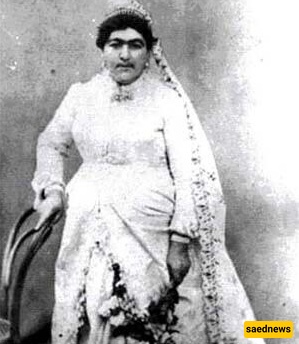
According to reports from Saed News Agency, citing Hamshahri Online, traces of many of these historical changes can still be found throughout Shemiran. For example, when the few remaining residents of the village of Emameh in Naserabad village, Lavasan, cross its old bridge, they occasionally recall a name that once made their village famous during the Qajar era. It was a bridge built through the efforts of a history-making woman—a teenage girl named Fatemeh, who later became known in the court of Naser al-Din Shah as Anis al-Dawlah.
But who was Anis al-Dawlah, and what was her connection to Lavasan? How did this village girl from a small settlement north of Tehran enter the royal court and become the king’s favorite wife? To answer these questions, we must go back more than 150 years through historical books, memoirs, and diaries, and travel to about six kilometers north of Lavasan.
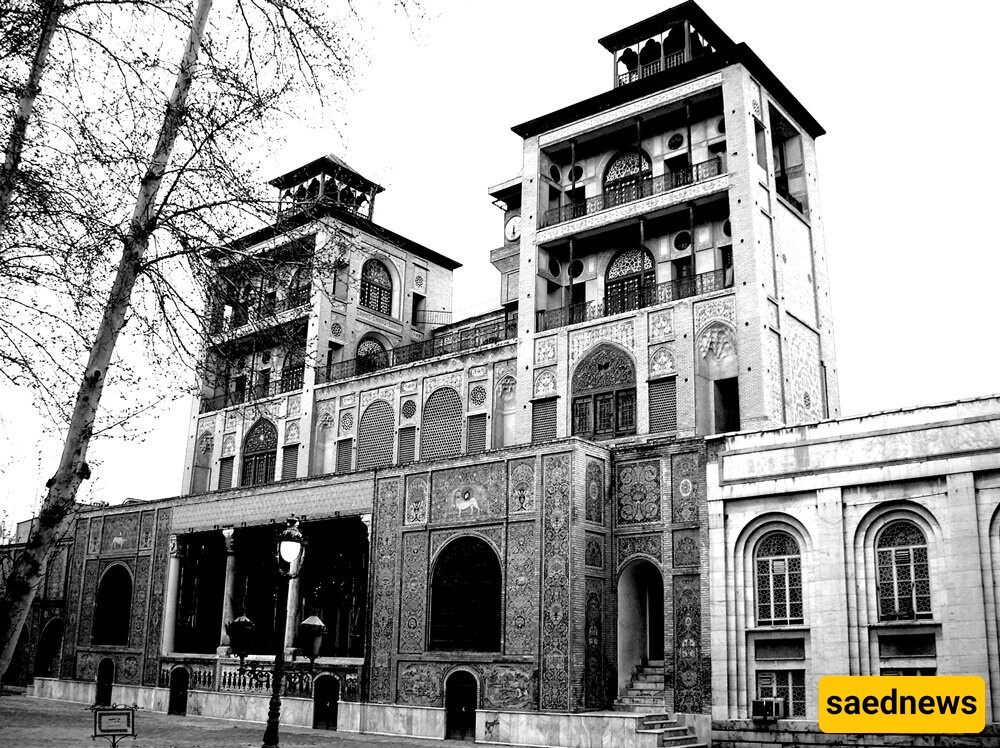
Naser al-Din Shah Qajar was famous for two things: having many wives and an intense passion for hunting. Both of these traits lead to one place—Emameh village and Naserabad in Lavasan. Naserabad is one of the villages of the Lavasan-e Kuchak rural district in Shemiranat County, located about six kilometers north of the town of Lavasan, the district center.
In a geography book on the political geography of Shemiran, the area is described as follows:
“It has 3 hectares of irrigated wheat farmland, 5 hectares of dry farming land, and 10 hectares of orchards and plantations. It is irrigated by a river. Its products include wheat, barley, potatoes, beans, dairy products, apples, walnuts, and cherries. The people’s occupation is farming and livestock raising.”
Emameh was one of the places where Naser al-Din Shah frequently went hunting.
However, one of these hunting trips was different from the others. In the second half of the 13th century AH, while hunting in Emameh, the Shah encountered a shepherd girl. After a short conversation, he found her to be pleasant and sweet-tongued, and brought her to Tehran. The girl’s name was Fatemeh, daughter of a man named Nour Mohammad. She had been orphaned in childhood and lived a difficult life in Emameh, working as a shepherd under the care of her uncle and aunt.
There is a well-known Persian saying: “Wherever a man takes a wife, he is considered from that place.” If we set aside the Shah’s other wives, by this saying Naser al-Din Shah could almost be called a man of Lavasan.
The Shah first brought Fatemeh to the court and entrusted her education in etiquette to Jeyran, one of his favorite wives, so she could learn court manners. After Jeyran’s death, her household and possessions were given to Anis al-Dawlah, and she gradually gained influence and status in the royal court.
She quickly became one of the most beloved and powerful women in the inner circle of Naser al-Din Shah, receiving the title Anis al-Dawlah. She later played an important role in political and social matters in Iran. More photographs of her exist than of any other wife of the Shah, likely due to his special affection for her.
At that time, no one except the Shah himself was allowed to photograph the women of the harem, and all existing photographs of Anis al-Dawlah were taken by him.
Dost-Ali Khan Moayyer al-Mamalek wrote in his memoirs:
“Anis al-Dawlah was in reality a queen, but she bore no children.”
She also received special honors. Etemad al-Saltaneh, the court historian, wrote in his diaries that in Jumada al-Thani 1312 AH, the Shah granted her the title of “Qaddisah” (the holy one) in recognition of her services. She was also awarded the “Sun Sash Medal,” a decoration originally intended for European queens, and became the first woman in Iran to receive it. She was also given the “Timsal-e Rahmat” (Portrait of Mercy).
Beyond titles, her role in the Shah’s private life was even more significant. Unlike other women of the harem, she was educated, articulate, and literate. Her writing style was fluent and elegant, which distinguished her from others and elevated her status close to that of a queen. She even had a female secretary—something reportedly unprecedented among queens in other countries.
Perhaps one of the most important reasons for her lasting fame was her role in the Tobacco Protest. Historical diaries record that Anis al-Dawlah separated herself from the Shah in protest and asserted her independence. After the issuance of the fatwa banning tobacco, she ordered all waterpipes (qalyans) to be collected. When the Shah asked who had declared tobacco forbidden, she reportedly replied:
“The one who made me lawful to you.”
Historical sources also mention that Anis al-Dawlah engaged in numerous charitable acts. Her endowments included donating a diamond ornament to the shrine of Imam Ali, a pearl curtain to the shrine of Imam Hussein, a silver shrine gate for the martyrs of Karbala, a diamond crown to the shrine of Imam Reza, the repair of the gold-plated silver door of the Goharshad Mosque, and the free printing and distribution of religious books.
Among her charitable works, two are particularly significant as they show her connection to her homeland. Years after entering the royal court, she returned to Naserabad and initiated the construction of a bridge in her native village. She also endowed the village of Kashanak in Shemiran.
Thus, despite her rise from a shepherd girl to one of the most influential women of the Qajar court, Anis al-Dawlah never forgot Lavasan and her origins.