SAEDNEWS: Iranian First Vice President Mohammad Reza Aref expressed optimism about the next two years, saying the government has prepared plans for every possible scenario. He emphasized that officials are ready to handle even the most challenging circumstances and have developed strategies to respond effectively if the worst-case situations arise.
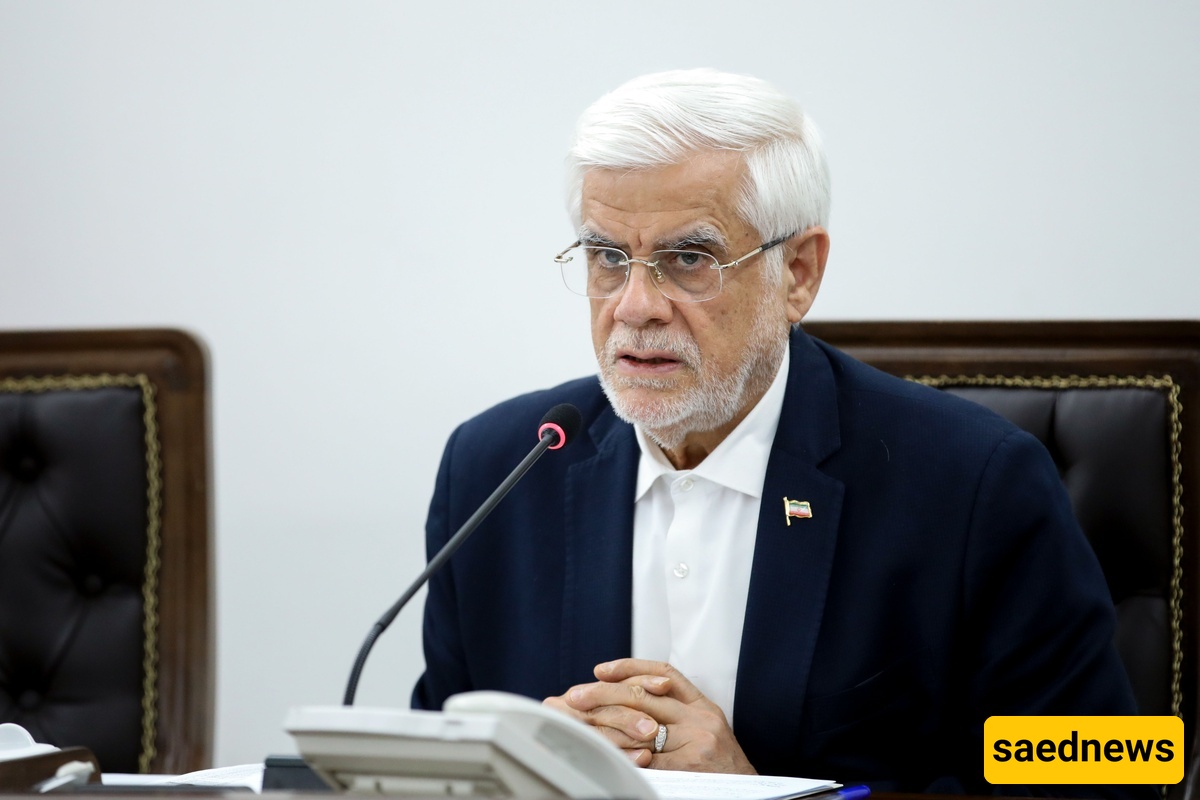
According to Saednews political report, Iran's First Vice President, Mohammad Reza Aref, stated during a meeting with public relations directors of government agencies that fostering hope and maintaining positive engagement with society should be the foundation of government communications. He emphasized that public relations offices should not focus solely on praising government officials but instead provide accurate, reliable, and balanced information to strengthen public trust and social capital.
Aref identified inconsistent statistical reporting as one of the country's key challenges, noting that conflicting figures released by different government agencies undermine public confidence. He stressed that public relations departments must coordinate closely to ensure consistent and transparent communication.
Referring to the current administration, Aref said that the 14th government had been operating under wartime conditions since the beginning of its term. Although the government had prepared plans for managing the country during conflict, its strategy was to prevent society from becoming overwhelmed by a wartime atmosphere. He praised government public relations offices for supporting this approach, saying that citizens did not feel they were living under wartime conditions before the recent 12-day conflict, and that they cooperated with government decisions throughout the crisis.
He attributed one of the government's greatest strengths to the close and sincere relationship between the president, the cabinet, and what he referred to as the "Martyr Imam," while also expressing gratitude for the support of the Supreme Leader.
Addressing criticism surrounding the Iran–U.S. memorandum of understanding, Aref said that even some government critics considered the agreement an important national achievement. However, he argued that certain media narratives unfairly portray the country's negotiators as traitors.
He emphasized that the government welcomes constructive criticism and urged government public relations offices and supportive media organizations to take a more active role in explaining government achievements and informing public opinion.
Aref added that while he did not expect support from political opponents, he expected government communication teams to present the first and most accurate account of events. He questioned whether the government had effectively explained the memorandum of understanding, arguing that when achievements are not communicated properly, opponents can more easily shape public perception with unfair narratives.
Highlighting public resilience during what he described as two recent wars against major powers, Aref said the government's duty is to serve the people and that creating hope remains essential. He added that public relations offices should not only promote optimism and stability but also collect public concerns and criticism and relay them to decision-makers. To fulfill this responsibility effectively, he said, communication professionals should be granted appropriate professional independence.
As the government enters its third year in office, Aref credited public support, honesty, consensus-building, and close ties with the "Martyr Imam" as key reasons for its success. He explained that during the two recent conflicts, the government relied not only on its legal powers but also on its executive authority to address urgent challenges. As an example, he said the country's customs clearance capacity doubled during the 12-day conflict. While legal authority remains the standard under normal circumstances, he said the government would again use its executive powers if future emergencies arise.
Aref stated that Iran's adversaries failed to achieve any of their declared objectives during the conflict. He expressed optimism about the next two years, saying that the country has made significant progress in science and strategic technologies following the 12-day war. According to him, expanding strategic technologies, improving living conditions, and combating price gouging will remain among the government's highest priorities.
He also stressed that the government is fully prepared for any future scenario. If another conflict is initiated, he said the government is ready to respond decisively. Conversely, if an agreement is reached, the country will continue pursuing its normal development plans. Regardless of circumstances, he emphasized that maintaining public calm and hope remains the government's responsibility.
In his closing remarks, Aref said that preserving the social unity established after the recent conflict is a shared responsibility across all state institutions. He instructed government public relations offices to prepare a unified report for Government Week outlining the administration's achievements as well as the challenges it has faced and their underlying causes. He said this would help prevent conflicting statistical reports and provide the public with a consistent and well-documented account of the government's performance.