SAEDNEWS: Iran's Foreign Minister Abbas Araqchi said the country's retaliatory strikes on U.S. military bases showed its ability to strike across the region without facing an effective military response, calling it a major shift in regional security.
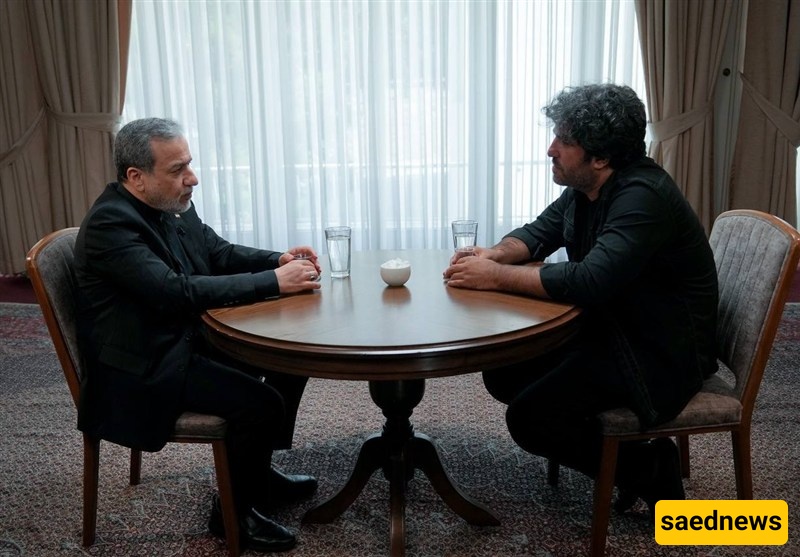
According to Saednews, Iranian Foreign Minister Abbas Araqchi stated that Iran had anticipated the possibility of military conflict long before it occurred and had developed comprehensive contingency plans for multiple scenarios. These preparations included potential joint military action by the United States and Israel, as well as the possibility of an assassination attempt against the country's supreme leadership. He emphasized that Iran was not caught off guard by the outbreak of hostilities and was ready to respond from the outset.
Araqchi explained that Iran chose to engage in negotiations with the United States despite expecting the possibility of war. According to him, the purpose of the talks was to demonstrate that Tehran had exhausted every diplomatic option before any conflict emerged. He claimed that Washington continued to insist on ending Iran's uranium enrichment program entirely and ultimately resorted to military action after negotiations failed to achieve that objective.
Rejecting the argument that diplomacy triggered the conflict, Araqchi said the war resulted from what he described as a mistaken belief by the United States and Israel that Iran had become strategically weakened and had lost its regional deterrence. He argued that Iran's military response disproved those assumptions and eventually forced its opponents to end their campaign.
The foreign minister also said that lessons learned from an earlier 12-day conflict helped Iran strengthen its armed forces, improve operational readiness, and enhance missile capabilities. These improvements, he claimed, contributed to success during a later 40-day conflict and exceeded the expectations of Iran's adversaries.
Araqchi noted that Iran's Armed Forces remained on full operational alert throughout the diplomatic process and were never instructed to depend on negotiations for the country's security. He added that contingency measures, including the possible closure of the Strait of Hormuz under certain wartime conditions, had been prepared in advance and could be implemented according to established military plans.
He further stated that decisions regarding negotiations were made collectively through a specialized committee operating under Iran's Supreme National Security Council. At the same time, the government continued military preparations while maintaining that demands to permanently halt or suspend uranium enrichment were unacceptable, describing Iran's nuclear rights as non-negotiable.
Concluding his remarks, Araqchi said Iran continues to prefer diplomacy as the best way to avoid the human and economic costs of war. However, he stressed that the country would not compromise its national interests or core strategic policies under external pressure.