SAEDNEWS: Israeli Prime Minister Benjamin Netanyahu, in his latest controversial remarks, directly threatened Turkish President Recep Tayyip Erdoğan while invoking the collapse of the Ottoman Empire. He also announced plans to establish a security zone in southern Lebanon.
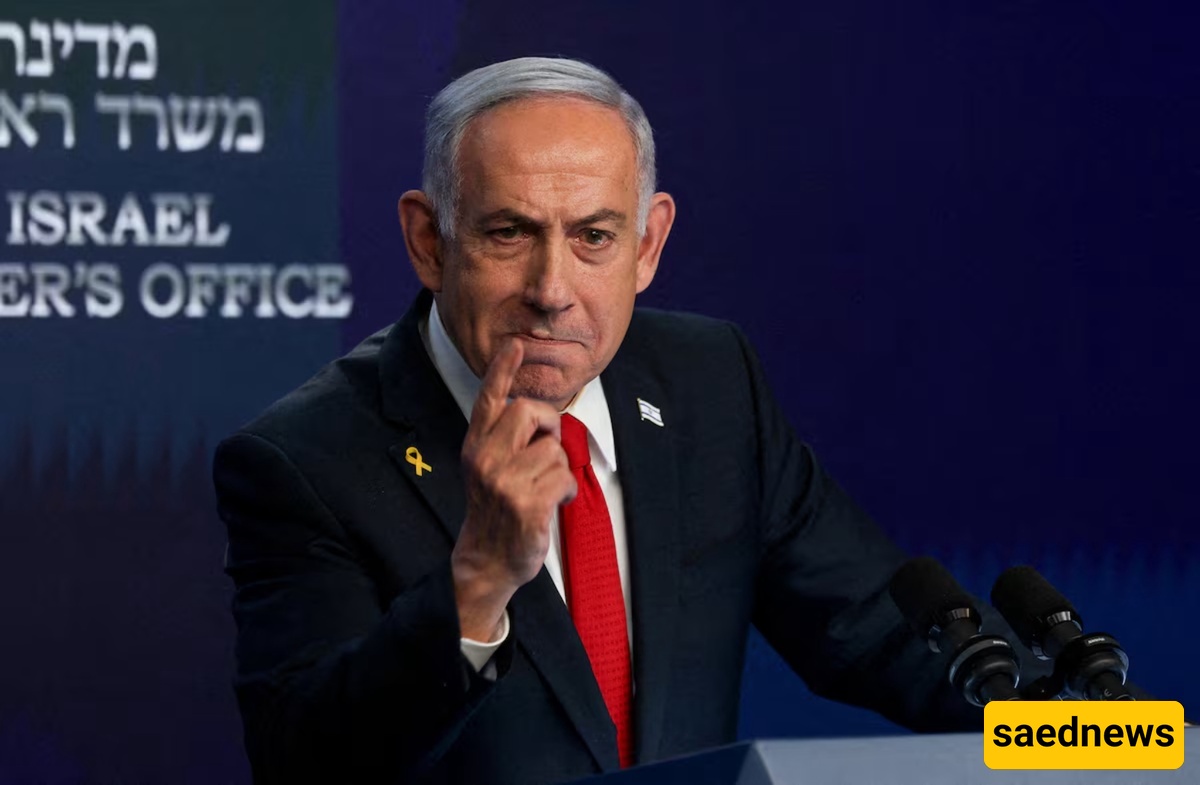
According to the Political Desk of Saednews , Israeli Prime Minister Benjamin Netanyahu, during a televised interview and while addressing Israeli troops, issued a new series of provocative statements and regional threats directed at Turkey, Iran, Lebanon, and Egypt.
Referring to recent regional developments, Netanyahu claimed that Iran's influence had weakened as a result of the recent conflict and argued that events unfolding in Turkey reflected the same shift. Responding to recent remarks by Turkish officials regarding Jerusalem, he described Turkish President Recep Tayyip Erdoğan as a representative of the "Muslim Brotherhood axis" and, in a confrontational tone, urged him to "calm down." Netanyahu also asserted that the 400-year era of Ottoman rule had long ended, claiming that Israel had previously demonstrated how it responds to threats and would never allow anyone to endanger its existence.
Addressing the situation along Israel's northern front, Netanyahu said during a visit to southern Lebanon that Israeli forces would remain in the area until Hezbollah is fully disarmed and all security threats are eliminated. He further claimed that, with the approval of the Lebanese government, a 10-kilometer security buffer zone had been established inside Lebanese territory. According to Netanyahu, maintaining this military presence could eventually pave the way for mutual recognition between Lebanon and Israel. He also renewed warnings toward Iran, stating that Israel would target Iranian military infrastructure again if it considered such action necessary.
Netanyahu expanded his remarks beyond Lebanon and Iran, turning to Israel's southern and western borders. Referring to discussions with Egypt concerning the Sinai Peninsula, he said Israel had clearly communicated its security expectations to Cairo and claimed that some of those measures were already being implemented. Speaking about the Gaza Strip, he acknowledged that the proposal for what he described as "voluntary migration" remained under consideration. When asked about rebuilding Israeli settlements in Gaza, Netanyahu replied that successful leadership means acting first and revealing plans afterward rather than announcing every intention in advance.
In the final part of his remarks, Netanyahu shifted his focus to U.S. financial assistance. He argued that Israel's economy had grown strong enough to rely on its own gross domestic product instead of American financial support and called for the gradual termination of U.S. aid beginning this year. The comments appeared intended to project economic independence and resilience despite the mounting pressures associated with ongoing regional conflicts.
The remarks have intensified debate over whether the region is heading toward further escalation. A key question now is whether U.S. President Donald Trump could restrain Netanyahu's approach or whether a new wave of regional confrontation is becoming increasingly likely.