Saed News: Rumors about lifting oil sanctions and freeing ports, reported by American media outlets, have been heard, but an unresolved claim by Trump has placed the final agreement in uncertainty.
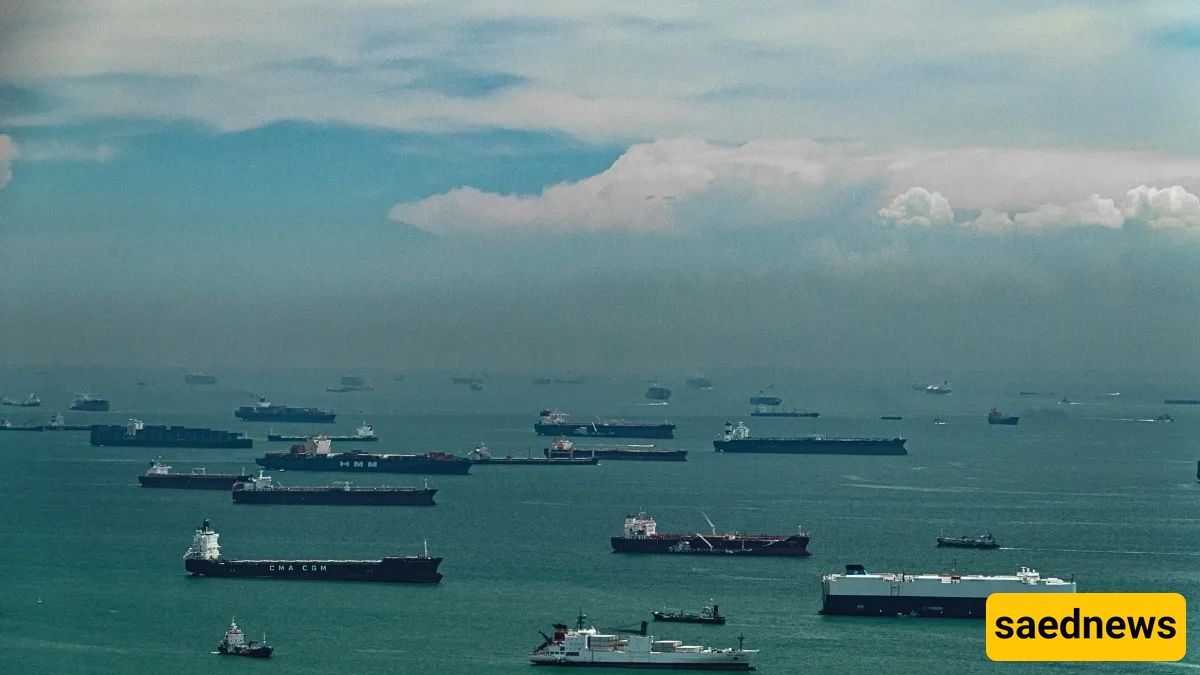
According to SAEDNEWS, while reports suggest that Tehran and Washington are moving closer to an understanding to end the war that began in late February, Donald Trump emphasized on Sunday that the naval blockade of Iranian ports by the U.S. Navy will continue at full strength until an agreement is reached, approved, and signed by both sides.
Shafaqna reported that he wrote on Truth Social: negotiations are proceeding in an orderly and constructive manner, and he has instructed his representatives not to rush toward reaching a deal during this period.
“Both sides must take their time and act correctly. No mistakes can be made! Our relationship with Iran is becoming a much more professional and productive relationship.”
He again stated that Iran must understand that it cannot produce or acquire nuclear weapons. This claim comes while Tehran has repeatedly emphasized that its nuclear program is peaceful and that it has no intention of building a nuclear bomb, although it will not give up its nuclear rights.
Reuters reported on Sunday, citing a senior Iranian source, that Tehran has not agreed to hand over its highly enriched uranium stockpile.
The source said that Iran’s nuclear issue was not part of the preliminary agreement with the United States.
“The nuclear issue will be discussed in negotiations for a final agreement and therefore is not part of the current deal. No agreement has been reached on transferring Iran’s enriched uranium stockpiles abroad.”
These remarks came one day after Trump claimed that the two countries were largely close to an agreement and that the Strait of Hormuz would be reopened. The U.S. president added on Saturday that final details are still being reviewed and will be announced “soon.”
Various media outlets in the U.S. and Iran reported that this memorandum, which could lead to a full agreement, sets a phased framework to end months of war, reopen this strategic waterway, and lift the U.S. blockade on Iran.
Reports also claim that discussions over Iran’s enriched uranium reserves—on which Washington insists Iran must compromise—will take place within 30 to 60 days.
U.S. Secretary of State Marco Rubio, who is on a visit to India, said more news may be released on Sunday and that good news about the Strait of Hormuz could arrive within hours.
Tasnim News Agency reported that differences over one or two clauses still remain. A knowledgeable source told Tasnim that if the U.S. continues to create obstacles, no final understanding will be reached.
A deal that stabilizes a fragile ceasefire would calm markets, but it would not immediately ease the global energy crisis that has increased fuel, fertilizer, and food costs.
Axios reported late Saturday that the U.S. and Iran are close to a deal that, according to the outlet, includes no charges for ships passing through the Strait of Hormuz, while Iran would be able to freely sell its oil.
A U.S. official said that in return, Washington would lift the blockade on Iranian ports and ease some oil sanctions.
Axios said the draft also includes commitments from Iran not to pursue nuclear weapons. Tehran has repeatedly stated that its nuclear program is peaceful and not aimed at building a bomb.
Fars News Agency also reported that the draft stipulates that the U.S. and its allies will not attack Iran or its allies, while Iran in return commits not to carry out preemptive attacks against them.