SAEDNEWS: Deputy Speaker Warns of Possible Escalation, Including Expanded Cyberattacks, Critical Infrastructure Targeting, and Military Pressure if Current U.S. Strategies Fail to Achieve Goals
According to the political service of Saednews, Ali Nikzad, Deputy Speaker of the Iranian Parliament, emphasizing that Iran’s comprehensive political, social, and military resilience in the face of a full-scale US–Israeli war has astonished the world and portrayed a complete model of “religious democracy,” explained the reasons and factors behind this resistance. He stated that the Islamic Republic of Iran’s steadfastness, along with the great and dignified Iranian people’s endurance against a full-scale US–Zionist war, should be understood as the result of the synergy of several fundamental factors operating at three levels: discursive, structural, and operational.
Nikzad, in an interview with Tasnim News Agency, continued that at the discursive level, the Islamic Revolution fundamentally changed the power equation from “dependency for survival” to “independence for strength.” This paradigm shift has created a lasting culture of resistance within both society and the governing system.
He said that the discourse of resistance, deeply connected with religious beliefs, a sense of national dignity, and the historical experience of humiliation and domination prior to the revolution, has made the cost of retreat and surrender far higher in the minds of society and elites than the cost of standing firm. Therefore, Iranian society understands resistance as the “cost of independence,” not the “price of a wrong policy,” and this shared perception forms the foundation of national resilience.
The Deputy Speaker of Parliament added that at the structural level, the combination of democracy and clerical leadership (Velayat-e Faqih) has created strategic cohesion in the political system, minimizing decision-making gaps during crises. The existence of a unified leadership with strategic and intelligence oversight, alongside participatory mechanisms such as elections and diverse institutions, has prevented the country from falling into the trap of short-term emotional decisions and has enabled social alignment with difficult decisions. This combination has effectively produced an “organized collective intelligence” capable of managing military, economic, and media pressures without internal collapse.
Nikzad emphasized that at the operational level, the formation of Iran’s multi-layered deterrent power plays a decisive role. Indigenous missile and drone capabilities, the regional network of resistance allies, strategic depth beyond geographical borders, and Iran’s transformation from a passive actor to an influential one in West Asian security equations have significantly increased the cost of any direct war for the United States and the Israeli regime.
He added that this deterrent capability is not based solely on weapons, but also on long-term battlefield experience in proxy wars, precise understanding of the operational environment, and the capacity for both symmetric and asymmetric responses. Additionally, decades of sanctions have enabled the Iranian economy to better withstand external shocks without rapid collapse.
Nikzad noted that the global astonishment at Iran’s resilience stems from the fact that Western analytical models of Iran are largely based on classical indicators of power—such as GDP, technological level, and formal alliances—while Iran’s power is a hybrid of ideological and cultural capital, identity cohesion, strategic leadership, regional networks, and indigenous defense capabilities. This “asymmetric hybrid power” has not only prevented Iran’s erosion of will under comprehensive US–Israeli pressure, but has also allowed it to maintain a significant degree of initiative in political, media, and operational arenas, thereby challenging the conventional logic of power in the international system.
Regarding the future of the conflict, Nikzad stated that the United States and its allies, given the high costs of direct confrontation and the risk of strategic defeat, will likely rely on options such as economic blockade, proxy warfare, and diplomatic and media pressure. However, these options are also contradictory and limited. For example, a blockade could trigger strong regional and global reactions, the formation of new alliances against the US, and even intensified resistance within the targeted country. Moreover, in today’s interconnected world, the effectiveness of a complete economic blockade has diminished.
On proxy wars, he noted that due to Iran’s growing regional influence and allied networks, such strategies may reach a deadlock and instead of weakening Iran, could put US and allied positions in the region at risk.
Regarding media and diplomatic pressure, Nikzad argued that given Iran’s relative credibility among parts of global public opinion and its media capabilities, such pressure may even backfire and strengthen the narrative of resistance.
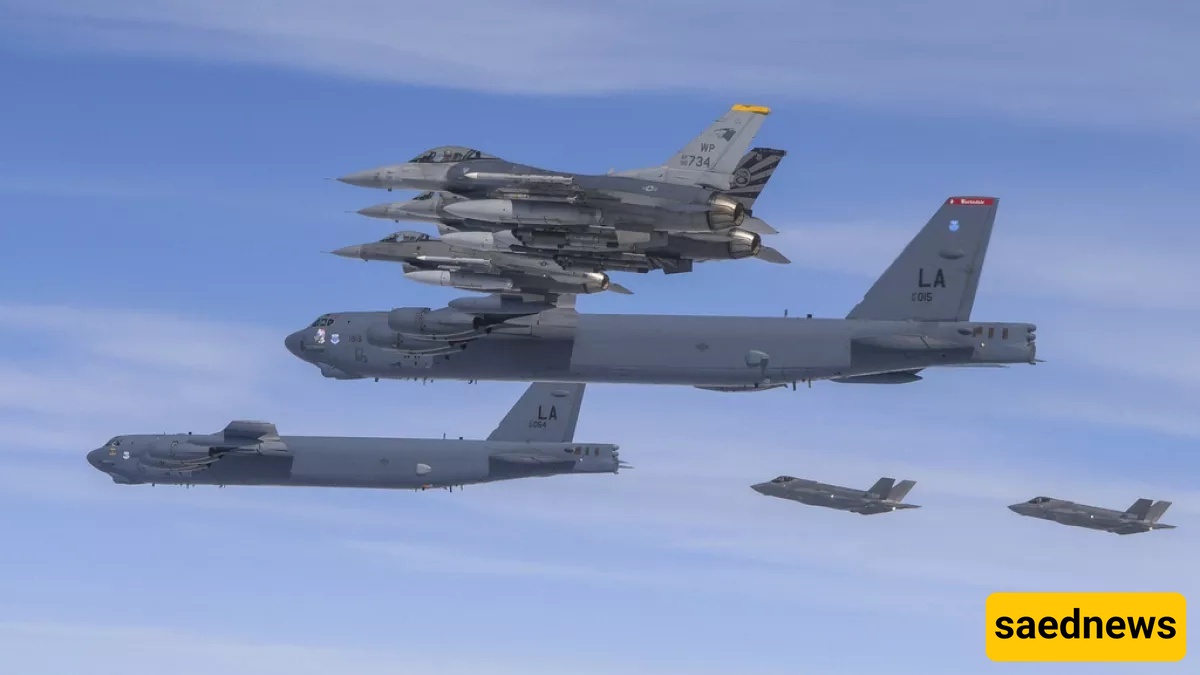
On the possibility of limited and targeted escalation, he said that if current options fail to achieve US objectives, escalation may occur through expanded cyberattacks, strikes on critical infrastructure (with high risk of further escalation), or pressure in other sensitive regions. However, the United States is fully aware of the consequences of expanding the conflict and is likely to proceed cautiously, as any direct military action could lead to unpredictable direct confrontation with Iran.
He added that a shift toward diplomacy and negotiation under pressure becomes more likely when the costs of the current situation become unbearable for all parties, especially the United States. In such a scenario, Iran would likely focus on preserving its achievements and ensuring non-aggression guarantees, while the US would attempt to address some of its security concerns through negotiations.
The Deputy Speaker of Parliament concluded by stating that Iran fundamentally distrusts the United States due to its historical record of broken promises and lack of reliability. He added that the current behavior of the US President, including the use of fake news and fabricated narratives, demonstrates an attempt to manipulate his deteriorating situation.