SAEDNEWS: What will the world of the afterlife be like? This is a question that has crossed the minds of countless people. The Quran and Islamic traditions contain various descriptions and truths about the afterlife, highlighting its profound importance and significance.

According to Saednews, The Quran places great emphasis on the Hereafter, and belief in it has been one of the fundamental principles preached by all the prophets. More than one-third of the Quran’s verses discuss the Hereafter, or Ma'ad, in one way or another.
According to some scholars, the Hereafter begins after earthly life comes to an end. Others, however, believe that the Hereafter already exists within this world and encompasses it.
One of the verses cited in support of this view is verse 49 of Surah At-Tawbah:
“Indeed, Hell will encompass the disbelievers.”
(Khurasani, “The Hereafter,” pp. 98–99)
Many people wonder what human existence is like in the intermediate world (Barzakh) and the Hereafter, and what these realms actually consist of.
The nature of the Hereafter and the world of Barzakh is hidden from human beings. A person cannot fully comprehend them until entering Barzakh themselves. Nevertheless, certain Quranic verses provide glimpses of the Hereafter and allow us to describe some of its characteristics.

One interpretation supported by reason is that the Hereafter is the inner reality of this very world. According to the Quran and a number of Islamic narrations, several arguments can be offered in support of this understanding.
The Quran says:
“Know that the life of this world is only play, amusement, adornment, boasting among yourselves, and competition in wealth and children. It is like rain whose resulting plants delight the disbelievers; then they dry up, and you see them turn yellow; then they become scattered debris. And in the Hereafter there is severe punishment, as well as forgiveness from Allah and His pleasure. The life of this world is nothing but the enjoyment of delusion.”
(Surah Al-Hadid, 57:20)
The phrase “And in the Hereafter there is severe punishment...” can be understood as being connected to the preceding description of worldly life. From this perspective, the outward life of this world has an inner reality that manifests itself as either severe punishment or divine forgiveness and pleasure.
The Quran states:
“Indeed, those who consume the wealth of orphans unjustly are only consuming fire into their bellies, and they will soon burn in a blazing Fire.”
(Surah An-Nisa, 4:10)
According to this verse, those who unjustly consume an orphan’s property are, in reality, consuming fire. The verse does not explicitly say that they will consume fire at some distant time or in another place. Rather, it presents their present action as already carrying the reality of fire within it.
Since no physical fire is visibly consuming them at that moment, this interpretation suggests that the fire exists at an inner, unseen level.

The Quran says:
“No! If you only knew with knowledge of certainty, you would surely see the Hellfire.”
(Surah At-Takathur, 102:5–6)
The apparent meaning of these verses is that if people possessed true knowledge of certainty, they would see Hell. The verses do not necessarily indicate that this vision must occur at some other time or in another place. Rather, they can be understood as suggesting that the reality of Hell already exists, although human beings are normally unable to perceive it.
Since people ordinarily perceive only the outward dimension of worldly existence, this interpretation holds that the reality of Hell belongs to the unseen inner dimension of the same world.
The Quran states:
“They know only the outward appearance of the life of this world, while of the Hereafter they are completely unaware.”
(Surah Ar-Rum, 30:7)
This verse says that certain people know only the outward aspect of worldly life, while they remain unaware of the Hereafter.
One possible interpretation is that the verse contrasts the outward appearance of this world with its inner reality. If people know only the outward aspect, their lack of awareness of the Hereafter may indicate that they are also unaware of the unseen reality underlying worldly existence.
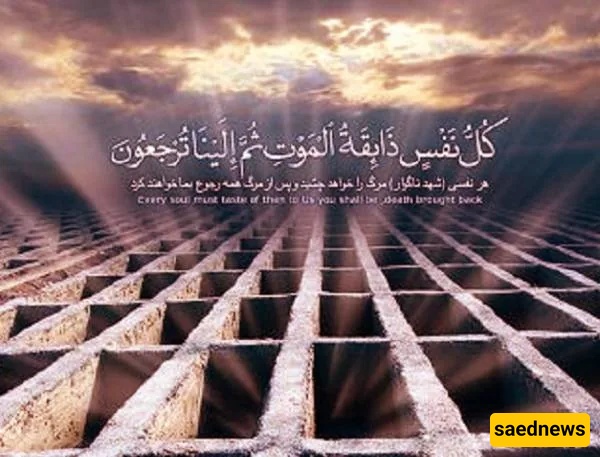
The Quran says:
“This worldly life is nothing but amusement and play. Indeed, the Home of the Hereafter is truly the real life, if only they knew.”
(Surah Al-Ankabut, 29:64)
This verse emphasizes that worldly existence is temporary, while the Hereafter represents the true and enduring form of life.
Some Islamic narrations also provide examples that have been interpreted in support of the idea that the realities of the Hereafter are present, although normally hidden from human perception.
The Prophet Muhammad is reported to have said:
“People are asleep; when they die, they awaken.”
(Tanbih al-Khawatir wa Nuzhat al-Nawazir, vol. 1, p. 150)
According to this narration, human beings often live in a state of spiritual heedlessness. Death removes many of the veils that conceal reality, allowing previously hidden truths to become apparent.
From this perspective, the realities of Barzakh and the Day of Judgment are already present, but human beings are unable to perceive them because their inner faculties have been obscured by worldly distractions, desires, and sins.
As death approaches, these veils are removed, and realities that were previously hidden become visible.

During the Prophet Muhammad's Night Journey and Ascension (Mi'raj), he is reported to have witnessed some of the inhabitants of Hell.
(Tafsir Nemuneh, vol. 27, p. 319; Tafsir Nur al-Thaqalayn, vol. 1, p. 291, hadith 1157)
These were people who had committed various wrong actions during their earthly lives and were experiencing different forms of punishment corresponding to their deeds.
This account has been interpreted as indicating that the realities of Paradise and Hell are not necessarily limited to a completely separate time and place. Rather, they may exist beyond ordinary human perception while remaining connected to the reality of earthly existence.
Religion, from this perspective, serves to turn human attention away from worldly distractions and remind people of the Hereafter.
Many people assume that the outward and inner dimensions of reality are completely separate. Another interpretation, however, holds that the outward is a manifestation of the inner and that the outward cannot be fully understood without its inner reality.
Although human beings live within the outward world, they may still become aware of its deeper reality. Remembrance of God (dhikr) is understood as one means of directing human attention toward that unseen dimension.
A famous narration known as the “Hadith of Truth” describes an encounter between the Prophet Muhammad and a young man named Harithah ibn al-Nu'man al-Ansari.
One morning, after performing the dawn prayer with the Ahl al-Suffah, the Prophet noticed a young man whose unusual spiritual state attracted his attention. The Prophet asked him about his condition, leading to a conversation later known as the “Hadith of Truth.”
Al-Kulayni records two narrations concerning the meeting between the Prophet and Harithah in Usul al-Kafi, in the section dealing with the reality of faith and certainty. Both narrations are attributed to Imam Ja'far al-Sadiq and convey essentially the same meaning.
During the conversation, Harithah is reported to have said that he could almost see the Throne of his Lord prepared for judgment. He also said that he could almost see the people of Paradise meeting one another in Paradise and hear the cries of the inhabitants of Hell.
The Prophet responded that Harithah was a servant whose heart Allah had illuminated and said:
“You have gained insight, so remain steadfast.”
Harithah then asked the Prophet to pray that he would be granted martyrdom alongside him. The Prophet prayed for him, and not long afterward Harithah accompanied him in a battle. He was martyred after nine other companions, becoming the tenth martyr of that battle.
(Anwar Jalieh, with commentary, correction, and introduction by Jalal al-Din Ashtiani)
This narration portrays a young man who had reached a certain level of spiritual development and was able to perceive Paradise and Hell. The Prophet's response is understood as confirming his spiritual insight.
From this perspective, Paradise and Hell are not merely realities belonging to an entirely separate time and place. Rather, they may be realities that exist beyond ordinary perception and can, under exceptional circumstances, become visible to those whose spiritual awareness has been awakened.
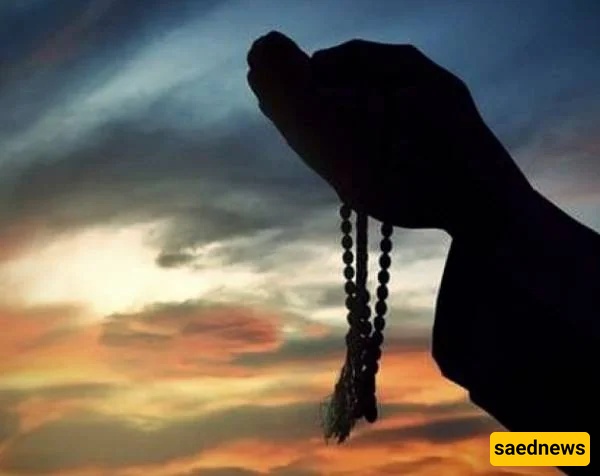
The Quran and Islamic teachings repeatedly encourage people to remember the Hereafter and live their earthly lives accordingly.
“That Home of the Hereafter We assign to those who seek neither superiority on earth nor corruption. And the good outcome is for the righteous.”
(Surah Al-Qasas, 28:83)
The Quran also says:
“The life of this world is nothing but play and amusement, but the Home of the Hereafter is better for those who are mindful of Allah. Will you not then understand?”
(Surah Al-An'am, 6:32)
A well-known Islamic saying states:
“The world is the cultivation ground for the Hereafter.”
(Ibn Abi Jumhur, Awali al-La'ali, vol. 1, p. 267)
Another narration states:
“Whoever frequently remembers the Hereafter will commit fewer sins.”
(Amidi, Ghurar al-Hikam, no. 146)
It is also reported:
“Whoever makes the Hereafter his greatest concern throughout the day and night, Allah places contentment in his heart, puts his affairs in order, and he does not leave this world until he has received his full provision.”
(Ibn Shu'bah al-Harrani, Tuhaf al-Uqul, p. 48)
Taken together, these Quranic verses and narrations emphasize the importance of looking beyond the outward appearance of worldly life.
The Hereafter is presented not merely as a distant future existence, but as a deeper reality connected to the actions, choices, intentions, and spiritual condition of human beings. Earthly life is temporary and outward, while its consequences may already possess an unseen reality that becomes fully apparent after death.
For this reason, Islamic teachings repeatedly encourage people to remember the Hereafter, avoid injustice and corruption, control worldly desires, and cultivate faith, righteousness, and spiritual awareness.