SAEDNEWS: Bandar Abbas is one of Iran’s most beautiful port cities, renowned for its diverse and extraordinary handicrafts. These unique artistic traditions reflect the city’s rich cultural heritage and deep-rooted civilization.
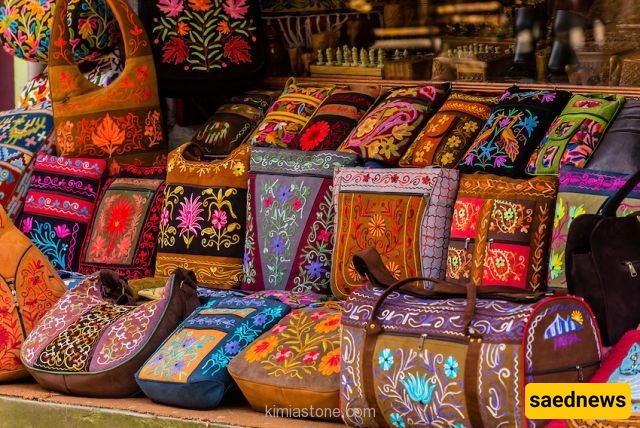
According to Saednews, Buying souvenirs is one of the most enjoyable parts of any trip. Souvenirs can include a variety of local foods or handmade crafts that represent the character of a particular city. By purchasing souvenirs, we can also introduce others to the art and craftsmanship of that region.
Handicrafts are, in fact, symbols of a city’s traditions, culture, and heritage. Bandar Abbas is no exception. With its skilled artisans, diverse climate, and access to the vast Persian Gulf, the city has developed a wide variety of traditional handicrafts.
The handicrafts of Bandar Abbas can be divided into several categories. Some are made from marine materials such as shells, while others are related to traditional occupations such as boatbuilding and fishing-net making. Another group consists of decorative techniques used on traditional clothing, including Shek embroidery, Golabatoon embroidery, Badleh embroidery, and Khoos embroidery. Khorsak weaving is another traditional craft associated with Bandar Abbas.
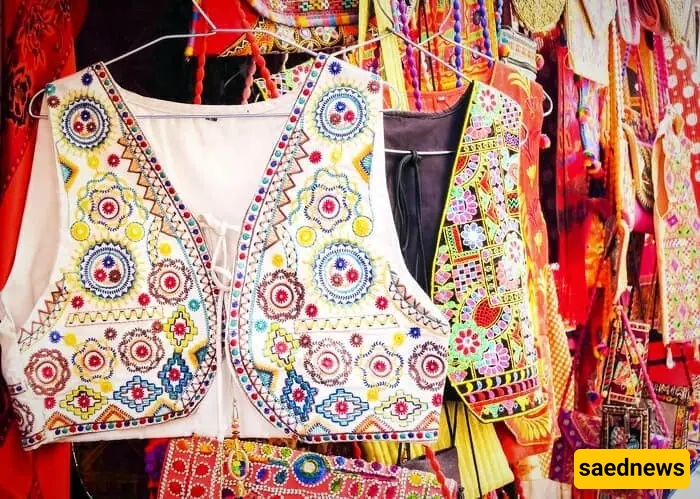
Golabatoon embroidery is an ornamental textile art that uses decorative threads to create eye-catching patterns on clothing and fabrics. In the past, fine strands of gold and silver were used for this type of embroidery. Today, skilled female artisans generally use threads coated with gold or silver.
Golabatoon embroidery can commonly be seen on formal dresses, prayer rugs, hats, trousers, coats, cushions, and wall hangings. It is one of the distinctive decorative arts of southern Iran.
Khorsak is a type of rug woven with thick, long pile and a limited range of colors. Traditionally, natural wool colors were used, although a wider variety of colors is now common.
In the past, Khorsak rugs were mainly used as coverings. Today, they are more often used as runners and small floor rugs. Khorsak weaving is particularly associated with the village of Dartoujan, and its designs are generally geometric.
Chanteh weaving is one of the well-known traditional crafts of Bandar Abbas. Visitors can find Chanteh products in traditional markets, historic bazaars, and modern shopping centers.
The weaving technique resembles that of carpet making. Chanteh has become a popular souvenir from Bandar Abbas, although historically these woven bags were used as saddlebags or small carrying bags.
Today, Chanteh is used to make handbags, sewing kits, cutlery holders, Quran holders, and other practical items.
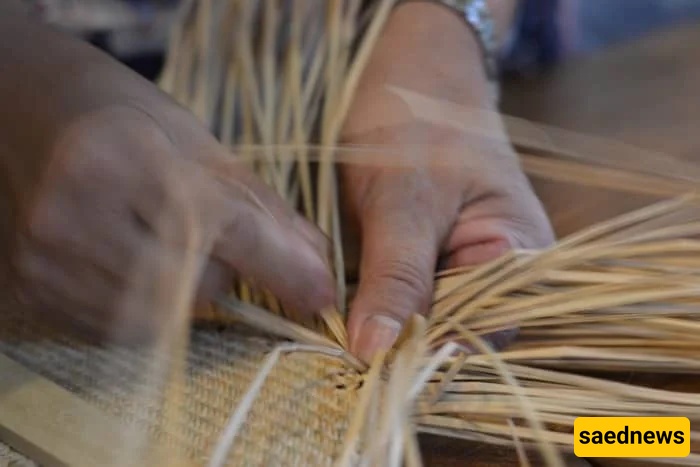
Mat weaving is widely practiced throughout the southern provinces of Iran. One of the main materials used in this craft is the thin fiber of palm trees.
Markets in Bandar Abbas offer a variety of woven products, including small mats, wall decorations, and woven containers. These items are among the traditional handicrafts and souvenirs associated with the region.
Shek weaving involves creating decorative bands from golden, silver, and metallic-colored threads. These bands are used to embellish traditional clothing, particularly around head coverings, collars, and prayer rugs.
Traditional tools used in producing these bands include a wooden mortar-like device, a small cushion, spools, and metallic or silver and gold-colored threads.
Shek bands are produced in different widths, ranging from approximately six millimeters to five centimeters. Different widths and patterns have traditionally been given distinctive names, including Zari Yek Fazleh, Zari Do Fazleh, Gol Ashrafi, Gheychi Lozari, Morafei, Ain al-Qamari, San al-Mashar, Gol Ashrafi Kalepandi, and Kaleh Kaj. The narrowest variety is Zari Yek Fazleh, while Morafei is among the widest.
Shek weaving is particularly associated with Rudan in Hormozgan Province and is well known in the region.
Bandleh embroidery, also known as Tali weaving, is used to decorate the edges of women's trousers and garments.
Tali consists of decorative bands approximately 15 centimeters wide, created by arranging several Zari bands together. The wider band is placed in the center, while narrower ones are positioned along the sides.
Traditional Badleh-embroidered trousers are especially associated with brides and women in southern Iran.
The creative people of Bandar Abbas make use of many materials found in their surroundings. Even stones and shells collected along the coast can be transformed into attractive handmade objects.
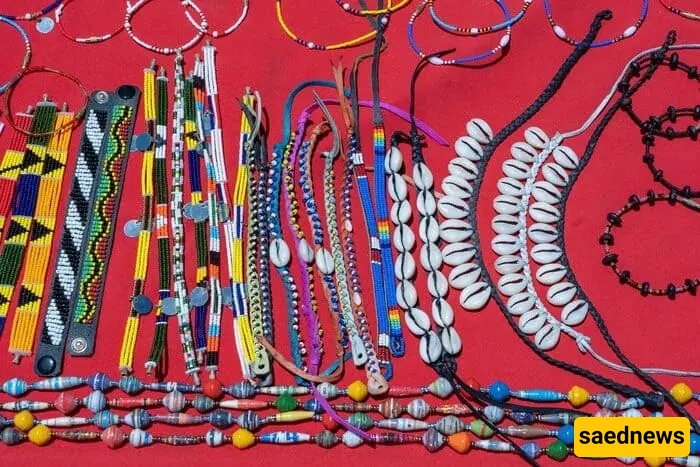
Local artisans collect items such as sea snails, coral, cowrie shells, seashells, and bones from the shallow coastal areas around Bandar Abbas. They combine, arrange, and decorate these materials to create paintings, sculptures, jewelry, and ornamental objects.
Marine handicrafts are among the popular traditional souvenirs of Bandar Abbas and reflect the city's close connection with the Persian Gulf.
Handmade jewelry is another popular category of souvenirs in Bandar Abbas. Local artisans often incorporate shells and other materials collected from the coast into decorative pieces, creating distinctive accessories inspired by the marine environment.
Khoos embroidery involves decorating mesh fabrics with metallic stars and silver-colored bands. It is also used to embellish women's traditional cloaks, locally known as dastar, as well as small scarves and head coverings.
Black fabric is most commonly used in Khoos embroidery, although green and maroon fabrics may also be used.
Fishing nets are essential tools for fishermen, and net making has traditionally been practiced by fishermen themselves. In Bandar Abbas, the craft has been passed down from one generation to another.
With the development of the fishing industry, some fishing nets are now produced industrially through fisheries organizations. However, a portion of the nets are still traditionally handmade by local fishermen.