SAEDNEWS: One of the oldest and most authentic forms of Iranian attire is traditional local clothing. Each region has its own distinctive style and appearance, reflecting the cultural identity and heritage of that area.
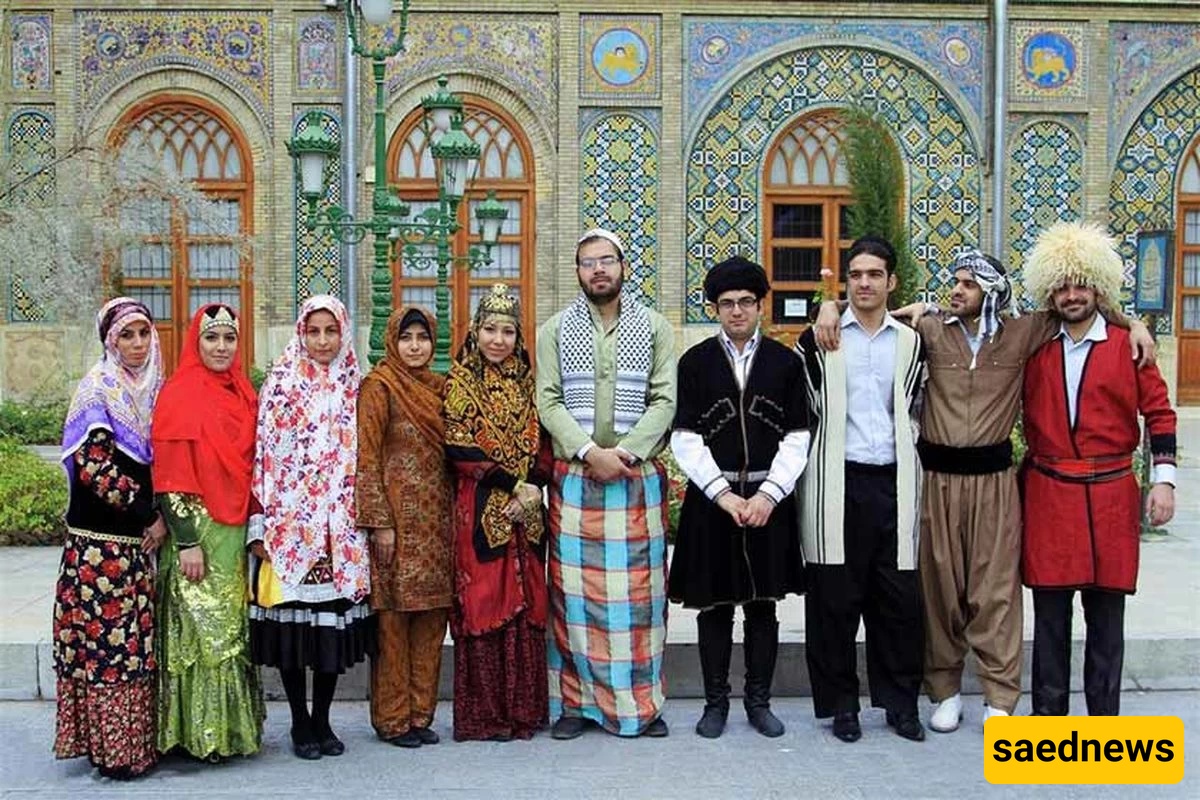
According to Saednews, Traditional clothing is one of the important factors that reflects the identity, culture, religion, and beliefs of an ethnic group. This traditional and authentic attire has its own distinctive appearance in each community, helping make one ethnic group unique from others. Join us as we take a closer look at the traditional clothing of Iran.
Traditional Iranian clothing is a blend of art, heritage, color, and the joy of life. Most Iranian ethnic groups have their own distinctive traditional attire, with styles varying according to cultural and climatic conditions. Each type of clothing also has its own traditional names.
One of the appealing features of Iranian traditional clothing is the difference between men's and women's attire at different ages. Many Iranian ethnic groups also have special clothing prepared for brides and grooms, often featuring unique and remarkable designs. Buying traditional clothing can be an important step toward experiencing authentic Iranian culture, but it should be done with sufficient knowledge of the style and its cultural background.
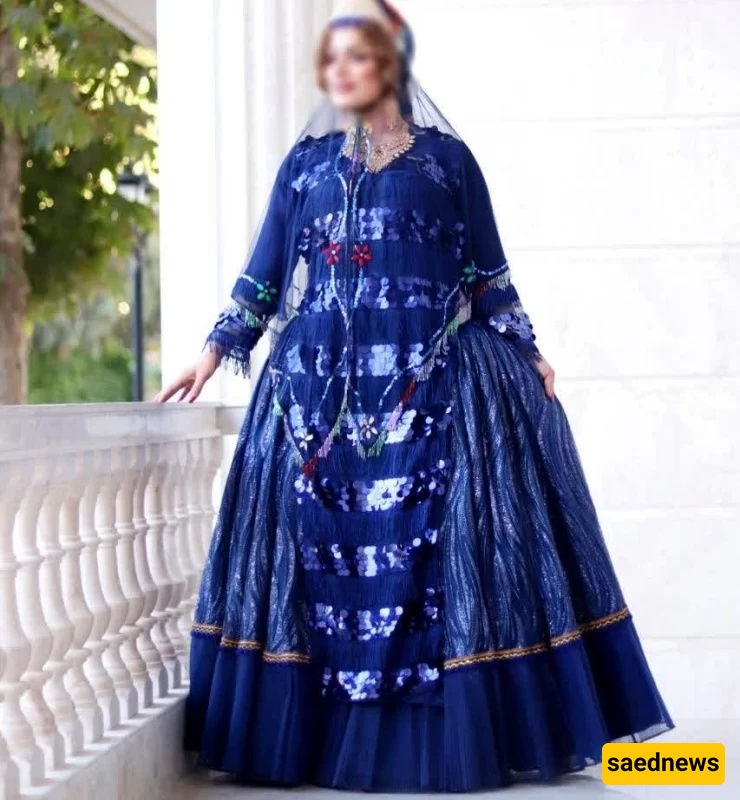
Qashqai traditional clothing is associated with the indigenous nomadic communities of Shiraz. Women's attire generally consists of five main parts: Arkhaliq (a warm garment), King (a long dress), a pleated skirt, Charqad (a head covering), and Yaghloq (a type of silk or chiffon scarf). These garments are usually made in bright colors and decorated with an embroidery technique known as Khos-bafi.
Qashqai men's clothing consists of a long shirt, a long sash worn around the waist, dark trousers, and a felt hat. Traditional Qashqai outerwear also includes Chogha and Arkhaliq, with the latter being a thin, cream-colored robe similar to a cloak.
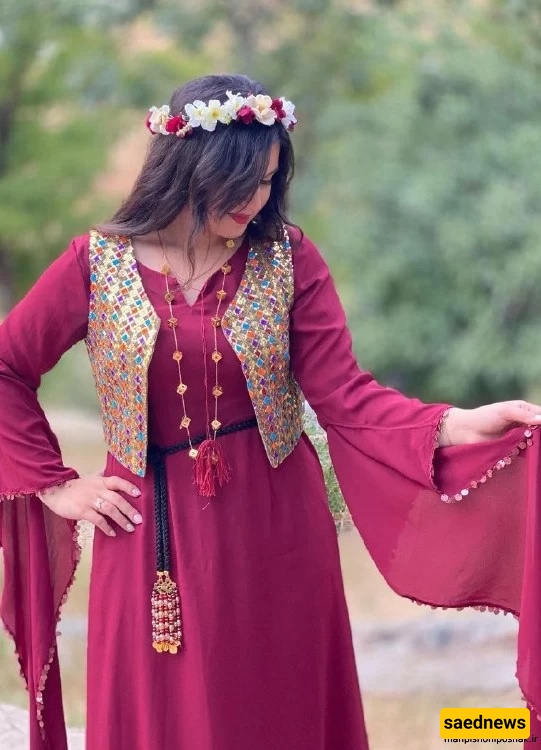
Kurdish clothing, traditionally worn in Kurdish-populated areas of Ilam, Kurdistan, Kermanshah, Urmia, Iraq, Turkey, and other regions, dates back to the Achaemenid period. Its style varies from one Kurdish region to another.
Different parts of Kurdish clothing are made from specific types of fabric. The combination of silk, satin, tulle, lace, velvet, and other materials gives these garments a distinctive appearance. Kras, Kova, hats, Sakhmeh, trousers, Selteh, and other pieces are among the components of Kurdish dress.
Men's clothing is also traditionally made from sheep's wool, including garments known as Chukha and Rank, which are commonly worn with Giveh, a type of traditional Iranian footwear.
In North Khorasan, traditional clothing is made using attractive and vibrant colors. Women's attire includes Shilvar or skirt, Kras, Charqad or Yashar, and a vest. Traditional clothing worn by Khorasan's Kormaj women includes garments known as Lav and Chak.
The traditional clothing of the Turkmen communities of Samalqan and Maneh consists of several pieces, including Chavak, Kolteh, Yelt, and Chalabi, traditionally made from wool and silk. Traditional men's clothing, known as Don, is usually dark red and decorated with beautiful embroidery.
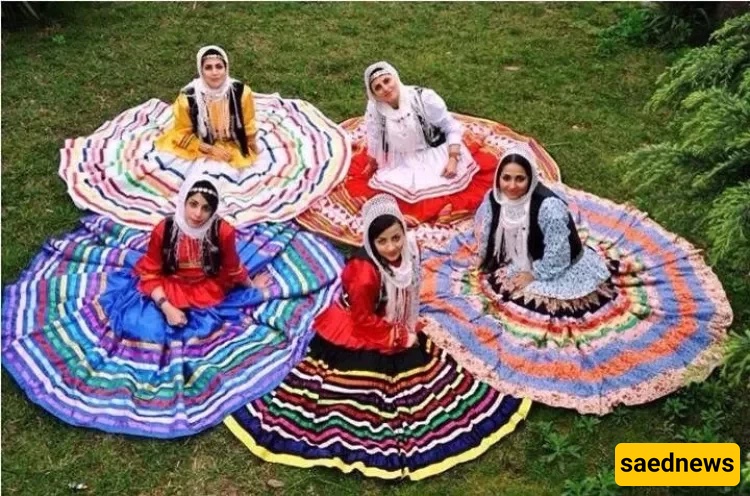
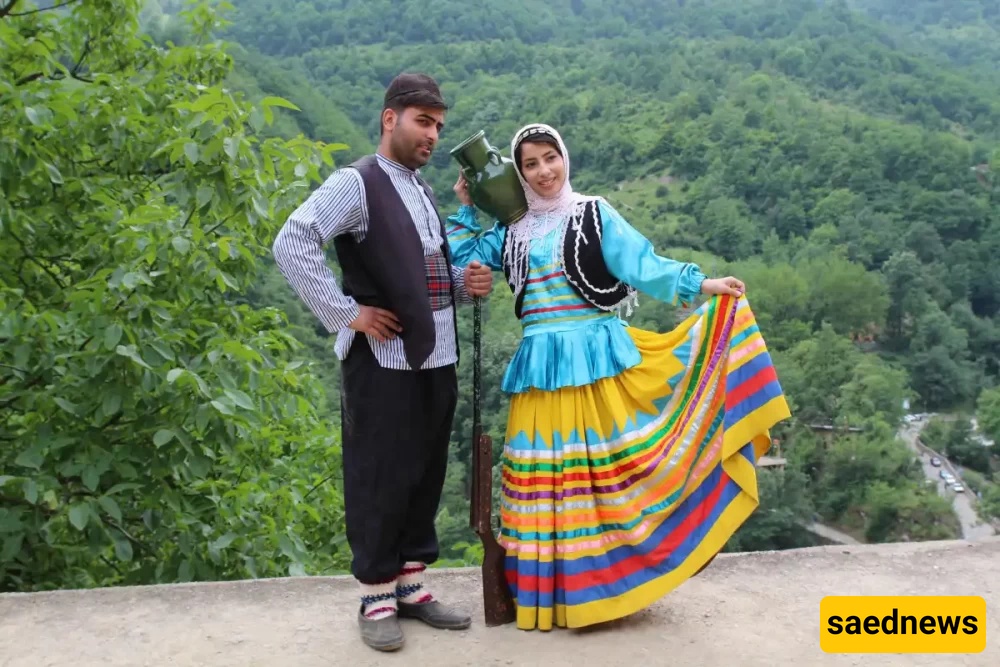
The people of Gilan have three main types of traditional clothing: Qasemabadi, Taleshi, and Rasookhi, with the Qasemabadi style being the oldest.
Qasemabadi clothing consists of three main parts: a scarf or Mandil worn instead of a hat, a vest decorated with coins, and a skirt decorated with bands of embroidery.
Women in the eastern mountainous areas of Gilan traditionally wear the Aljaghia, also known as Chador Shab, while women in central and eastern Gilan commonly wear short, heavily pleated skirts with trousers.
Traditional Gilan men's clothing includes a special type of footwear called Chomush, along with trousers, a sash, a cotton shirt, and a hat.
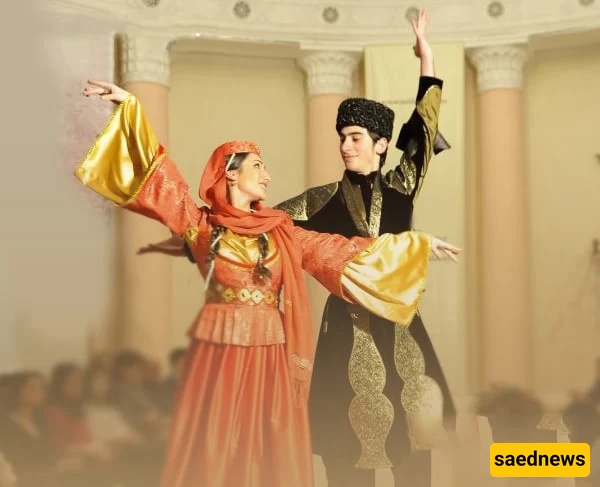
Silk and Termeh, a traditional Persian textile, are commonly used in making Azerbaijani traditional clothing. Azerbaijani attire consists of three main categories: body garments, footwear, and headwear.
Headwear comes in various forms, including Charqad, scarves, hats, Ala Charshab, and sashes. Other components of Azerbaijani clothing include vests, Shaliteh or short skirts, Yal or velvet jackets, and shirts known as Don.
Men's clothing includes various pieces such as hats, Araghchin, Arkhalig, and Charugh, a type of traditional footwear.
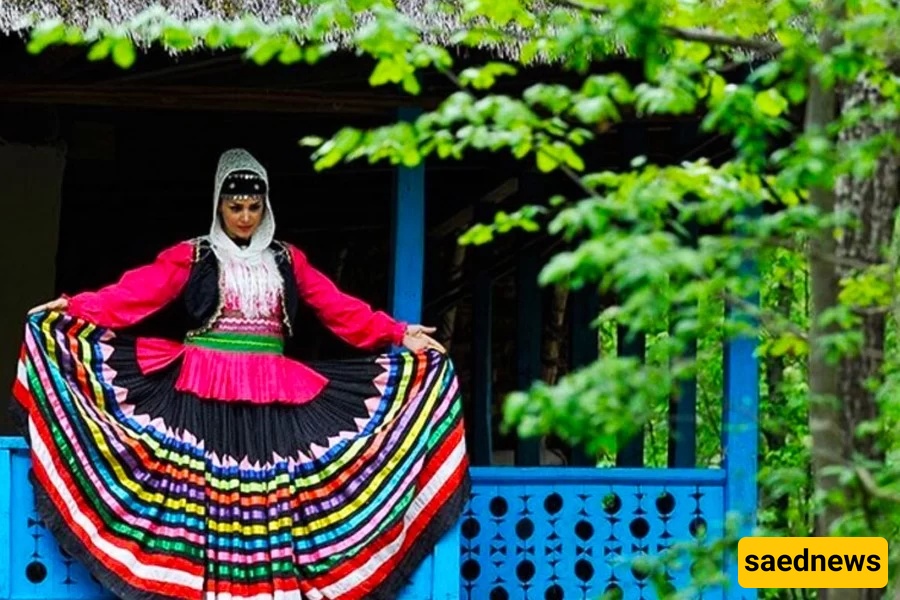
Traditional clothing in different parts of Mazandaran includes heavily pleated skirts known as Shaliteh, Nim-Saq, Chador Sho, Jumeh or a long shirt, Mandel, a floral Charqad or scarf, and a hat called Saraijugh.
Bright, floral fabrics are commonly used to make these garments. Men's traditional clothing consists of various pieces, including Jumeh, a hat, Tamban, Lebadeh or a long outer garment, and long socks.
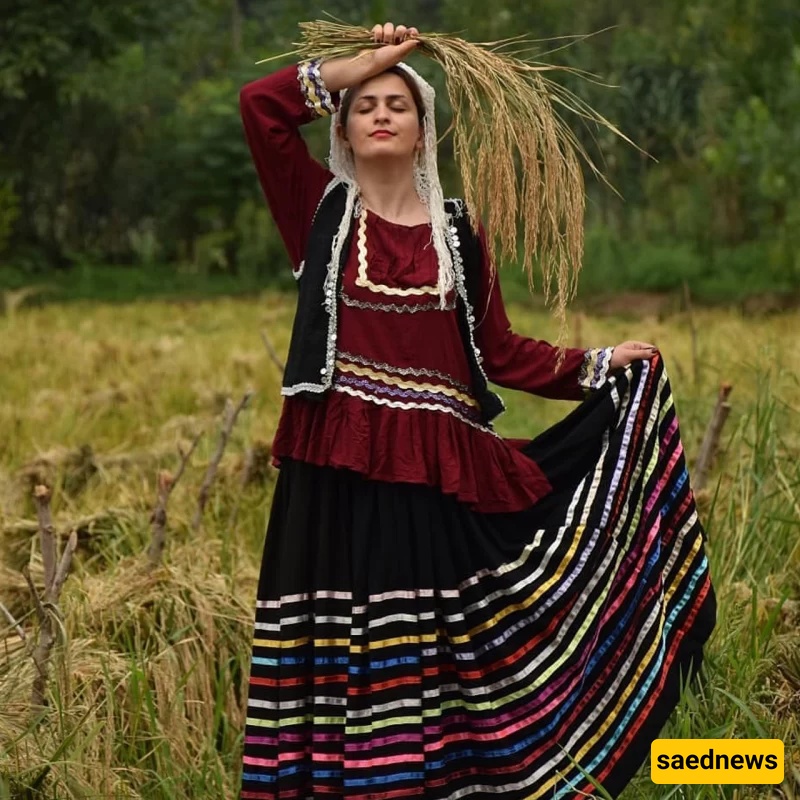
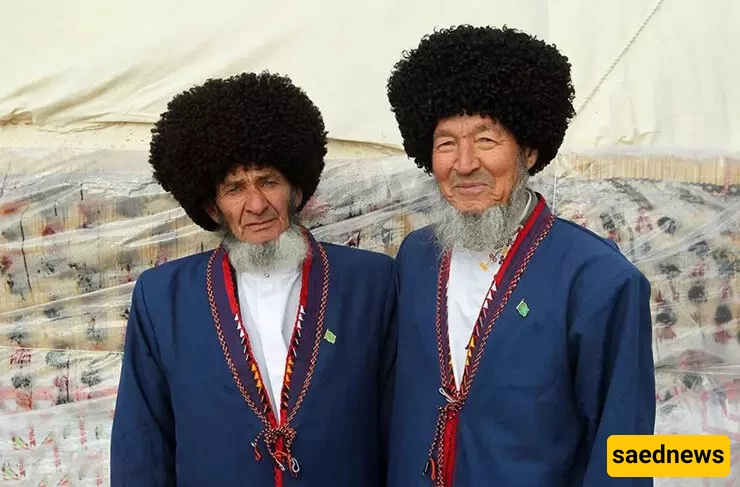
Turkmen traditional clothing is associated with Golestan Province, Gorgan, and parts of Khorasan. Its designs vary according to a person's age and circumstances.
Women's Turkmen clothing includes a long silk dress known as Chabit, decorated with distinctive embroidery. Other elements include a silk belt and Balaq, or traditional Turkmen trousers.
Turkmen women traditionally cover their heads with velvet hats called Topbi, as well as scarves known as Yayliq and Qingach. Turkmen men's clothing includes long outer garments, hats, leather boots, and traditional Turkmen trousers known as Yalaq.
There are several ways to purchase authentic traditional clothing in Iran. Some common options include:
Local markets: Every city has local markets where fabrics and traditional clothing associated with that particular region are sold.
Specialized stores: Today, specialized designers operate stores dedicated to designing and selling authentic traditional clothing. They often select high-quality fabrics and create designs suited to the customer's appearance.
Online stores: In many cities, traditional clothing designers and artisans offer their products online. Customers can simply place an order and have their chosen garments delivered within a relatively short period.
Buying traditional clothing requires not only an understanding of the specific style but also attention to several important factors:
Purchase from reputable and established stores.
Prices vary according to the type of fabric and quality of workmanship, so these factors should be considered when making a purchase.
Handwoven traditional garments generally offer higher craftsmanship and quality and tend to be more expensive.