SAEDNEWS: China’s exports recorded a significant increase in August, fueled by robust overseas demand for high-tech and artificial intelligence-related products. The strong export performance is helping sustain economic growth as domestic consumption and investment remain weak.
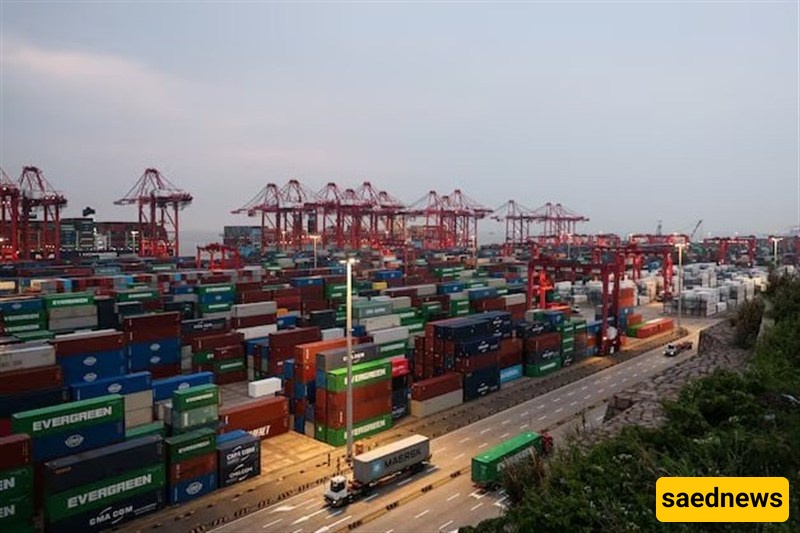
According to Saednews, Exports from the world’s second-largest economy rose 25% year-on-year in US dollar terms, according to customs data released on Tuesday. The increase accelerated from 23.9% growth in July and matched market expectations.
Imports also grew strongly, rising 28.2% year-on-year compared with 27.5% in July.
Lynn Song, ING’s chief economist for Greater China, said external demand had significantly outpaced domestic consumption. She noted that tariff risks and the sustainability of the technology investment cycle would be key factors in determining how long the strong performance could continue.
During the first eight months of the year, high-tech exports increased 42.9% in value terms. Semiconductor export values more than doubled, while automobile exports rose by more than 50% in both value and volume.
Zhaopeng Xing, a senior China strategist at ANZ, said strong demand for artificial intelligence products, electric vehicles, solar cells and lithium-ion batteries helped offset weather-related disruptions.
Xing also said Chinese companies continued to accelerate shipments to the United States amid uncertainty over tariffs.
China’s trade surplus increased to $119.09 billion in August, up from $112.5 billion in July. For the first eight months of the year, the surplus reached $805.51 billion.
The country’s trade surplus with the United States also rose to $29.18 billion, as Chinese exports to the US increased 34.4% year-on-year.
Despite the strong external trade figures, China’s domestic economy continued to face challenges. Industrial production, retail sales and fixed-asset investment all slowed, while the property market remained in a prolonged downturn.
In August, Premier Li Qiang called for measures to stabilize external demand while acknowledging weak domestic demand and increasing international uncertainties.
The government has expanded fiscal support, including an 800 billion yuan ($119.21 billion) financing facility for infrastructure investment. However, stronger exports have eased some of the immediate pressure for broader economic stimulus.
“The latest trade data do not materially strengthen the case for an imminent interest rate cut,” said Hao Zhou, a Hong Kong-based analyst at Guotai Haitong Securities.
He added that while further policy support remained possible, resilient external demand, steady industrial activity and increasingly targeted fiscal measures meant that the timing and need for additional monetary easing would require further observation.