SAEDNEWS: A tropical plant native to Borneo in Southeast Asia that produces sweet, red, juicy fruit and develops its flowers underground.
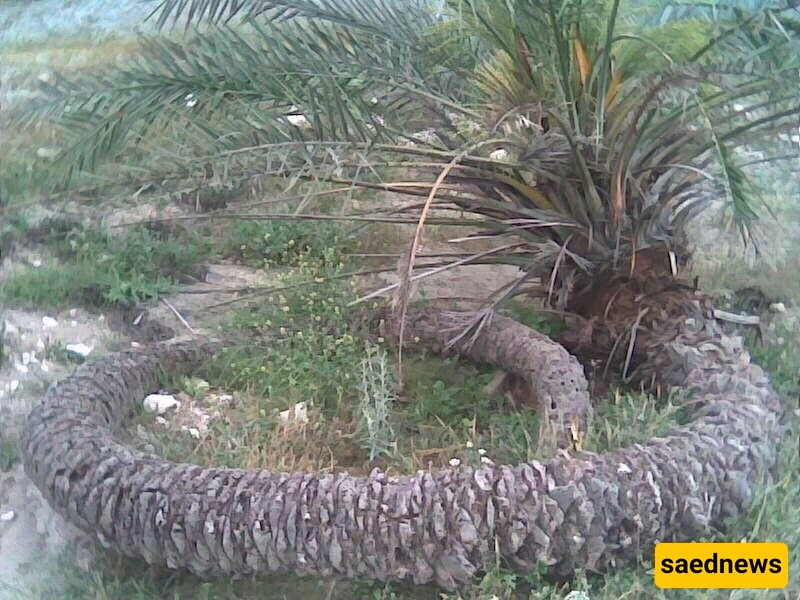
According to Saed News Agency, citing Fars News, a native plant of the tropical island of Borneo in Southeast Asia produces sweet, juicy red fruits that develop underground.
The plant, known as Pinanga, is native to the island of Borneo and has a remarkable characteristic: its sweet, fleshy red fruits grow beneath the soil surface. According to an international research team, Pinanga species can be found in the rainforests of western Borneo.
Although this plant and its fruit are well known to indigenous communities in Borneo, it had been largely overlooked by the scientific community, a fact that surprised researchers. Scientists note that this highlights the importance of closer collaboration with Indigenous peoples and their sophisticated knowledge of forest ecosystems.
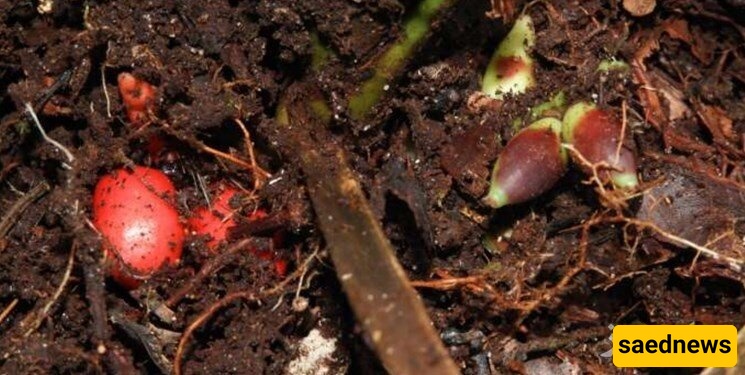
“Palm flowers beneath the forest floor”
At first glance, the species appears to be a typical young plant of the Borneo rainforest. Palm seedlings often cover the forest floor in tropical rainforests, making them extremely difficult to identify even for expert botanists, and therefore they are frequently overlooked in botanical surveys. However, in this case, these seemingly small plants are fully developed organisms whose reproductive structures are hidden beneath the soil surface.
There are more than 140 species in the genus Pinanga, most of which are small, slender palms found in the forest understory. Over 100 of these species occur in Southeast Asia, with Borneo being a major center of their diversity. Borneo
The vast majority of flowering plants have evolved to produce flowers and fruits above ground to facilitate pollination and seed dispersal. However, there is a small subset of plants that flower and fruit underground. This phenomenon has been observed in at least 171 species across 89 genera and 33 plant families. For example, peanuts flower above ground but develop their fruits underground. However, fully underground flowering and fruiting is extremely rare and, according to the authors’ knowledge, had previously only been observed in orchid species.