Saed News: Beneath the cobblestones of a quiet village in northeastern France, an astonishing treasure had remained hidden for nearly 1,700 years. Now, thousands of Roman coins have been rediscovered, reshaping what we knew about daily life on the fringes of the Roman Empire.
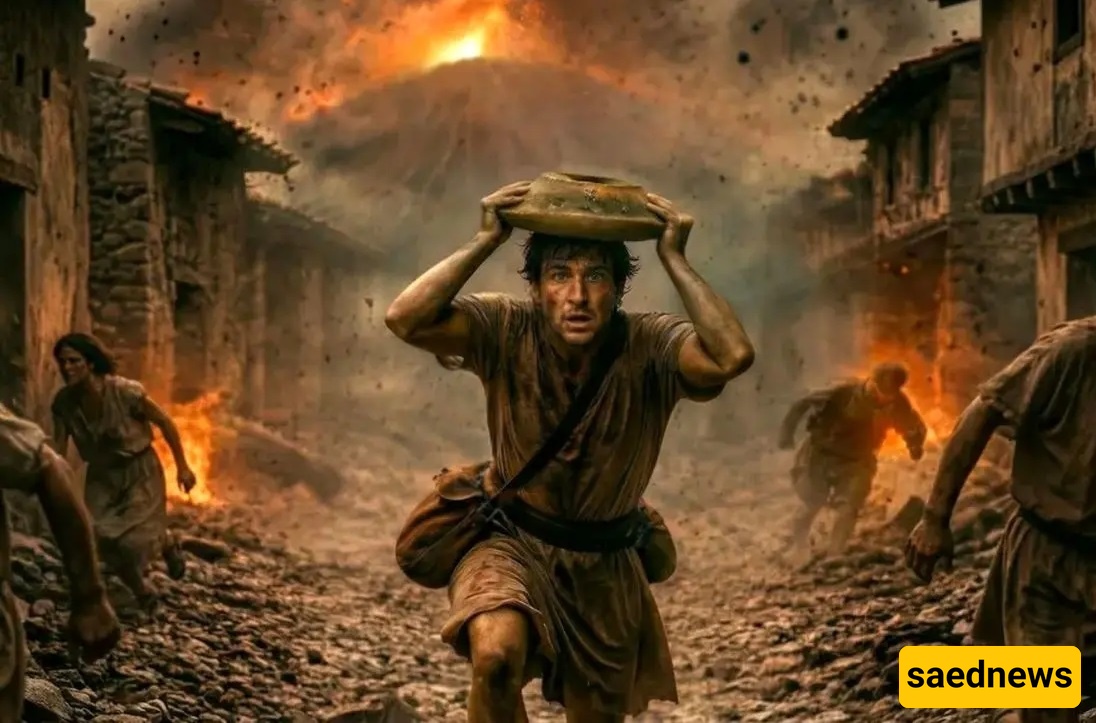
According to SAEDNEWS, recent archaeological excavations have uncovered two skeletons outside the walls of the ancient city of Pompeii. Researchers have also used artificial intelligence to reconstruct an image of the final terrifying moments of one of the victims.
When Mount Vesuvius erupted in 79 AD and destroyed Pompeii, a man named Pliny the Younger, who was across the Bay of Naples in the city of Misenum, witnessed the disaster from afar.
He later described the horrifying scenes in a letter, writing that people “tied pillows to their heads to protect themselves from falling stones.” He also explained that even after sunrise, people had to move around with torches in a darkness “darker and denser than any night.”
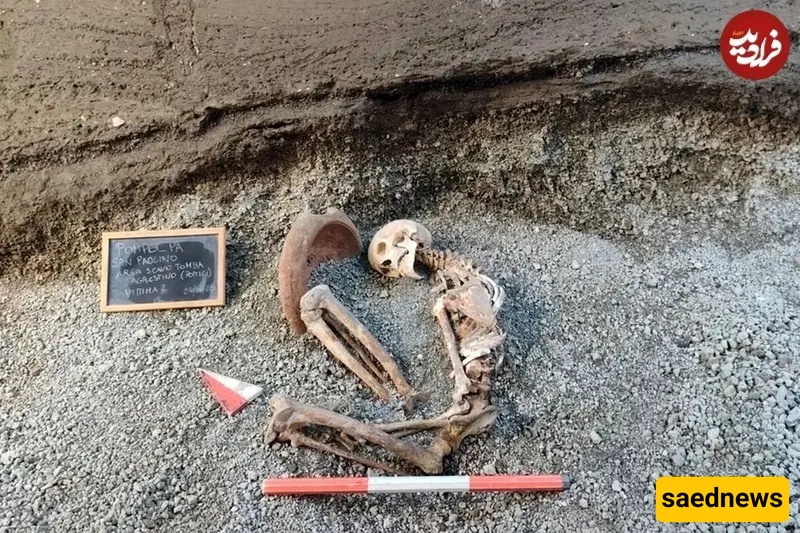
Archaeologists have now discovered two skeletons outside Pompeii that remarkably match Pliny’s account. The first victim was a man around 35 years old who died shortly after the eruption began, buried under volcanic ash. The second victim was a young man aged between 18 and 20, who likely died a few hours later due to deadly flows of hot volcanic material.
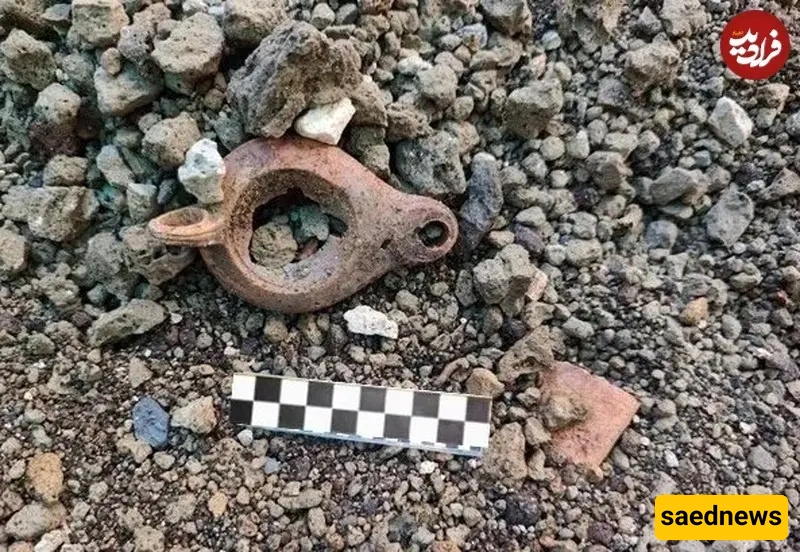
The older man’s body was found next to a ceramic bowl. Researchers, who published their findings in the journal Scavi di Pompei, believe he was likely holding it to protect his head. A small oil lamp was also found beside him.
Using artificial intelligence, researchers created a digital reconstruction of the man’s attempt to escape. In the image, he is seen running through debris-covered streets, holding the bowl above his head, with the eruption of Mount Vesuvius visible in the background.
Gabriel Zuchtriegel, director of the Pompeii Archaeological Park, said: “If used correctly, artificial intelligence can help revive classical studies and present the ancient world in a more tangible and inclusive way.”
The skeletons were discovered near the Porta Stabia cemetery, outside the southern gate of Pompeii. Both men were likely trying to escape the city and reach the coast.
It appears the younger victim had survived the early stages of the eruption and attempted to flee during a brief lull in volcanic activity. However, this calm did not last, and he was ultimately killed by scorching and deadly volcanic flows.
The older man was found in a crouched position, his right hand raised holding the bowl, while the oil lamp was near his left hand. He also had an iron ring on one of his toes and carried ten bronze coins.
Researchers believe that during his escape, the man took items he thought were essential for survival: money, light, and something for protection.
Scientists hope that this digital reconstruction will bring the man’s story to life for the public. In collaboration with the University of Padua, they used several AI-based image generation tools and photo-editing software to transform osteological and archaeological data into a realistic human representation.
However, the researchers emphasized that AI-generated images may simplify the true complexity of archaeological data, and some experts may consider them overly dramatic or resembling video game or comic book imagery. Nevertheless, they believe such reconstructions help people better immerse themselves in the historical environment of ancient Pompeii.
According to the researchers, when archaeologists see the columns of an ancient structure, they automatically imagine the roofs and gardens that once connected to them. As they walk through the ruined streets of Pompeii, they mentally reconstruct upper floors, staircases, and balconies that no longer exist. However, this ability is not natural for the general public, which is why visual reconstructions are so valuable.
Reconstructing the faces of historical figures is not a new practice. For years, artists and forensic experts have used bone scans, precise measurements, and even DNA analysis to create lifelike representations of people from the past—often including details such as hair and eye color.