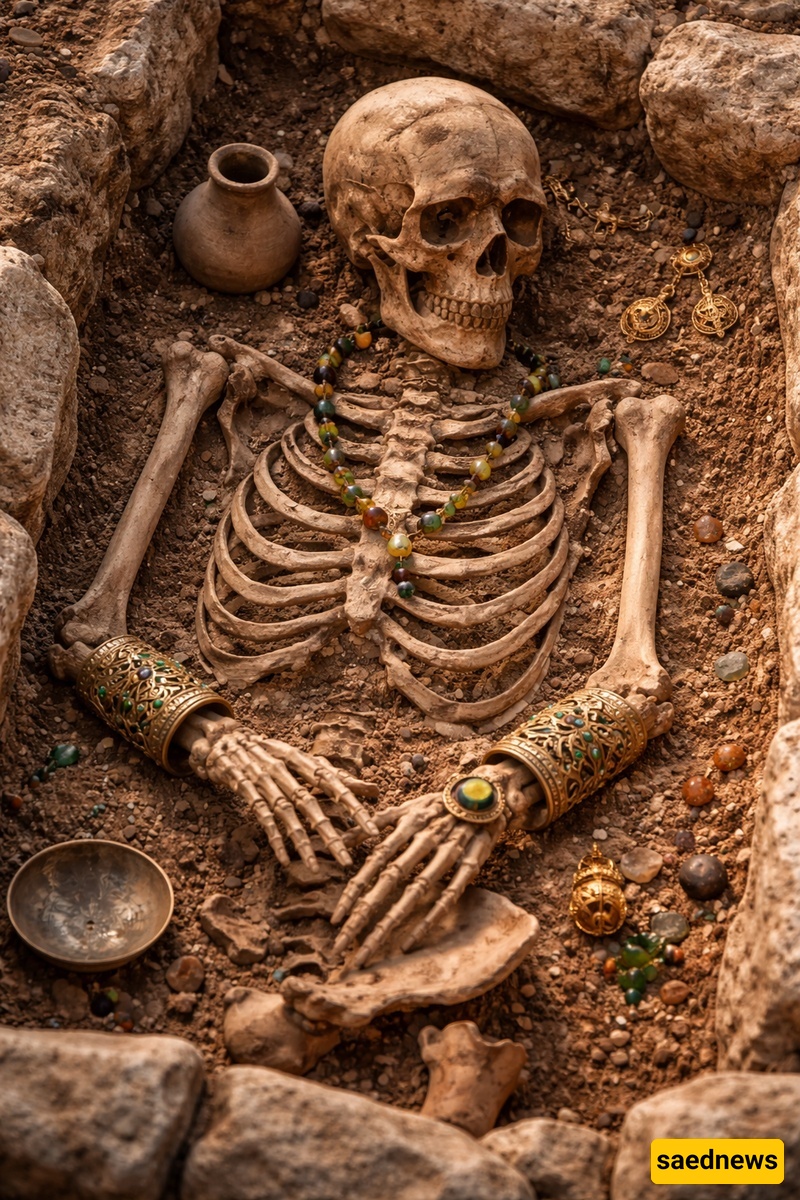
SAEDNEWS: A striking archaeological discovery in the Chechen Republic has drawn global attention. An ancient woman was found buried with notable wealth, her hands adorned with 19 bronze bracelets and 8 rings.
According to a report by Saed News, the discovery is the result of extensive rescue excavations carried out in 2025 by the Institute of Archaeology of the Russian Academy of Sciences (RAS), prior to the reconstruction of a gas pipeline. What initially began as a preventive measure has now become one of the most significant archaeological projects in the North Caucasus in recent decades.
Among the 160 graves excavated at the “Khumik-2” burial site, one stood out in particular. The woman had been buried on her side according to the rituals of the Eastern Kuban culture (dating from the 10th to the first half of the 8th century BCE), and was accompanied by numerous grave goods. On her hands alone, archaeologists found 19 bronze bracelets and 8 rings. This assemblage reflects a broader pattern at the cemetery, where some graves contained up to 60 objects, including jewelry, pottery, and personal items.
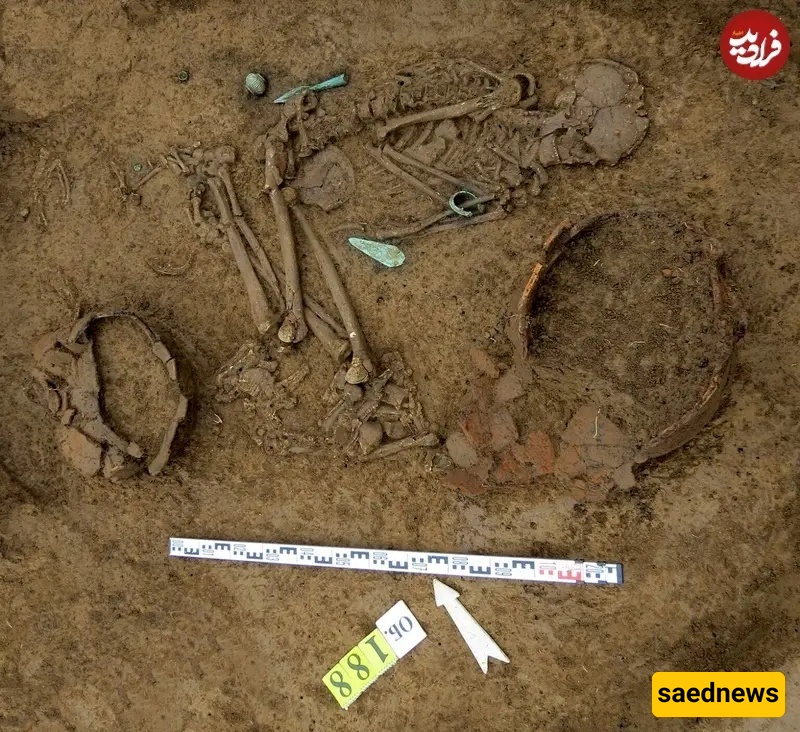
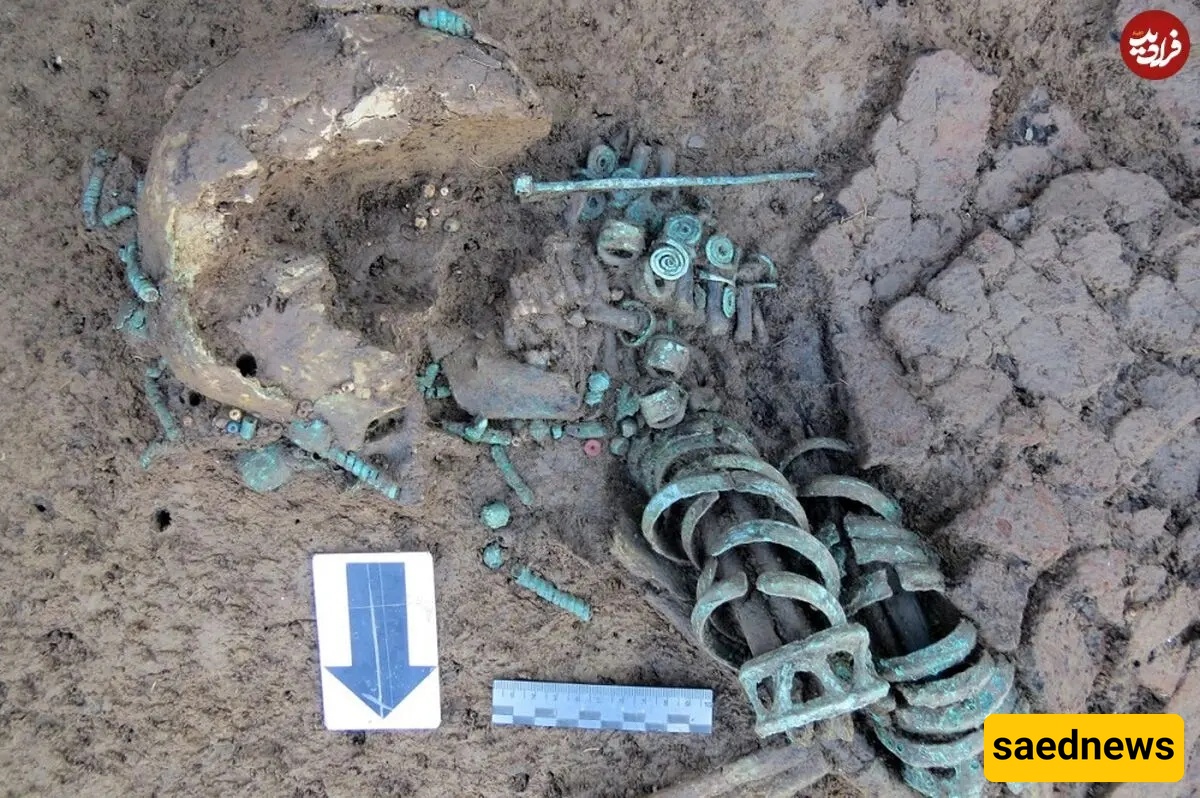
Such an abundance of ornaments and decorative items is not merely indicative of aesthetic preference, but also points to social status, personal identity, and possibly ritual beliefs. Archaeologists suggest that these richly furnished burials may indicate high social standing or specific cultural roles of women in ancient Caucasian societies.
The Khumik-2 site is just one of four major locations investigated during the 2025 excavations. Collectively, these sites span a wide chronological range—from the Chalcolithic period (4th millennium BCE) to the late Middle Ages (15th century CE)—offering an unprecedented picture of the evolution of human life in this region.