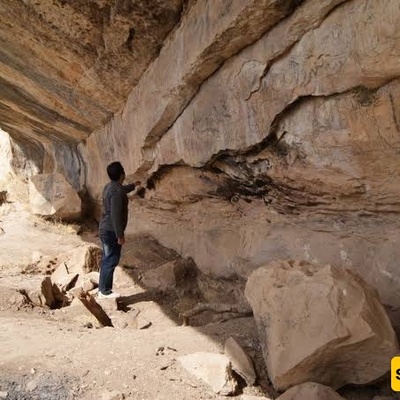
SAEDNEWS: Limited resources such as food, water, and territory led communities to attack neighbors and other lands in order to claim them—a behavior considered entirely logical and even fair. In fact, war had a clear justification: “us” versus “them.”

According to Saed News, citing Asr-e Iran, Donald Trump has claimed he would “return Iran to the Stone Age.” This means he intends to make life in Iran so precarious—through attacks on power plants, petrochemical facilities, refineries, oil industries, and all infrastructure such as roads and bridges—that by dismantling technological and industrial achievements, Iran would essentially revert to living in the Stone Age.
Undoubtedly, attacks on a nation’s infrastructure and industrial facilities could create a severe crisis that would be extremely difficult to recover from. But is living in the Stone Age, even symbolically, only about a lack of technological progress?
Many sociologists and social theorists argue that life in the Stone Age is not merely a technological issue. They point to two key dimensions of “Stone Age living.” The first is technology, which everyone recognizes. Without metal, writing, the wheel, electricity, the internet, factories, and industrial facilities, humans face immense challenges to survival.
We are familiar with the markers of Stone Age life: hunting, gathering food, living in caves or tents, and using stone tools—the pinnacle of technology in that era.
But there is another dimension: ethics. Sociologists refer to it as “Stone Age ethics,” which exists independently of technology. This ethical framework emphasizes traits such as absolute tribal loyalty: people living in the Stone Age valued only members of their core group—family, close friends, or fellow tribespeople—while outsiders received no empathy or moral consideration.
The famous law of the “strongest” dictated survival and power—physical, political, and economic. The strong thrived, while the weak were naturally eliminated. Revenge and personal justice were intrinsic to Stone Age morality; principles like “blood for blood” or “eye for an eye” reflect a society without codified law and rife with chaos.
Viewed through a modern lens, Stone Age ethics valued humans based on instinct and tradition. Critical reasoning, individual rights, gender and racial equality, and modern concepts like human rights or collective responsibility toward future generations were either absent or extremely weak. Empathy was limited to one’s own group; outsiders could be deceived, plundered, or even killed without profound guilt.

Sociologists observe that while humanity has advanced technologically, it has not entirely left Stone Age ethics behind. Today, some individuals remain loyal only to their own “tribe”—be it family, political party, clan, or even Instagram followers. They see the weak as deserving their fate, uphold personal revenge as justice, and base morality solely on instinct and tribal tradition. Real-world examples include certain politicians and celebrities who, despite access to advanced technology, operate on entirely tribal ethics: believing the strongest prevail, glorifying domestic violence or family revenge, and condoning deceit against outsiders.
War or attack, especially when framed as “us versus them,” is among the clearest manifestations of Stone Age ethics. In the past, limited resources such as food, water, and territory made aggression not only rational but morally acceptable for tribal survival. Tribal identity relied on “us,” while outsiders were considered strangers or competitors. Attacking weaker groups was seen as a natural right of the strong, not a moral failure, and killing rival group members—including women and children—could be celebrated as victory or revenge rather than condemned as crime.
Archaeological evidence shows that throughout history, preemptive attacks for survival, resource acquisition, and elimination of rival powers were common—what sociologists now call Stone Age ethics, an ethic that legitimizes violence and crime.
From a sociological perspective, when an individual, group, party, or nation justifies war or attack in this way, they are effectively reviving Stone Age ethics—even if the assault is conducted with missiles, drones, and advanced aircraft. Targeting “outsiders” (non-members) based on perceived natural right or virtue, deeming the enemy’s defeat just, considering their casualties worthless, treating war as a default dispute resolution, and limiting empathy only to “us” embodies Stone Age moral logic.
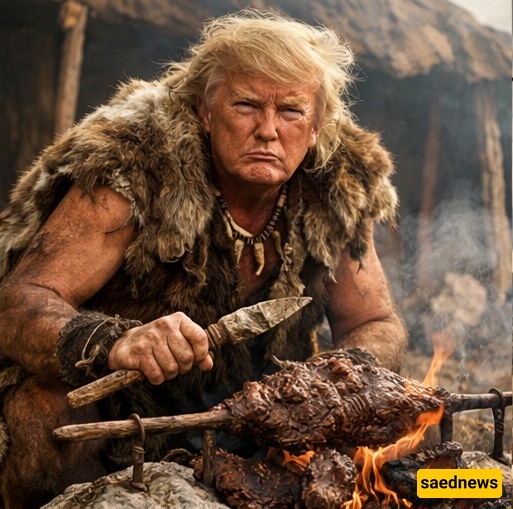
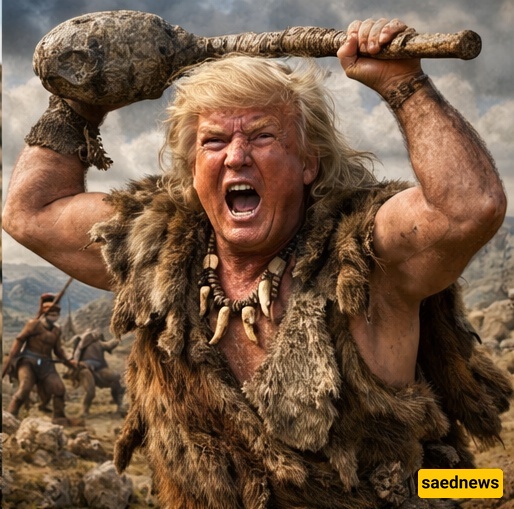
Donald Trump entered conflict with such slogans. Many political and economic analysts also argue that his eyes were on Iran’s oil and natural resources—another reflection of Stone Age reasoning. He claimed, “They wanted to attack, and I preempted them,” a statement critics view as a justification for a war rooted in tribal ethics. Some analyses even situate his behavior within historical patterns of primitive moral reasoning.
Furthermore, controversial episodes, such as his connections to Jeffrey Epstein, are interpreted in some analyses as part of this broader ethical portrait.
In fact, Trump may have been living by Stone Age ethics since his youth, but in a modern world with advanced technology, he forgot that while his tools and environment were modern, his reasoning and morality remained rooted in primitive ethics. In archaeological and sociological terms, he is a Stone Age actor in a suit and tie, waging war with ancient instincts.