SAEDNEWS: Aachen Cathedral is one of Germany’s oldest churches and has served for centuries as the coronation site of German kings and queens.
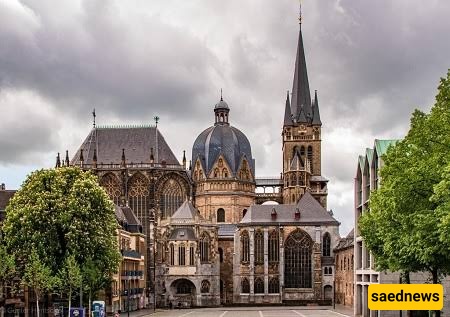
According to Saednews, Germany is home to countless remarkable European attractions, and one of its most impressive landmarks is Aachen Cathedral. Located in the city of Aachen in western Germany, the cathedral has a fascinating history that stretches back to the reign of Charlemagne. Its original core was later expanded over the centuries, eventually becoming the coronation church of German kings.
Aachen Cathedral (Aachener Dom) is one of the oldest buildings in Germany that has remained in continuous use. Its central octagonal chapel was commissioned by Charlemagne as a chapel dedicated to the Virgin Mary and connected to his palace at Aachen, then known as Aix-la-Chapelle. Although later additions transformed and enlarged the complex, the original octagonal structure remains the heart of the cathedral.
The central structure of Aachen Cathedral was originally the Palatine Chapel (Pfalzkapelle) of Charlemagne’s palace in Aachen. Its relatively modest size reflects its original function as a royal palace chapel. Nevertheless, when it was completed around 800, it was considered the largest church north of the Alps.
The chapel was dedicated to the Virgin Mary and was known for centuries as the Royal Church of Saint Mary. It later became closely associated with German royalty because it served for centuries as the coronation church of German kings, many of whom were also Holy Roman Emperors.
A popular tradition claims that Pope Leo III consecrated the chapel in 805, following Charlemagne’s imperial coronation in Rome on Christmas Day in 800. However, historians regard this story as part of the cathedral’s later tradition rather than established historical fact.
Aachen Cathedral officially became a cathedral in 1930, when Aachen became the seat of a bishop.
The architectural character of Aachen Cathedral is a remarkable combination of Carolingian, Romanesque, Gothic, Baroque, and later Neo-Gothic elements. At its center is the original Carolingian octagon, crowned by a dome approximately 31.5 meters high.
Much of the cathedral’s present decoration was added or modified centuries after Charlemagne’s reign. The famous marble throne associated with Charlemagne is among the most important surviving elements of the original complex.
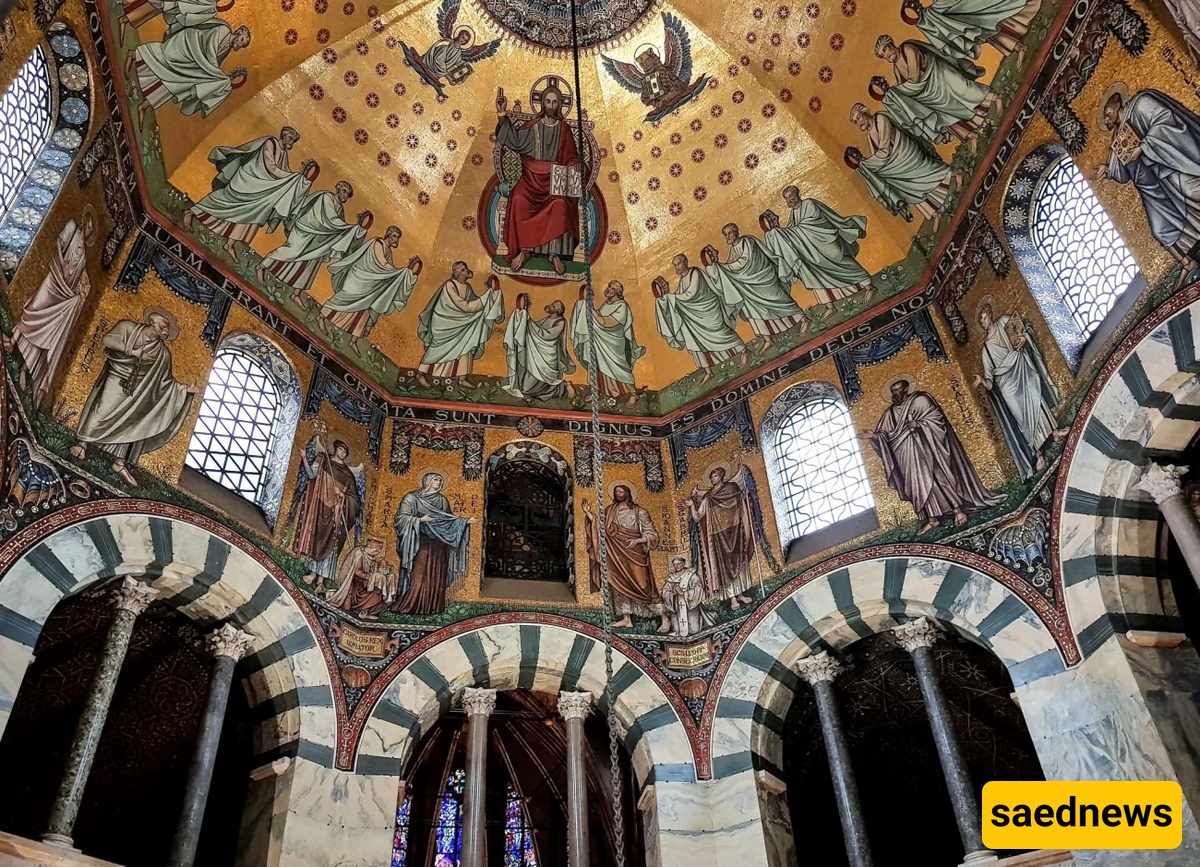
During the 19th century, when Aachen was part of Prussia, extensive restoration and decorative work transformed the interior. Byzantine-style mosaics were added, reflecting the strong interest in Byzantine art among the Prussian royal family and later German emperors.
Although the extent to which these later decorations reflect the cathedral’s original appearance remains debated, the mosaics are artistically significant and correspond closely with the decorative traditions found in other major European churches.
Aachen Cathedral is particularly important for its Carolingian architecture. The central octagonal structure and parts of the western building preserve the character of Charlemagne’s original chapel.
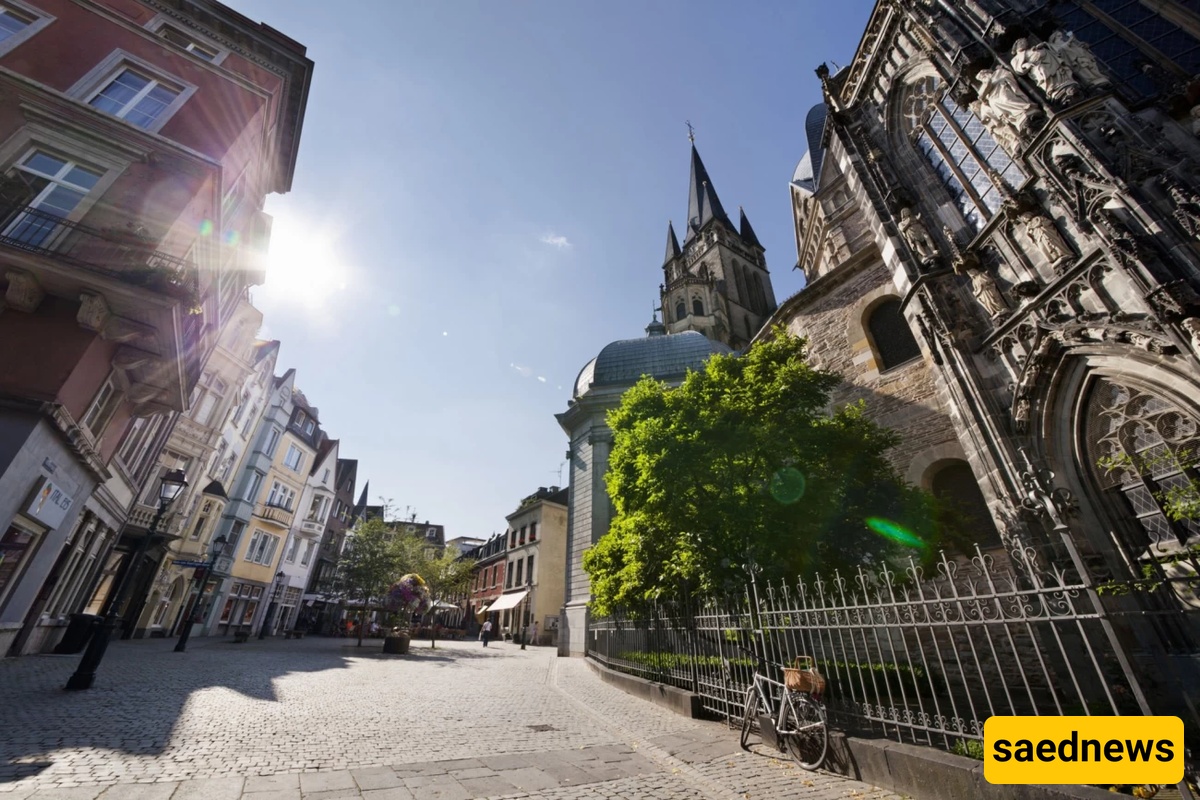
Over the centuries, numerous additions were made to the cathedral. During the 19th century, some later structures were removed or redesigned so that the building would appear more visually consistent with its medieval origins. The western tower was also completed during this period.
The exterior stonework of the Carolingian octagon reveals the evolution of architectural techniques over many centuries. Originally, the exterior was reportedly plastered and painted red during Charlemagne’s time, giving the building a very different appearance from the exposed stone seen today.
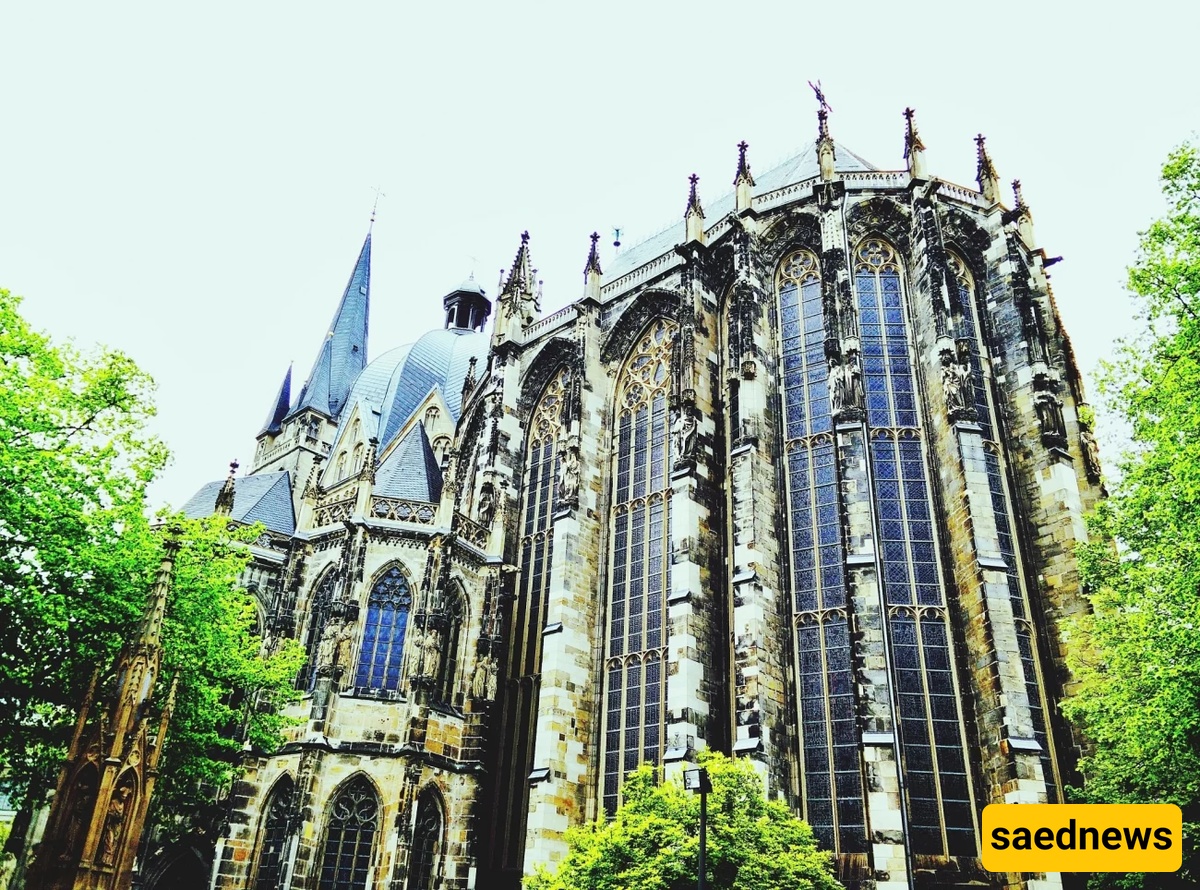
One of the cathedral’s most spectacular additions is its Gothic choir, often regarded as a masterpiece of Gothic architecture. Built between 1355 and 1414, it replaced the earlier Carolingian rectangular structure.
The choir is characterized by its enormous windows, intricate stonework, and impressive vertical proportions. Side chapels were added primarily during the Gothic and later Baroque periods, contributing to the complex appearance of the cathedral.
The cathedral also preserves magnificent bronze doors traditionally associated with the age of Charlemagne. The doors feature lion-head handles, and according to local legend, one of them contains the Devil’s thumb inside a lion’s mouth.
The legend says that the Devil agreed to help finance or construct the church in exchange for the soul of the first person to enter it. Instead, a wolf was sent through the entrance. Furious at being deceived, the Devil slammed the door and lost his thumb.
Today, visitors can still feel the small protrusion inside the lion’s mouth, which has become one of the cathedral’s most famous traditions.
The central octagonal space remains the defining feature of Aachen Cathedral. A striking Baroque canopy rises above the main area, accompanied by a lantern dating from the late 17th century. Its distinctive appearance makes the cathedral recognizable from many viewpoints.
The contrast between the ancient Carolingian octagon and later Baroque and Gothic additions demonstrates how the cathedral developed continuously throughout European history rather than being built as a single architectural project.
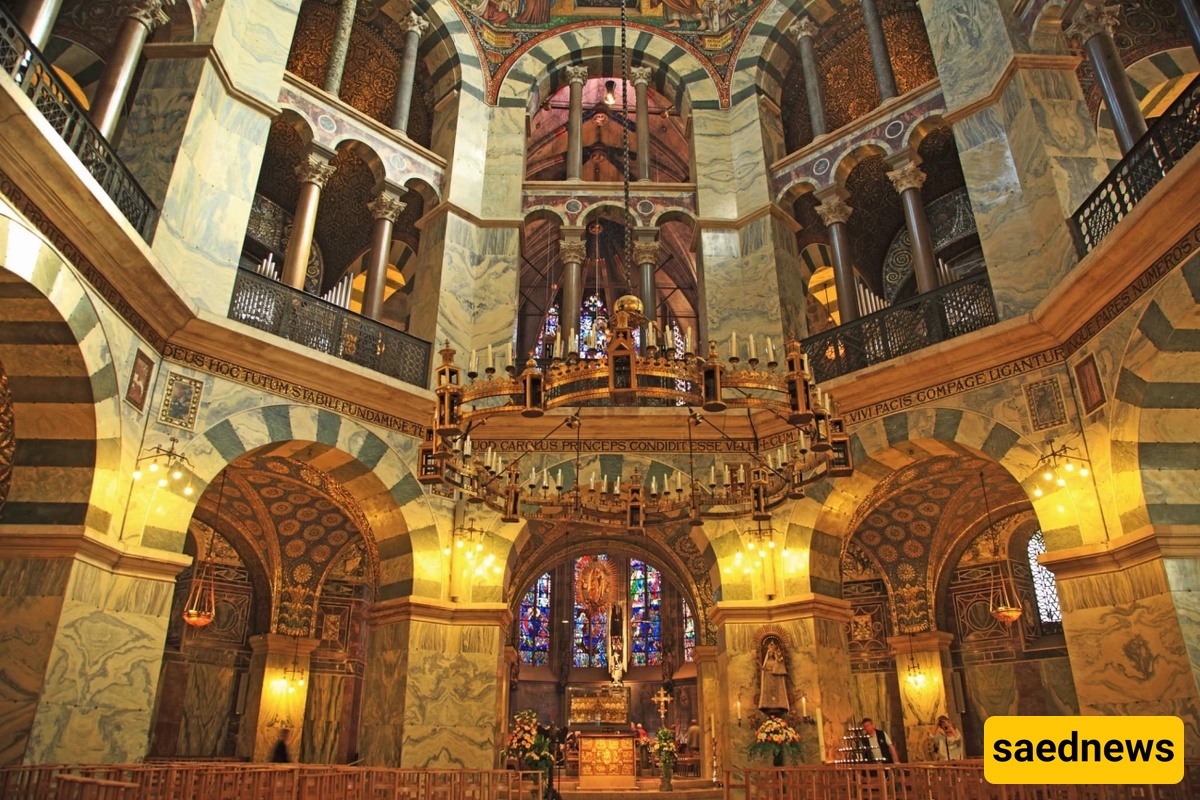
Aachen Cathedral is far more than a beautiful historic church. It represents a unique intersection of European religious, political, and architectural history. Its connection with Charlemagne, its role as the coronation church of German kings, its extraordinary medieval architecture, and its later Gothic and Baroque additions make it one of Germany’s most significant historic monuments.
The cathedral’s original Carolingian core, Gothic choir, Byzantine-inspired mosaics, medieval throne, and legendary bronze doors together create a monument that reflects more than a millennium of European history.