SAEDNEWS: A direct flight is a flight in which a passenger travels to their destination with a single ticket, one flight number, and the same aircraft, without disembarking. However, in indirect flights, the ticket and flight numbers are different, and the passenger must change aircraft during the journey.

According to Saednews, When purchasing an airline ticket, you may come across many terms that can make travel planning and your overall travel experience easier to understand. Two of these terms are direct flights and connecting (or transit) flights. What is the difference between them? Why are some flights direct while others are not?
These are the questions we will answer in this article. To do so, we will first define each term and then explain the differences between them. Before buying your flight ticket—especially for international destinations—reading this article can help you choose the right ticket and save both time and money.
As you probably know, domestic flights in Iran are usually short and do not include stops along the way; these are called direct flights. In international aviation, these are also referred to as Direct flights.
In this type of flight, even if the plane stops at another airport for reasons such as refueling, passengers do not disembark. Direct flights are usually used for short routes. Most domestic flights in Iran and flights to neighboring countries are direct.
Flights that travel without any stop are called non-stop. However, if there is a stop, they are referred to as direct in aviation terminology.
In contrast to direct flights, there is another type called non-direct, connecting, or transit flights. These terms may appear on tickets as Non-Direct, Connection, or Connecting.
In a connecting flight, not only is there a stop between the origin and destination, but passengers must also change aircraft at an intermediate airport. This stopover airport is called a transit airport.
The main reason for connecting flights is that there is no direct route available between the origin and destination. This may be due to permanent reasons such as political or airline restrictions, or temporary factors like reduced demand. Another reason can be the long distance of the route, requiring multiple refueling stops.
Connecting flights are divided into two categories: Online and Interline.
In online connecting flights, all segments belong to the same airline, although flight numbers may differ. However, the aircraft type (such as Airbus, Boeing, or Fokker) may not necessarily be the same.
In interline flights, passengers may travel with different airlines for each segment of the journey.
One of the most important differences is time. If both direct and connecting flights exist for the same route, the connecting flight will always take longer.
Another difference is cost. In cases where both options are available and the travel class is the same, connecting flights are usually cheaper than direct flights. This is because direct flights offer more convenience and shorter travel time.
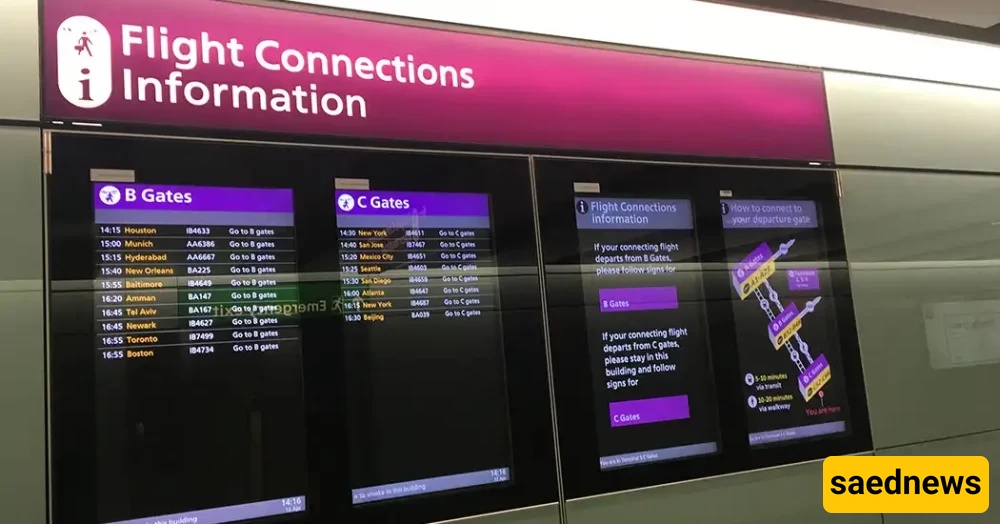
A third difference is that connecting flights involve different flight numbers and sometimes different tickets. Passengers must check in again at the transit airport and board another aircraft. However, in connecting flights, you do not need to buy a new ticket at the transit airport—you continue your journey with the same ticket.
Not all differences favor direct flights. One of the main advantages of connecting flights, especially in economy class, is the reduced fatigue caused by long hours of sitting.
During the stopover, passengers can rest, enjoy fresh air, eat different food, or even explore the airport. Some major international airports are so well-equipped that passengers enjoy shopping in duty-free stores and using entertainment facilities during layovers.
However, passengers traveling in business or first class often prefer to stay onboard and enjoy the comfort of their seats or suites and premium services throughout the journey.
If you choose or are required to take a connecting flight, you should keep several important points in mind:
Always purchase tickets from reputable airlines that take responsibility for delays or cancellations.
In connecting flights, risks increase because delays in one segment can affect subsequent flights.
The airline should compensate you if a delay causes you to miss your next flight, including providing accommodation, rebooking, or refunding costs where applicable.
If you miss a flight due to personal delay, the airline may not be responsible for issuing a replacement ticket.
Do not spend too much time exploring the transit airport and risk missing your next flight.
Choose flights with enough layover time to complete airport procedures comfortably.
Sitting closer to the front of the aircraft can help you disembark faster during transit.
Airlines must set appropriate time intervals between connecting flights based on airport regulations and conditions.
Passenger procedures vary between airports. Some require additional security checks, others have weather-related delays, and many major hubs experience long queues for baggage claim and boarding.
Other factors such as special assistance (wheelchair services, pet transport), airport size, and airline operations also affect transfer time.
Generally, layover times can range from 30 minutes to 24 hours. For longer layovers, travelers may need a transit visa depending on the country’s regulations. Without this visa, passengers may face serious issues at the airport or even be forced to return.
A connecting flight is a type of air travel in which passengers travel from origin to destination with one or more stops, changing aircraft at a transit airport due to the absence of a direct flight or operational requirements.