SAEDNEWS: The World’s Happiest Nations: 16 Countries Ranked Among the Most Joyful Places on Earth
According to Saednews, Imagine two people with similar jobs, similar incomes, and equally busy urban lives. Yet one falls asleep each night with a sense of safety and satisfaction, while the other goes to bed anxious about tomorrow. Where does this difference come from?
At this point, many people stop focusing only on income and job position and start paying attention to quality-of-life indicators and overall life satisfaction. Before going further, you can explore the world’s best countries based on 10 key parameters through this link.
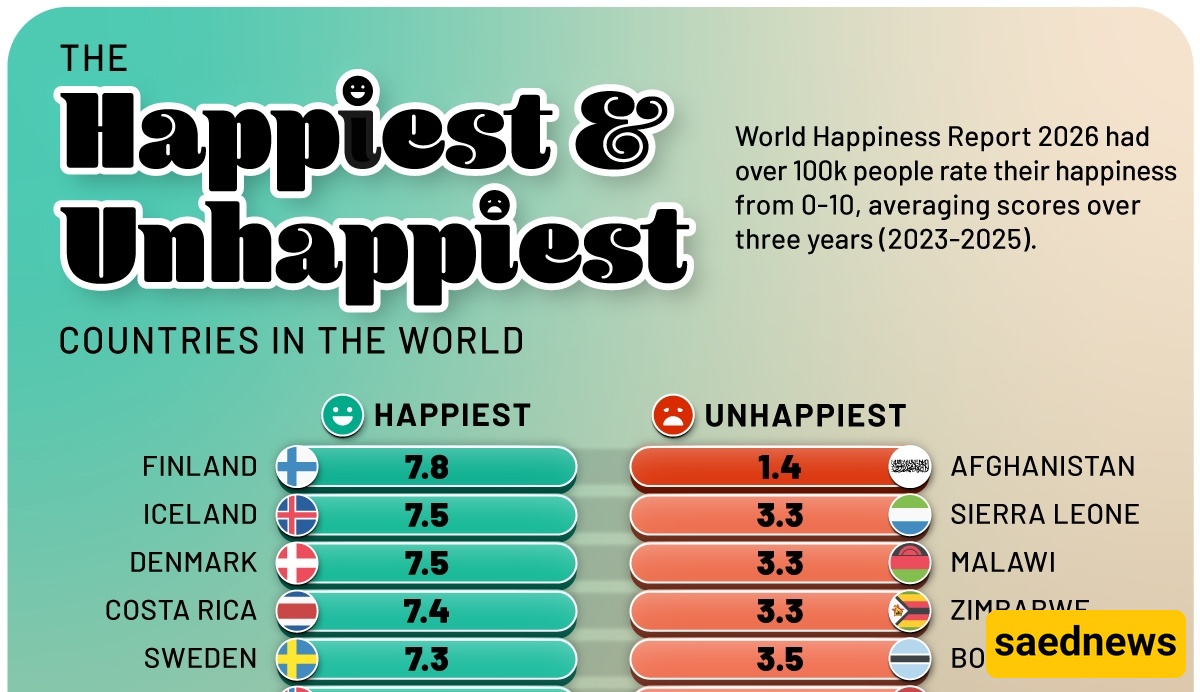
Now an interesting question arises: which countries have actually succeeded in building this sense of calm and satisfaction?
Rank | Country | Common Languages | Lifestyle / Culture Overview | Immigration Insight |
|---|---|---|---|---|
1 | Finland | Finnish, Swedish | Orderly, safe, high welfare | Excellent for stability and quality of life |
2 | Denmark | Danish (English widely spoken) | Balanced lifestyle | Strong opportunities in specialized fields |
3 | Iceland | Icelandic (English widely spoken) | Calm, nature-focused | Safe and small-scale environment |
4 | Sweden | Swedish | Structured, family-oriented | Career paths for skilled professionals |
5 | Netherlands | Dutch (English widely spoken) | Urban and international | Popular for work migration |
6 | Costa Rica | Spanish | Nature-based, relaxed living | Attractive for a slower lifestyle |
7 | Norway | Norwegian (English widely spoken) | High welfare, strong services | Stability and job security |
9 | Luxembourg | Luxembourgish, French, German | Small but extremely wealthy | Strong for international finance jobs |
10 | Mexico | Spanish | Social and vibrant | Rich cultural and lifestyle experience |
11 | Australia | English | High quality of life, immigrant-friendly | Skilled migration pathways |
12 | New Zealand | English, Māori | Calm, nature-oriented | Peaceful but smaller job market |
13 | Switzerland | German, French, Italian (Romansh) | Highly structured, premium standards | High cost, language requirements |
14 | Belgium | Dutch, French, German | Multicultural European hub | Language region matters for jobs |
15 | Ireland | English, Irish | Modern, open society | Attractive for work migration |
16 | Lithuania | Lithuanian (English common in cities) | Emerging European economy | Lower cost, growing opportunities |
You may find it interesting that the “World Happiness Report” is not based on economists’ assumptions, but on real people’s responses gathered by the Gallup World Poll.
The key question used is called the Cantril Ladder.
People are asked to imagine a ladder from 0 to 10:
0 = worst possible life
10 = best possible life
Then they rate where they personally feel they stand.
Contrary to what many assume, country rankings are based directly on these self-reported life evaluations.
Other factors such as:
Social support
Life expectancy
Freedom of choice
Corruption levels
are not direct happiness scores. Instead, they help explain why people feel happier in some countries than others.
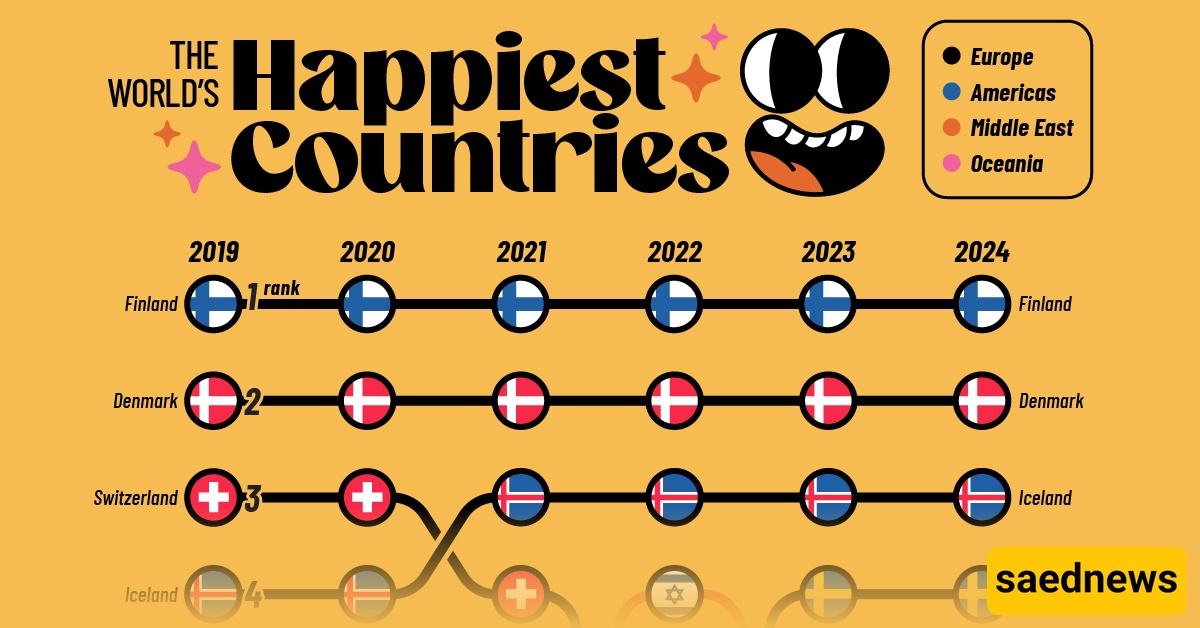
Finland’s long-standing top position is not accidental. A combination of structural and cultural factors contributes to it:
Trust and safety: Strong trust between citizens and institutions
Social support system: No one is left alone during crises
High-quality public services: Education and healthcare are stable and efficient
Work–life balance: Life is not sacrificed for work
Changing location alone does not solve underlying stress if living conditions remain similar. After the initial excitement of moving abroad fades, old pressures and anxieties often return.
Migration becomes meaningful when the destination offers higher levels of well-being and life satisfaction. In that case, you are not just changing your home—you are improving your quality of life.
The key question today is no longer:
“Where do I earn more money?”
But instead:
“Where do I have a higher chance of living a stable, peaceful, and high-quality life?”
Countries with high happiness rankings tend to offer:
Psychological safety: Strong institutional and social support
Work–life balance: Time to actually enjoy life
Social trust: Less friction in daily interactions
The “happiest country in the world” is not just a catchy media phrase—it is based on real statistical data and people’s lived experiences.
These rankings show which countries have succeeded in creating environments where life is not only functional, but also stable and meaningful.
If migration is seen not as a short-term escape but as a long-term investment in your peace of mind and future, then happiness reports can serve as a useful compass.
Ultimately, they help you choose a place where well-being is not an exception—but part of everyday life.