SAEDNEWS: Eyvan County: A Tourist Hub in Ilam Province Featuring Natural Landscapes and Historical Sites, Including the Shirin and Farhad Arch

According to Saednews, Ivan County is one of the newer counties in Ilam Province. It has strong potential in agriculture and livestock farming. The county is located along the route between Ilam, Islamabad, and Gilan-e Gharb.
Ivan features pleasant highland summer resorts. Among its notable natural and recreational sites are the Talsam Cave and Khoran recreational area. Important cultural, historical, and pilgrimage sites in Ivan include the Siahkal Fire Temple, Taq-e Shirin and Farhad, Shimeran Castle, the Shirpanah Bridge, the Zarna and Nargesi hills, Talsam Cave, the shrine of Haji Hazer, Imamzadeh Abdullah, and others.
The county also contains gypsum, sand, and gravel mines, mostly located around the Gankir River.
Traditional handicrafts in Ivan County include jajim weaving, kilim and relief kilim weaving, wool and silk carpets, black tents, felting, and more. Wave weaving is also widely practiced; it is used for decorating homes and wrapping bedding. It is mostly woven by men, and the materials used are wool or yarn.
Taq-e Shirin and Farhad in Ivan, Ilam Province, is a historical monument that attracts many visitors interested in Iranian history and ancient civilization. It is registered as a national heritage site under number 7969.
This structure is a stone building from the Sassanid era, constructed using large carved stones without mortar.
The monument is located at the base of the eastern slope of rocky highlands composed of rubble stone formations. Due to its position in an erosion-prone area, it has constantly been at risk of being buried by rock debris.
The site lies within natural resources territory and in a warm region of Ivan, which is still used seasonally by nomadic pastoralists as a winter settlement area. The surrounding vegetation is rangeland, and the soil is sandy and rocky.
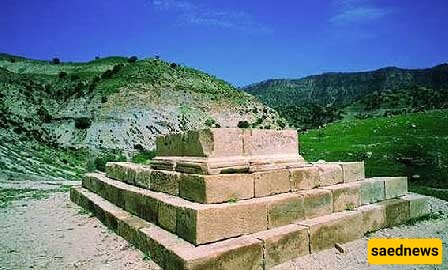
The structure consists of a square stone chamber. The term “Taq” refers to a semi-subterranean room measuring about 320 cm in length, 290 cm in width, and 220 cm in height from the floor of the vault.
The entire structure is built from large carved stones, stacked dry without mortar in successive layers. Part of the hillside was cut to stabilize the construction and prevent collapse.
The interior is completely plain and undecorated. Currently, there is no original floor, but the entrance area is covered with flat stone slabs taken from the upper rocky layers.
One of the most remarkable architectural features of this monument is the transformation of the roof from a curved vault to a flat and even surface, which makes its design unique and striking.
The Ivan region, due to its favorable environmental conditions, mountainous landscape, rich pastures, and access to plains and highlands, as well as the presence of many rivers—especially the large and flowing Gankir River—has hosted numerous temporary and permanent settlements throughout history.
Taq-e Shirin and Farhad is one of these unique structures, built in a strategic mountainous location. It is considered exceptional in its architectural style compared to similar monuments.