SAEDNEWS: Following Tehran–Washington initial agreements, the naval blockade on Iran ended and five Iranian ships passed freely through international waters, marking the first step toward a permanent ceasefire.
According to the political desk of the Saednews news agency, just one day after reports emerged regarding a draft peace understanding between the Islamic Republic of Iran and the United States, the first practical and field-level signs of this major agreement were observed in international waters.
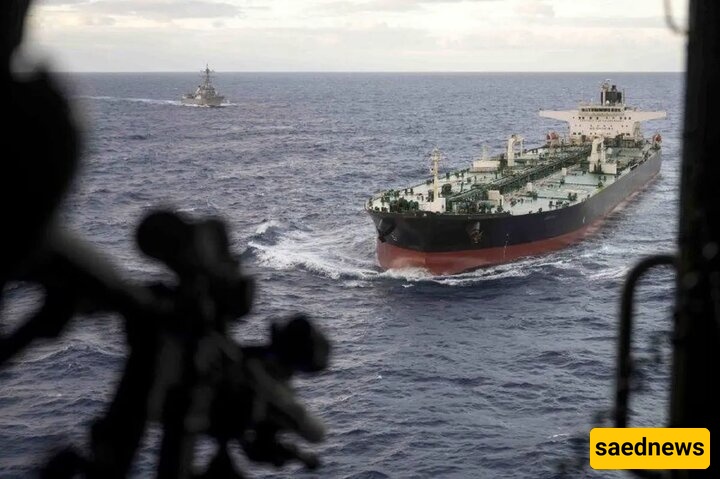
Sputnik News Agency reported on Monday evening, citing reliable maritime sources, that a fleet consisting of five Iranian vessels successfully passed through international waters without any obstruction. According to the report, the fleet included three large oil tankers and two cargo ships carrying essential goods.
This unrestricted passage is considered the end of the blockade of Iranian ports and maritime routes by the United States, indicating that the provisions of the new agreement are being implemented rapidly.
Iran’s Supreme National Security Council Secretariat also confirmed these developments and released key details of the agreements reached through mediator efforts. According to the official statement, the agreement has resulted in two immediate and strategic outcomes:
Immediate and complete termination of the maritime blockade against Iran.
Immediate and permanent end to war and military operations on all fronts, particularly in Lebanon.
These field-level changes suggest that the reached agreement goes beyond a temporary ceasefire and marks a new phase in the regional security architecture.
According to announced scheduling, the official signing ceremony of this memorandum of understanding is expected to take place on Friday, 29 Khordad (19 June). However, Tehran has taken a firm stance regarding the continuation of negotiations.
Based on internal sources, any talks aimed at reaching a “final agreement”—especially discussions concerning the complex issue of Iran’s nuclear program—are contingent upon strict verification. These negotiations will only begin once the opposing side (the United States) fully and flawlessly implements all its commitments under the initial memorandum of understanding.