SAEDNEWS: You may have heard that bread causes weight gain or that rice is high in calories. If you're unsure which is the better choice for a weight-loss diet, read the following article.
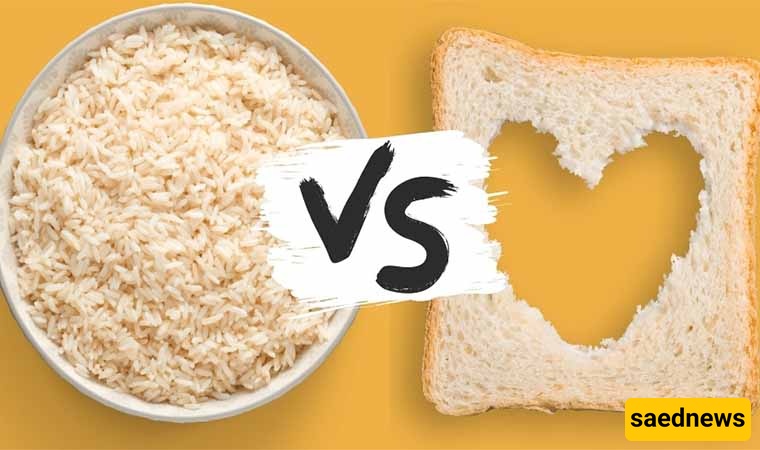
According to Saednews, Bread and rice hold a special place in the Iranian diet because they are relatively inexpensive, tasty, and filling. Many people who are overweight eliminate rice from their meals and switch to eating bread instead. But which is better for weight loss: bread or rice? Can you remove both from your diet? Does avoiding bread or rice help you lose weight? Here is what you need to know.
Being overweight and obesity are among the biggest health challenges facing people around the world today. Reduced physical activity, increased consumption of fast food and sweets, and other dietary habits have contributed to rising obesity rates.
Various diets are available for weight loss, but some can be harmful. A balanced weight-loss diet includes a variety of foods, meaning you can eat both bread and rice in appropriate portions and still lose weight.
Contrary to popular belief, no healthy food automatically causes weight gain on its own. Weight gain is influenced by factors such as portion sizes, preparation methods, and overall calorie intake.
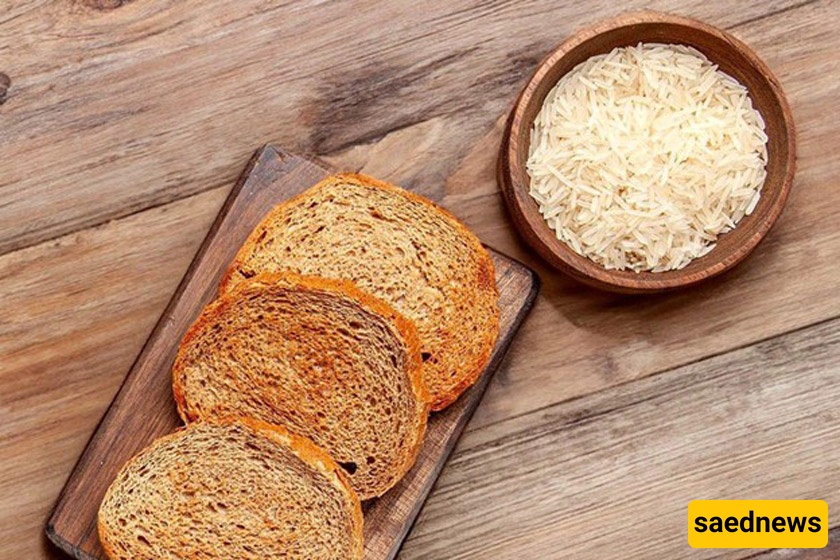
Therefore, replacing rice with bread will not necessarily help you lose weight. If you eliminate rice but eat large amounts of bread, you may not lose weight at all. You can include both bread and rice in your diet, provided you consume them in suitable portions.
Approximately seven tablespoons of cooked rice are equivalent to the following portions of bread:
2.5 palm-sized portions of Sangak bread
2.5 palm-sized portions of Barbari bread
4 palm-sized portions of Taftoon bread
6 palm-sized portions of Lavash bread
One baguette
In other words, you can eat approximately seven tablespoons of rice instead of 2.5 palm-sized portions of Sangak bread.
Following a diet that completely excludes bread and rice can be difficult to maintain over the long term. Depending on how the diet is structured, it may contribute to disordered eating patterns, vitamin and mineral deficiencies, changes in hunger and fullness hormones, hair loss, a reduced metabolic rate, metabolic problems, poor sleep, nausea, and impaired mental performance.
Rather than eliminating these staple foods entirely, it is generally better to focus on portion control and choosing more nutritious varieties.

Whole-grain bread made from whole-wheat flour is generally the best choice for weight management.
Sangak bread and barley bread are good options, provided they are made with whole-grain flour that retains its bran.
Lavash and Taftoon breads generally contain less bran, depending on the flour used in their preparation. Star-grade flour, commonly used for Barbari and specialty breads, ranks lower in bran content than whole-grain flour. Nool flour contains the least bran and generally has a lower nutritional value.
When choosing bread, look for whole-grain varieties that provide more fiber and nutrients.
You can replace white rice with brown rice as part of a weight-loss diet.
Brown rice is less processed and is considered a whole grain. Compared with white rice, it generally contains more fiber and retains more nutrients because its bran and germ layers remain intact.
However, portion size still matters. Both white and brown rice can fit into a balanced diet, and successful weight loss ultimately depends on your overall eating habits and energy intake.