SAEDNEWS: Repeatedly opening and closing doors can be a normal part of childhood exploration, helping children develop motor skills, understand cause and effect, and practice control over their environment.
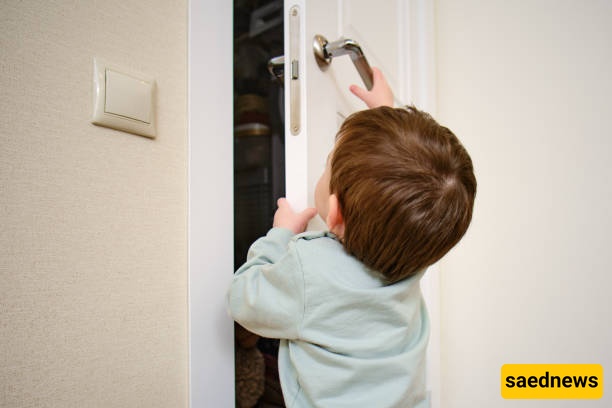
According to SAEDNEWS, children’s fascination with opening and closing doors is often rooted in simple but meaningful learning. A door is an interactive object: when a child pushes, pulls, or moves it, something predictable happens. The door changes position, makes a sound, and may reveal or hide what is behind it. For a young child, this creates an immediate connection between their action and its result.
Opening and closing a door can help children practice coordination between their hands, eyes, and body. They need to grasp a handle, apply an appropriate amount of force, and adjust their movements according to how the door responds. These repeated actions can therefore become a form of natural practice rather than meaningless repetition.
Children may also be interested in the cause-and-effect relationship involved. They learn, through experience, that:
Pulling or pushing can change the door’s position.
Different amounts of force produce different results.
A closed door can conceal something from view.
An open door can change access to another space.
Repeating an action can produce a familiar sound or movement.
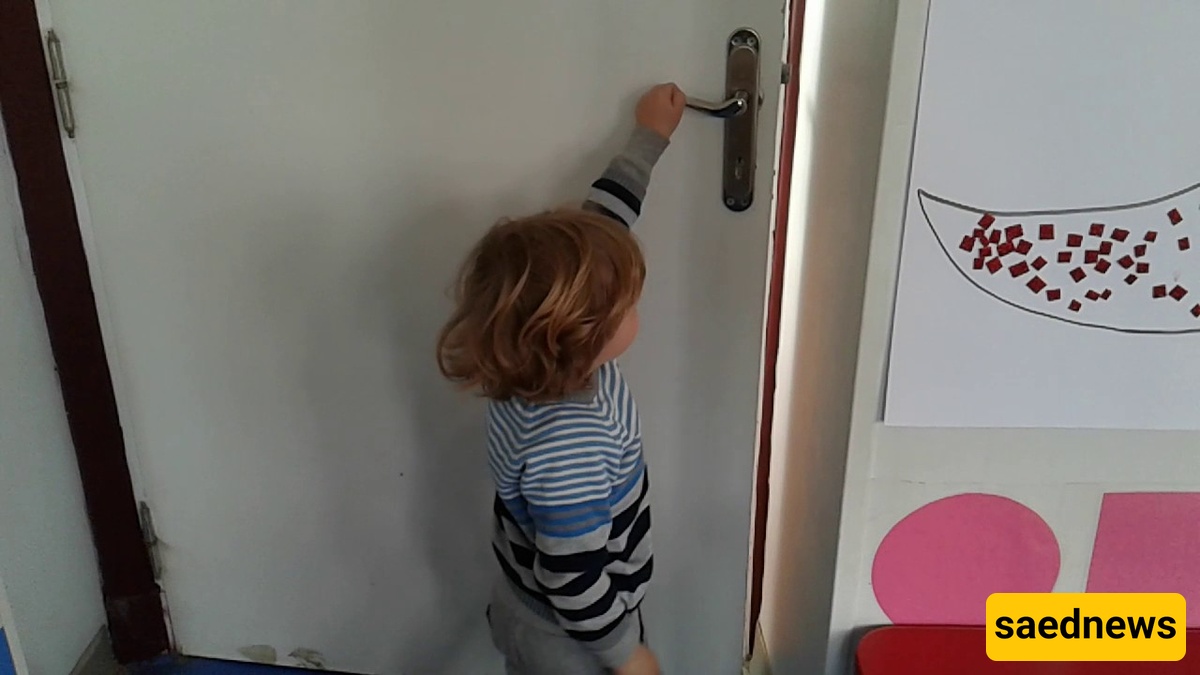
Young children often repeat activities they find interesting. Repetition gives them opportunities to predict what will happen and notice small differences in the outcome. A child may open a door several times simply because they are testing what happens each time, gradually becoming more confident in controlling the object.
There can also be an element of independence. Being able to open a door without adult assistance can make a child feel capable and in control. For toddlers who are rapidly developing new physical skills, everyday objects can become opportunities to demonstrate what they have learned.
Interest in doors is generally not concerning on its own. Children naturally become fascinated with ordinary household objects, particularly when those objects move, make sounds, or respond directly to their actions. Parents can use this curiosity as an opportunity for safe learning by allowing appropriate exploration while supervising the child around doors, hinges, and handles.
Safety matters because doors can cause finger injuries if a child places their hands near hinges or between the door and frame. Adults can also teach simple rules, such as keeping fingers away from closing edges and asking for help with doors that are heavy or difficult to move.
What looks like a repetitive game may therefore be a child experimenting with movement, prediction, independence, and the physical world around them. A simple door can provide surprisingly rich opportunities for learning through hands-on exploration.