SAEDNEWS: Lining up toys can help children create order, practice patterns, and explore their surroundings. The behavior is often a normal part of play and development.
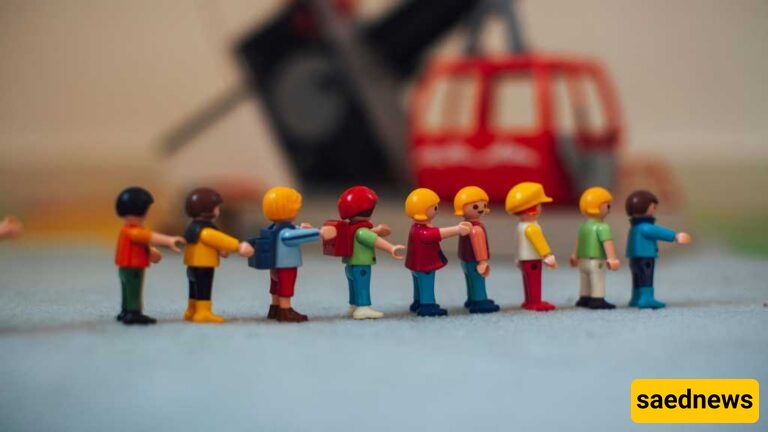
According to SAEDNEWS, a child carefully arranging cars, blocks, dolls, or other toys in a straight line may simply be exploring order and organization. Young children often enjoy putting objects into groups, sequences, or patterns because these activities make their environment easier to understand and give them a sense of control over their play.
Toy-lining can serve several developmental purposes. Children may be practicing early mathematical concepts such as sequence, position, similarity, and difference without consciously thinking of them as learning activities. For example, a child might place cars from smallest to largest or arrange blocks according to color.
The activity can also support focused, independent play. Rather than immediately creating a pretend story, some children first organize their toys and then decide what to do with them. The repeated actions involved in arranging objects may also provide a predictable and satisfying play experience.
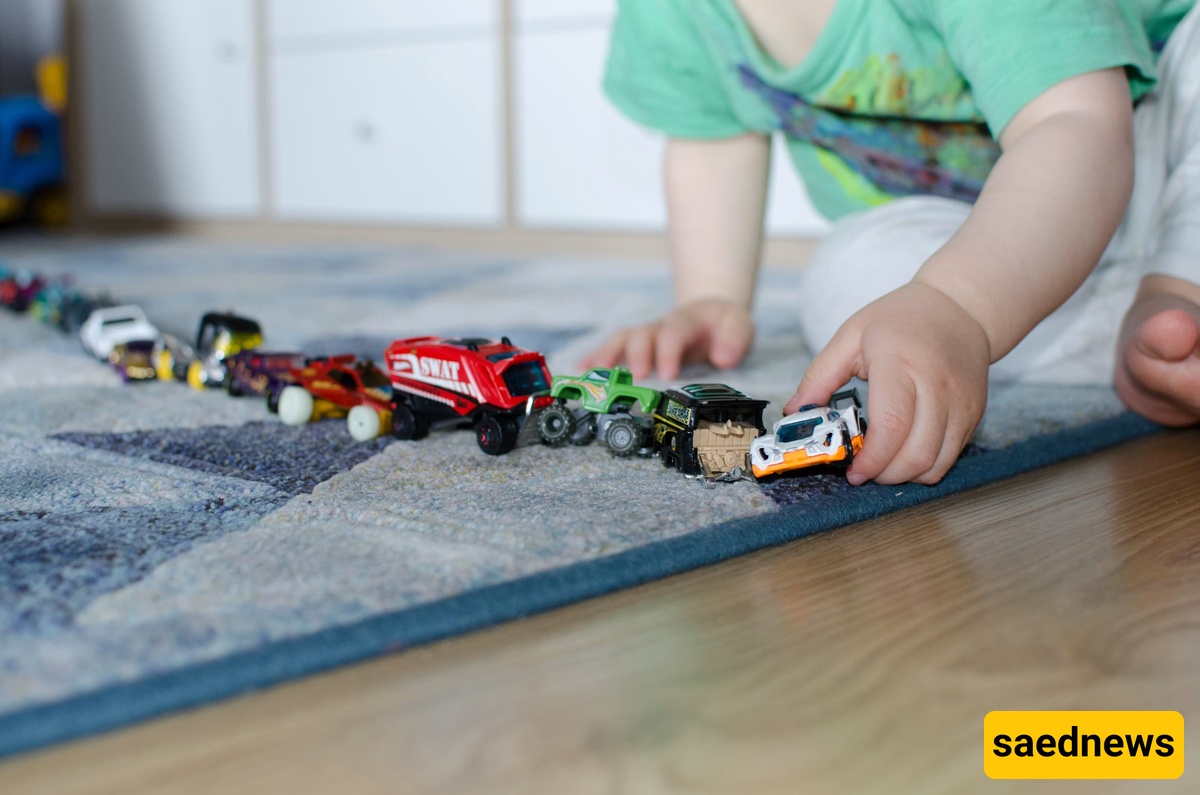
A child who lines up toys might be:
Creating a pattern or sequence
Sorting objects by color, size, or type
Practicing spatial awareness
Enjoying repetition and predictability
Preparing the toys for another type of play
Simply experimenting with how objects can be arranged
The meaning depends heavily on the child's age, personality, and overall behavior. Some children line up toys occasionally, while others incorporate arranging and sorting into their regular play.
By itself, lining up toys is not evidence of a developmental disorder. Children can display many repetitive or highly organized play behaviors as they learn about patterns and their surroundings. What matters more is the broader developmental picture, including communication, social interaction, flexibility during play, and the child's ability to engage in different activities.
Parents generally do not need to interrupt the behavior simply because the toys are arranged in a particular way. Instead, they can join the child's activity by asking questions such as, “Which car comes next?” or “Can we make a pattern with these blocks?” This can turn an ordinary play habit into an opportunity for language, problem-solving, and early mathematical learning.