SAEDNEWS: Eating with the hands can be a normal part of childhood development, sensory exploration, and growing independence rather than simple refusal to use a spoon.
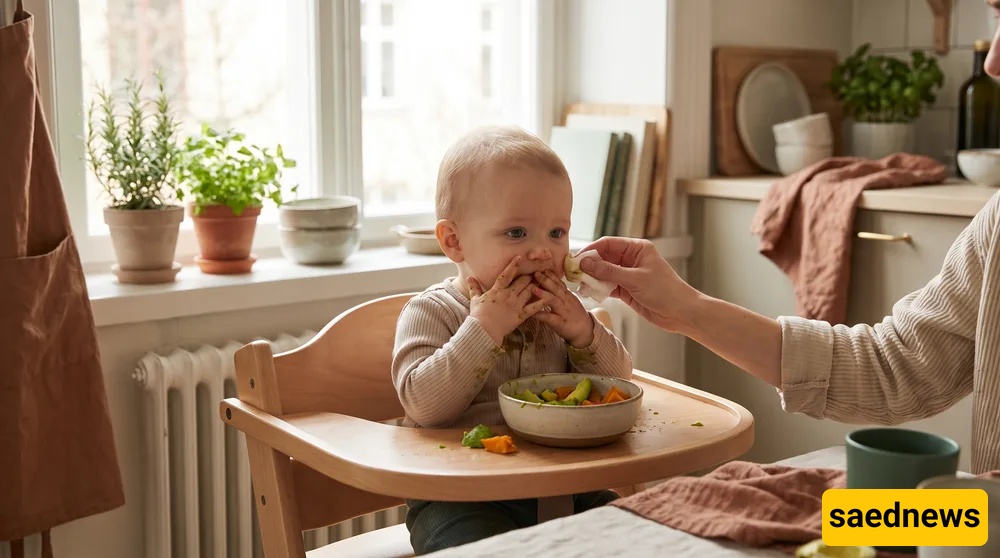
According to SAEDNEWS, some children reach for food with their hands even when a spoon is right in front of them. This behavior can seem confusing to parents, but it is often connected to the way young children learn about food and develop control over their movements. Using their fingers gives children direct information about a food’s texture, temperature, shape, and firmness.
For younger children, eating with the hands may be more natural than managing a spoon. Holding a spoon, scooping food, and bringing it accurately to the mouth require coordination and practice. Fingers can sometimes make the process simpler and give the child greater control.
Children may also prefer foods that are easy to grasp. Small, appropriately prepared pieces can allow them to eat independently without needing help from an adult.

Eating is not only about taste. Children experience food through several senses, including touch. Feeling a soft piece of fruit, a firm vegetable, or a different texture can help them become familiar with new foods.
This does not necessarily mean that a child dislikes the spoon. The child may simply find the sensory experience of touching food interesting or comforting.
As children become more independent, they often want to decide how they eat. Choosing their hands instead of a spoon can be one small way of exercising that independence.
Parents can encourage utensil use without turning every meal into a struggle. A practical approach is to:
Keep a child-sized spoon within easy reach.
Let the child practice using it without demanding perfection.
Offer foods that are manageable with a spoon.
Allow some finger-feeding when appropriate.
Avoid turning utensil use into a punishment or source of pressure.
Occasional finger-feeding is generally not unusual in young children. What matters more is the child's overall development and eating behavior. If a child consistently struggles with feeding skills, has significant difficulty handling utensils compared with other expected developmental abilities, frequently coughs or chokes while eating, or has persistent difficulties with eating, discussing the concern with a pediatrician or qualified child-development professional can be helpful.
For many children, learning to use a spoon is a gradual process rather than an immediate switch. Giving them opportunities to practice while allowing some age-appropriate independence can make mealtimes more comfortable and help utensil skills develop naturally.