SAEDNEWS: Using a single color in drawings is often a normal part of childhood development, reflecting preferences, experimentation, or the way a child focuses on an idea.

According to SAEDNEWS, a child who repeatedly chooses only one color while drawing is not necessarily showing a problem. Children often develop strong preferences for particular colors, and their choices can change as their interests, emotions, and drawing skills develop.
Sometimes the explanation is surprisingly ordinary. A child may simply like a particular color, find it easier to use, or enjoy the way it looks on paper. Children may also repeat the same color because repetition feels familiar and satisfying.
The choice can also be influenced by the activity itself. If a child is drawing the same type of object repeatedly, they may naturally use the color they associate with it.
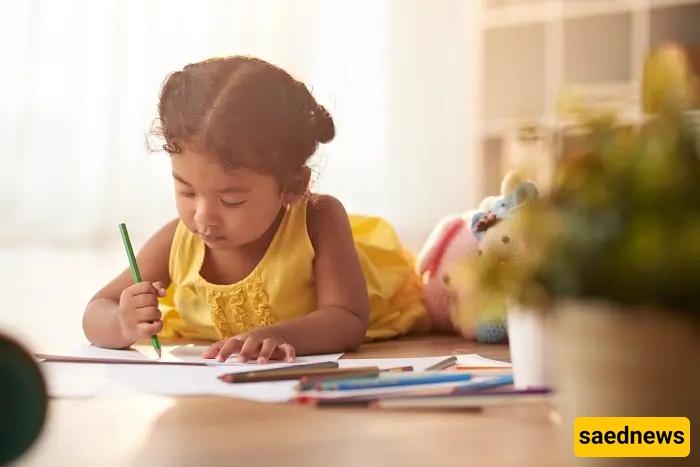
Adults sometimes assume that using one color must reveal a child's emotional state. However, a single drawing is not enough to determine what a child is feeling or thinking. Color preferences can have many explanations, and children's drawings should be considered alongside their communication and behavior rather than interpreted in isolation.
Parents can gently ask questions such as:
“What are you drawing?”
“What do you like about this color?”
“Would you like to try another color?”
These questions allow the child to explain the drawing without making them feel that their choice is wrong.
Using one color by itself is generally not a reason for concern. It becomes more useful to observe the broader pattern if the child also shows persistent difficulties in communication, play, learning, social interaction, or everyday activities.
Instead of focusing on the color alone, parents can look at whether the child's overall development and behavior seem appropriate for their age. If several concerning changes appear together, discussing them with a pediatrician or child-development professional can provide more meaningful guidance.
There is usually no need to insist that a child use more colors. Providing crayons, pencils, or paints in different shades and allowing the child to choose freely can encourage experimentation without turning drawing into a test.
Over time, many children naturally expand their color choices as their interests and artistic experiences change. The most useful approach is to stay curious about what the child is creating rather than assigning a fixed meaning to one color.